
Address Newsletter
Our weekly digest on buying, selling, and design, with expert advice and insider neighborhood knowledge.
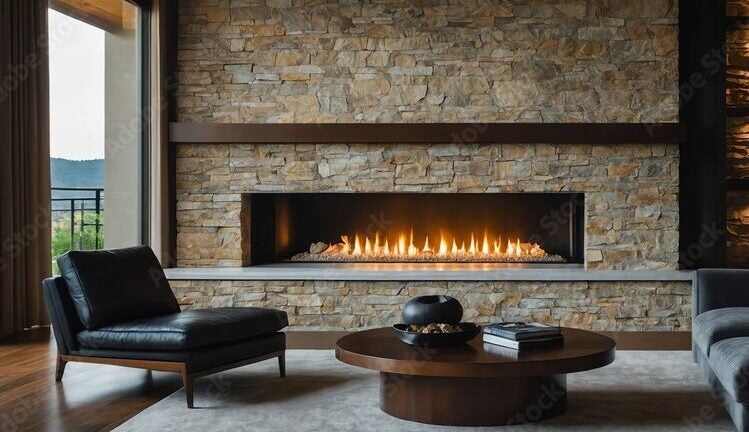
A glowing hearth is an ancient symbol of comfort, but in New England’s aging housing stock, it’s a feature that often falls into disrepair. As we head into the chillier months, you may be considering an update, whether that means a masonry restoration or something more modern.
Before you start shopping for a fireplace feature, hire a chimney sweep to assess the existing situation and make sure everything is in good working order, said Jamie Lynn Anderson of Abington-based Anderson Fireplace. Her team sometimes starts by taking measurements to see what is feasible, and it may also be necessary to enlist the services of a plumber or electrician, depending on the vision.
If you’re not looking at a wood-burning fire in a masonry-based hearth, choices quickly become numerous.
“For new construction homes, gas fireplaces, electric fireplaces, and even some pellet stoves are popular options,” said Gregory LaPierre, a manager for Saugus-based Fire Element and a representative for Architectural Fireplaces of New England, Inc. “They’re usually either framed into the wall or they’re freestanding units, and they can either direct vent out or through a side wall, or go up through the roof, or even through a manufactured sheet that a builder or contractor builds through the house.”
A hearth feature can be built into plans, said LaPierre. You can opt for a leaner, more traditional look, or a sleeker, more modern one. Local ordinances may impact whether and how gas installation is allowed.
“It’s really just a personal preference of the quality of flame that you want to see, and the amount of heat output that you want coming out of the unit,” he said. “Some people are tied to the nostalgic look of a wood-burning fire, as opposed to a gas fire, and being able to actually feed the fire yourself, whereas the gas fireplaces are fed manually through the gas valve.”

Anderson said there are more choices than ever.
“A lot of it’s going to stem [from whether] the homeowner has something existing, like if they have an existing wood-burning fireplace, [and] are they trying to convert that?” said Anderson. “What fuels do they have available? Do they want to use wood? Do they want to use pellets? Do they want to use natural gas? Do they want to use propane? Do they want to use electric?”
If someone wants to add warmth to an existing wood-burning masonry-based fireplace, gas conversions are possible, she said. A sealed direct-vent gas fireplace would be installed within that, which would vent through the existing flue.
That can activate a long-dormant wood-burning hearth with something a little more accessible, said Anderson.
“[People] have fireplaces that they don’t use … They do nothing with them,” she said. “So, it’s a way to make that area more cozy, more efficient, and actually usable.”
Price points vary.
“They all look good, but some more than others,” said Anderson. “You know, you get what you pay for. They’re basically beautiful furnaces.” In some cases, costs rise if gas and electric must be installed in the existing fireplace area, and some require remote control.
However, if atmosphere — but not heat — is the priority, Anderson said a gas-vented log in a glass door is another option, which provides the look, but not the added heat, of a more robust unit. Some areas of the home may not be the best location for a roaring fire — for example, a dining room —but where the look of a crackling flame appeals, but not a burst of added heat.
While wood might shed more heat, Anderson said she sees customers steering toward gas for breathing concerns.
Anderson said that a vented gas log set and glass door, not including additional contractor support, might start around $2,500 and run all the way to $10,000 for a large masonry conversion, with heating versions more costly than aesthetic-only sets. Electric sets will cost less, and not run afoul of local requirements that may not allow gas installations.
While nostalgia may drive some fireplace updates and installations, pairing that update with some forward thinking may help conserve energy and heating costs. Bill Stack, the energy efficiency spokesperson for Mass Save, said related programs do not offer incentives that will apply to such installations.
But completing a home energy assessment before doing so could provide companion benefits. Stack said an energy assessment will touch down on every aspect of energy use in the home, including insulation. The sponsors of Mass Save cover a minimum of 75 percent of the insulation costs, and could help seal up the home, said Stack.
The assessment might be a good chance to talk about hearth placement and fireplace fuel choice to help maximize efficiency, said Stack.
Our weekly digest on buying, selling, and design, with expert advice and insider neighborhood knowledge.




To comment, please create a screen name in your profile
To comment, please verify your email address
Conversation
This discussion has ended. Please join elsewhere on Boston.com