
How Greater Boston homeowners sort themselves by income
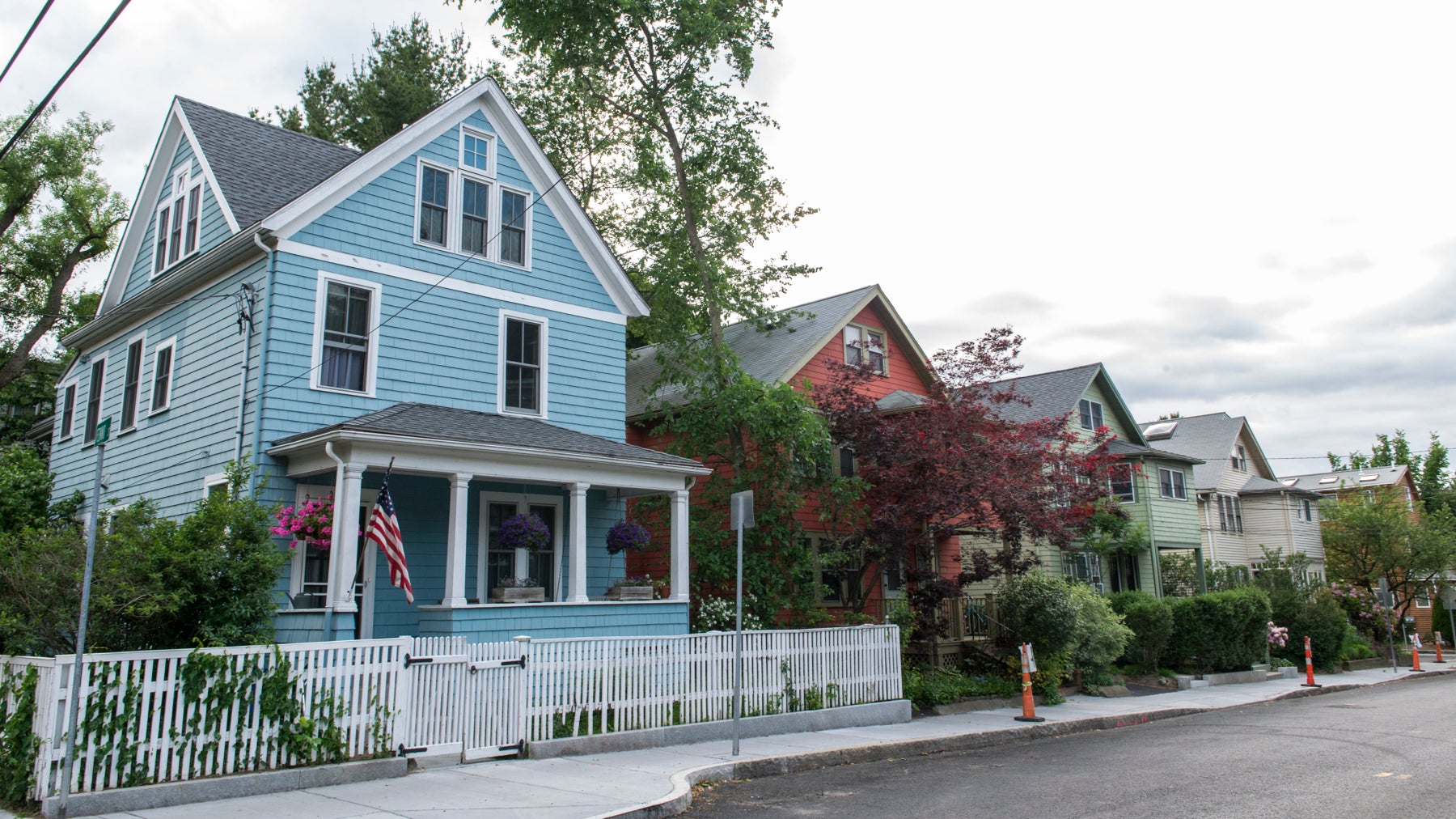
We compared the median income and the median home price in Greater Boston in order to determine which cities and towns are most affordable for their residents and where people stretching their finances just to stay put.
Where incomes and home prices are out of whack
Take Somerville for example, where the median household income is $66,866 per year, according to the US Census Bureau’s American Community Survey (2010-2014). The median single-family home price in Somerville, based on sales from January 2016 through June 2016, is $635,000, according to numbers provided by the The Warren Group, publisher of Banker & Tradesman.
Assuming a few standard metrics (30-year mortgage, 20 percent downpayment and a 3.4 percent annual interest rate), the mortgage payment on Somerville’s median home is $2,253 per month, or $27,036 per year.
So if someone (or some family) making Somerville’s median income bought a typical home in the city, they would spend about 40 percent of their yearly income on their mortgage.
That’s quite a bit above the recommended amount.
The U.S. Department of Housing and Urban Development defines an affordable house as one that does not require more than 30 percent of a family’s income. The department says “an estimated 12 million renter and homeowner households now pay more than 50 percent of their annual incomes for housing,” however.
In Cambridge, those math is even tougher for local families. The median salary is $75,909, while the median home price so far this year is $1,600,000, making the mortgage payments $5,678 per month. A typical family would have to spend about 90 percent of their income to afford a typical single-family house.
Both Cambridge and Somerville, along with places like Brookline, Newton, and Belmont, have high housing to salary ratios, but it is important to note that they also contain a high percentage of renters. Those renters probably make much lower salaries than their home-owning counterparts, bringing down the cities’ median income figures but not their median home prices.
Living within (varying) means
Most families in Greater Boston seem to be living within their means, whether that means a low salary and a low home price or a high salary and a high home price.
Take Weston, for example, where the median household salary is $201,200 and the median home price so far this year is $1,320,000. Families in Weston spend about 28 percent of their salaries on housing, just below the affordable housing threshold.
In Everett, families make a median income of $51,056 and the median home price in 2016 is $345,000, so people spend about 29 percent of their incomes on housing. Chelsea, Concord, Hingham, Lexington, Malden, Needham, Revere, Waltham, Watertown, and Winchester also get very close to that 30 percent cutoff even though incomes in those places can be strikingly different.
Though most real estate talk in the Greater Boston area is focused on the lack of affordability, there are also plenty of towns where people are paying closer to 20 percent of their incomes on mortgages.
Brockton has one of the lowest income to housing cost ratios in the area, as the median household salary is $48,569, but the median home price in 2016 is $229,900. So a typical family buying a typical house would spend 20.15 percent of their income on housing. Braintree, Burlington, Danvers, Dedham, Hull, and Saugus also fall close to the 20 percent mark.
Boston’s median salary is $54,485 per year, but income figures for specific neighborhoods aren’t available. Given the city’s diverse range of home prices by neighborhood, an analysis based on a citywide median income is of limited usefulness.





To comment, please create a screen name in your profile
To comment, please verify your email address
Conversation
This discussion has ended. Please join elsewhere on Boston.com