
Sign up for the Today newsletter
Get everything you need to know to start your day, delivered right to your inbox every morning.

After years of soaring prices and scarce options, Massachusetts condo buyers are finally seeing some relief with more inventory and slightly lower costs — but experts warn the state’s housing shortage remains far from solved.
“What we are starting to see is a shift in the market, and often it will start within the condo market,” said Sarah Gustafson, president of the Massachusetts Association of Realtors. However, she said, “We still have a housing supply shortage. There’s no question about that.”
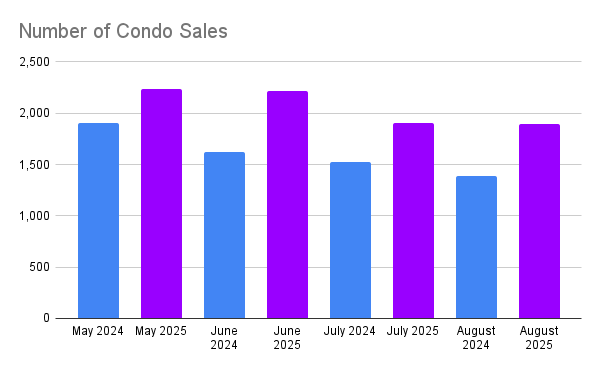
Data from the Massachusetts Association of Realtors shows an increase in inventory in May, June, July, and August, compared to the same time frame last year, causing prices to drop.
According to data from the Warren Group, there were 1,893 condo sales in August compared to 1,804 the year prior, a 4.9% increase. Meanwhile, the median condo sale price decreased 3.1% year-over-year to $526,000, down from $542,635.
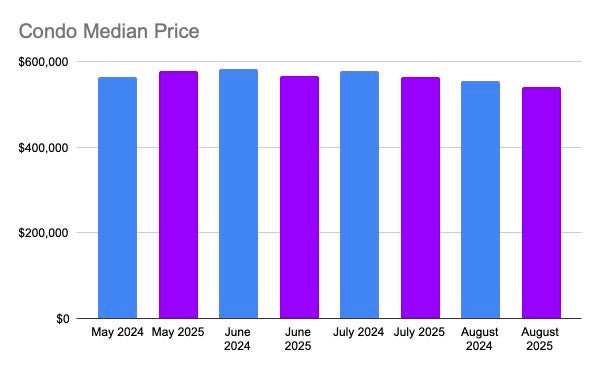
The Warren Group reports 13,146 condo sales in the first eight months of the year, a 3.5% increase from 2024. However, the year-to-date median sale price was flat at $545,000 for both years.
According to Cassidy Norton, associate publisher and media relations director of the Warren Group, the condo market had four months of inventory in May for the first time since 2011, which is enough to moderate prices.
Months of inventory refers to how long it would take to sell all the homes currently on the market at the current sales pace.
Now, instead of five people looking at an available unit, there are maybe two, said Norton. So, “it’s not as frantic as it was,” she said.
“Whether or not that continues is anyone’s guess,” said Norton.
Gustafson said that even with an increase in inventory over the past few months, it still has not reached a six-month supply, which is the level of inventory needed to indicate a balanced market.
Gustafson said the inventory is so low that even a slight bump in inventory is still relative. “It’s not like it was flooded,” she said.
Even so, consumers are starting to treat the market as if it were, with some people beginning to make the move.
Gustafson said many were waiting to see what would happen with the market now that interest rates are coming down before they “jump off the fence” and list their homes.
But the market softening is regional, said Gustafson. For example, due to the new rail connection, condos on the state’s South Coast are seeing fewer days on the market and higher prices.
However, “if you’re looking to enter the condo market, it is a great time to explore,” Gustafson said.
With interest rates stubbornly high, many people are unwilling to give up their current loans to move elsewhere, holding up inventory. Norton says she is seeing many people building onto their homes rather than moving to a different one.
Norton said that for a major shift in housing to occur, something drastic, like a major recession, would have to happen.
A recession would mean more inventory on the market, but that would be because people are forced to sell their homes or the homes are being foreclosed upon — which isn’t good for the economy, even if it brings prices down.
Norton warned, “There can only be incremental changes to the Massachusetts housing market.”

Get everything you need to know to start your day, delivered right to your inbox every morning.





To comment, please create a screen name in your profile
To comment, please verify your email address
Conversation
This discussion has ended. Please join elsewhere on Boston.com