

Address Newsletter
Get the latest news on buying, selling, renting, home design, and more.
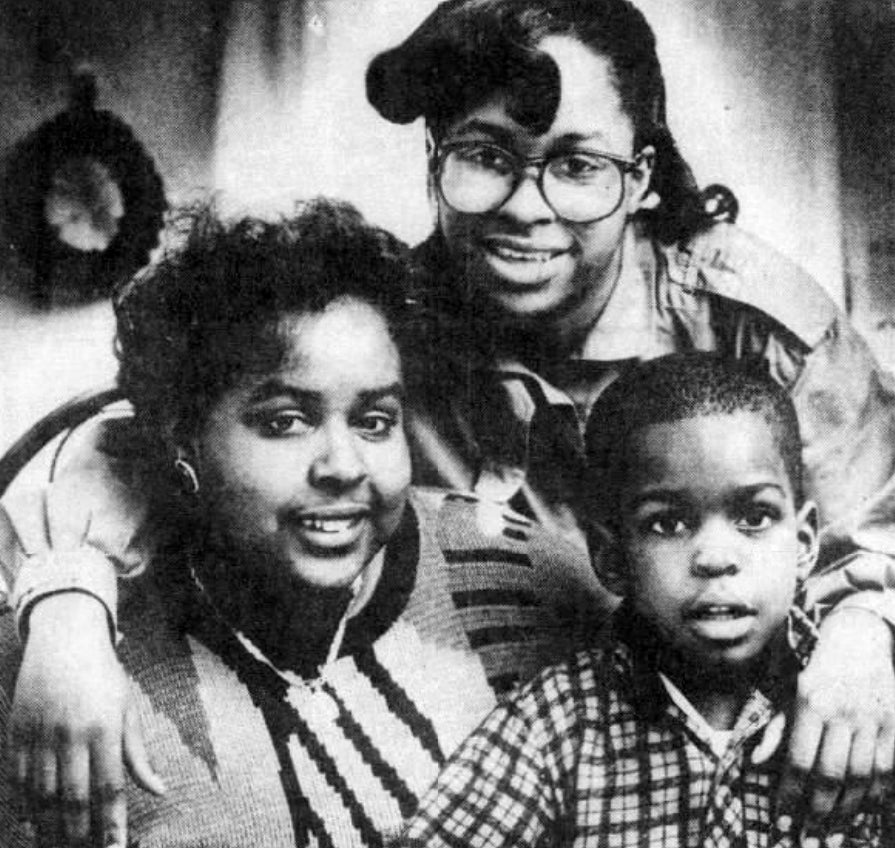
The Rev. Elizabeth Clinkscales, 72, said move-in day at the Mary Ellen McCormack public housing development on July 11, 1988, “was a circus. It was a zoo.”
It shaped up like an Allston Christmas: It was sweltering and chaotic that summer day.
Bessie Payne, 71, remembers the hallways being filthy.
Reporters wanted to talk to the two Black single mothers. Clinkscales recalls one of them remarking: “‘Wow! You’ve got nice furniture.’”
Boston officials were watching.
Payne said it was comforting that the city assigned the two 35-year-olds private detectives for their protection. Cathy Flynn, wife of then-Mayor Raymond L. Flynn, helped Clinkscales haul her personal belongings up the stairs, she said.
And the neighbors were watching, too.
Clinkscales tailed police and a moving truck steering into the South Boston development. Tenants — who’d later loyally preserve the parking spot of Clinkscales’s daughter— lined the road and made racist gestures toward the caravan, she said.
“Honestly, I wasn’t fearful,” Clinkscales said, “but I was sorrowful — for both them and myself.”
More than 35 years have passed since Clinkscale and Payne became the first Black tenants in nearly a decade to move into McCormack after a settlement ordered the desegregation of the city’s public housing developments.
The two mothers told The Boston Globe at the time that they didn’t view their move as courageous.
“I’m not here to be a celebrity,” Clinkscales said in 1988. “All I am here to do is to raise a family, to stabilize my life and go forth for a more promising future.”
Now the ordained First Baptist pastor told Boston.com, “I think I accomplished it.”
“I think I raised my family,” Clinkscales said. “I’m a first generation graduate: college grad. And I have never looked back. I’m always looking forward.”
Payne’s daughter, Dadizi R. Poles, who moved in on her ninth birthday, said she’s proud of her family’s move.
“And I definitely think that my peers who I interacted with … that they have learned something from us,” she said.
Clinkscales’s daughter, Anjanette, attended elementary school amid the violence that followed a 1974 ruling that Boston must desegregate its schools. She remembers people throwing rocks at her bus, she said, “and I didn’t understand why.” Her mother recalls getting run out of her brothers’ football game in South Boston, years prior to their move into McCormack.
The complex was among those that used a site-specific waiting list, said Nadine Cohen, part of what was then called the Lawyers Committee for Civil Rights. People of color had to wait nine months longer than white tenants for housing, she said. Tenants of color were discouraged from applying for public housing in South Boston, East Boston, and Charlestown, according to the Fair Housing Center of Greater Boston.
Cohen and the committee — now called Lawyers for Civil Rights — took up a class-action lawsuit on behalf of the NAACP, alleging that the housing authority maintained segregated housing. The two parties settled, forcing the authority to integrate its white housing developments and compensate applicants discouraged by its practices, according to the nonprofit housing center.
“We really thought if we could desegregate public housing in areas like South Boston and Charlestown and East Boston, it would pave the way for desegregating private housing,” Cohen said. She pointed out the complaint filed this month against 20 landlords and real estate agents that alleges discrimination against prospective low-income renters.
As part of the 1988 settlement, Cohen said, the housing authority was forced to set up a civil rights division. A follow-up complaint alleged it wasn’t doing enough to protect the tenants of color who moved in — some who faced disturbing harassment, Cohen said.
“I distinctly remember, you know, one tenant who had young children, and the kids tied their hands behind their back and put firecrackers in their pockets,” Cohen said. “And the kids were scared to death.”
For Payne, the memory of the filthy hallways that July day sticks out. After she moved into her second-floor, three-bedroom apartment on the opposite side of the development from Clinkscales’s place, she said she grabbed cleaning supplies.
“We started from the top to the bottom and cleaned that whole hallway,” Payne said. “We had to do it a few times for them to get the message.”
Payne said nobody really gave her issues that day. But the white children, said Poles, 44, were more vocal, questioning things like her Black Barbie doll. Going to school in Wellesley through METCO, she said, prepared her for the move.
Anjanette Clinkscales, who was 19 at the time, moved into the development with her mother and son, Jahman, after graduating from English High School with honors, she said. There she was part of a basketball team that won back-to-back state championships. At McCormack, she headed to the court.
“When you’re on the court, it shouldn’t matter the color of your skin,” said Anjanette Clinkscales, now 54. “But there was one player that just wouldn’t play because of the color of my skin, wouldn’t put me on his team. And then the other guys was like: ‘She used to play for English … she was a good ballplayer.”
The Rev. Elizabeth Clinkscales said she received similar treatment. Clinkscales recalls a neighbor across the hall who “looked at me and he actually screamed” when he saw her move in. “Well, I looked back at him and screamed,” she said.
She never expected that she’d live in public housing. Before moving to McCormack, she had experienced medical issues and left her job. She was still keeping up with her rent payments, she said, but her landlord sold the home and she had to move.
“To be honest, all I was concerned about at that time was having a roof over our heads,” Clinkscales said. “That was the primary goal.”
At McCormack, she said, she experienced name-calling and thinks someone broke her car mirror. After that, she threw on a hot-pink jumpsuit and walked the entire development.
“I said, ‘You know, my car hasn’t done anything,’” she said. “If you want me, here I am,’” Clinkscales said. “And people said, ‘She’s crazy.’”
But after that, the grandmother said, her neighbors became very protective of the family.
The basketball player who didn’t want to play with Anjanette apologized after he tried to cover her on defense and realized how good she was, she said, and the guys started giving her rides home late at night.
At Christmas, Clinkscales said, her neighbors across the hall brought over cookies. And the same neighbors who made racist gestures at her when she moved in shooed away people who tried to claim her daughter’s parking spot.
“I was able to, in my opinion, change the attitude,” Clinkscales said. “And we realized, we were all just human beings, and we were all there for the same purpose: Put a roof over our head.”
Payne, who lived at McCormack with her son, Kimani, said she moved out after about five years to stay with her sick mother. Around that time, she attended a property management program and landed a gig with John M. Corcoran & Co. after a successful internship.
Clinkscales also moved out after five years, to a town house in Jamaica Plain. Her health improved and she landed a job at another public housing complex.
“Let me move and allow somebody else to come in,” Clinkscales said, relating her attitude at the time. “That’s what I think it’s there for.”
Clinkscales grew up in the South, where her mother, who was spiritual, taught her, “’Go in the back door and do not harbor hate.’” Her family’s also interracial, she said, so the move into the all-white development felt like no big deal, even though she knew her family’s safety was at stake.
On a recent Saturday, Clinkscales spoke about her time at the development and what came after. Dictionary-sized books sat on the living room table in her apartment that overlooks the hills in a northern suburb of Worcester. The stacks, she said, are her preaching resources.
“If you’re really doing your Godly duty, you’re not just pulling things together,” said Clinkscales, now the interim pastor at the First Baptist Church of North Oxford. “You have to do a lot of research, because you never know who’s in your audience.”
The audience at the First Baptist Church in Westwood, she said, was all white. After graduating from Andover Newton theological school, she got ordained in the church located in the wealthy suburb of Boston.
“So, had I not had that experience in South Boston,” Clinkscales said, “it wouldn’t have shaped how I met that challenge.”
Although Clinkscales comes from a family involved in the church, Anjanette said she “was like, ‘Huh?’,” when she found out her mother was heading into the ministry. The preacher, she said, is her superhero.
“Whatever she can do,” Anjanette said, “I know I can do.”
And Clinkscales has done a lot. After moving out of McCormack, she got a bachelor’s degree in sociology with a concentration in social services from UMass Dartmouth. She spent time as a teacher’s aid and, on Dec. 21, retired from a career as a behavioral health counselor at Community Healthlink in Worcester.
Payne, now 71, said she’s been retired for four years after spending more than a quarter of a decade with Corcoran.
Awards marking Payne’s anniversaries at the company line a wall of her Allston apartment, where she’s lived for almost a year. As a property manager, she handled inspections, recertifications, and tenant complaints. Her time at McCormack — where the heat was kept high around the clock and a window popped out during a storm — led her to approach her gig with a different lens, she said.
“It taught me how to accept people of all races and to be patient,” Payne said.
During move-in, Clinkscales said, reporters expressed shocked at her articulateness and status as a high school graduate. They made comments about the quality of her furniture, she said.
“But I said, ‘Oh, so you expected me to have pee-stained mattresses,’ because it’s that stigmatism,” she said.
When reporters returned for the first anniversary of their move, Clinkscales said, there was no story to tell. Nobody was fighting, she said, and there was no name-calling. One white grandmother there commented that the two were just alike, she said.
“And so we found, just by talking to one another, we had more in common than just everyday people,” she said.
She said it’s outrageous that it took a federal lawsuit for the housing authority to house people in need.
Cohen, the lawyer, called the case one of the most important in her career.
“And I think it resulted in change — not as great a change as we hoped — but I think it was really important in changing the atmosphere in Boston,” Cohen said.
Clinkscales said she accomplished what she set out to do at McCormack: stabilize her family. She’s proud to say, “That’s where I was, and this is where I am today.”
“I continuously looked to improve my life, myself, and my family,” Clinkscales said.
Get the latest news on buying, selling, renting, home design, and more.