
Address Newsletter
Our weekly digest on buying, selling, and design, with expert advice and insider neighborhood knowledge.

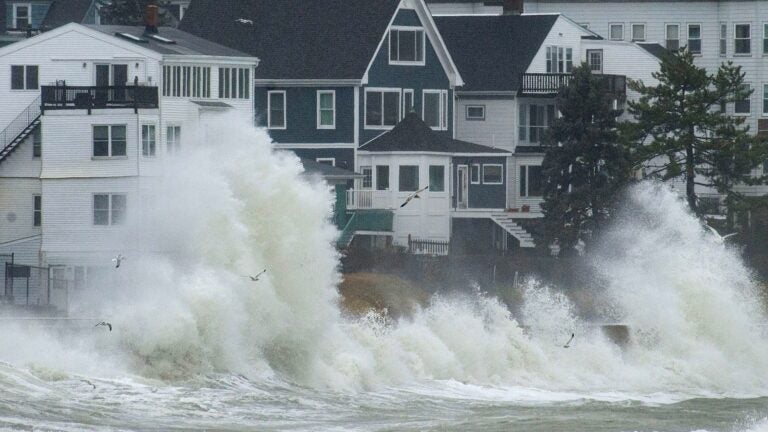
With climate change increasing the frequency and intensity of natural disasters, you might wonder what would happen to your mortgage payments if your home is destroyed.
In October, Hurricane Helene barreled across several states, causing $53 billion in damage and recovery needs in North Carolina alone, according to the governor’s office. The storm destroyed more than 100,000 homes and affected some 200,000 people in the state, ABC News 13 reported.
What happens to your mortgage when disaster strikes, and how can you protect yourself?
Experts from the mortgage industry spoke with Boston.com on the topic.
Jeff Ostrowski, a mortgage expert at personal finance site Bankrate, said the first call should be to your insurer.
“The mortgage companies have sort of offloaded the responsibility for the risk onto the insurance companies … if there’s a disaster that destroys the house, you should theoretically get enough proceeds from your carrier to pay off the mortgage,” he said.
Homeowners insurance is “the biggest pot of money available to homeowners,” Ostrowski said, but if there is a significant amount of damage to the property, the owner should not have to make mortgage payments.
Ostrowski explained that if you have a mortgage, your lender requires you to have homeowners insurance. Depending on where you live, you may be required to carry additional flood or windstorm insurance.
The only way to cover flood risk is through the National Flood Insurance Program. So, if your house is in a high-risk flood zone, as determined by the Federal Emergency Management Agency, you will need flood insurance in order to be covered.
The other relief option is forbearance, which is when the lender works with the borrower to stop payments for a certain period of time. “Forbearance would be sort of a case-by-case negotiation with your mortgage servicer,” Ostrowski said.
“The good news about flood insurance is, if you’re not in a high-risk flood zone, it’s pretty inexpensive,” Ostrowski said.
Rick Scherer, chief strategy officer at NewFed Mortgage Corp., a Boston-based provider, said homeowners should call their mortgage servicer first.
Typically, mortgage companies modify the loan in a way that will delay the payments for a certain period of time, but it depends on the situation and what kind of help is needed.
“Let’s say their home was involved in a tornado or it just leveled the house, then the mortgage doesn’t go away, but there are things that you can do to delay mortgage payments … until the insurance kicks in and rebuilds the home,” Scherer said.
He said the decision ultimately comes down to the servicer. There are guidelines from the Federal National Mortgage Association, known as “Fannie Mae,” and the Federal Home Loan Mortgage Corporation, or “Freddie Mac.”
According to Chapter 8408 of the Freddie Mac guidelines, for example, if a disaster affects a mortgage tied to this organization, the servicer must comply with the insurance claim process; inspect the property; provide local, state, and federal disaster assistance; and monitor and coordinate the insurance claim process and repairs.
Our weekly digest on buying, selling, and design, with expert advice and insider neighborhood knowledge.





To comment, please create a screen name in your profile
To comment, please verify your email address
Conversation
This discussion has ended. Please join elsewhere on Boston.com