
Sheets: You’ve got to know when to fold ’em … How to make your bed
Slipping into a well-made bed is a reward at the end of a long day. Experts weigh in on the perfect slumber space.
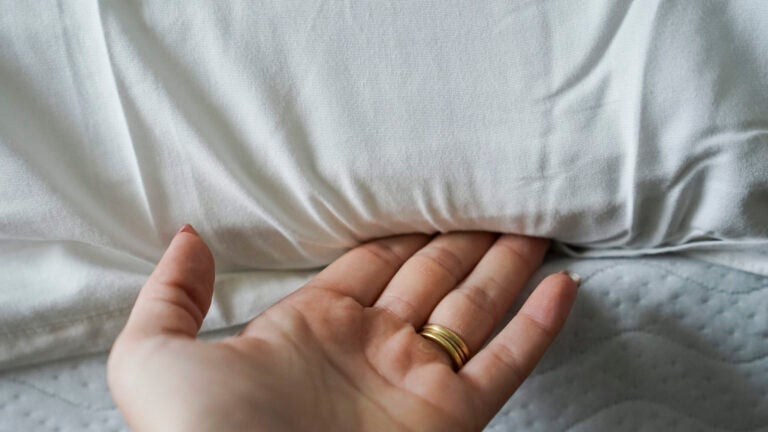
Slipping into a well-made bed is a reward at the end of a long day.
But many of us give more thought to constructing a great sandwich than to layering the right components for a bed that is comfy and cozy, that looks stylish and inviting — and that doesn’t have the sheets all scrunched up at the bottom.
Yes, some people seem to be able to fall asleep on anything. “But most of us need a comfortable setup, and bedding is so important in getting a good night’s sleep,’’ said Keith Cushner, product expert at Sleepfoundation.org. “If you are uncomfortable, you just won’t sleep well.’’
We asked three experts — a bedding designer, a cleaning expert, and an interior designer — to weigh in on setting up and maintaining a stylish, comfortable bed.
The basics
Do you know how to make your bed? Melissa Homer, chief cleaning officer at MaidPro, offered the following tips to help you get your sheets, pillows, and blankets just right.
Start with the fitted sheet, hooking the pockets as far as they will go over each corner of the mattress, beginning in the most difficult corner to reach if the bed is pushed against walls. Then lay out the top sheet — if you still use one — with the patterned/finished side facing down, because it will give things a more finished look when you fold back the sheet.
If you like to add blankets, lay them on top of the sheet, then fold back the top of the sheet 6 to 8 inches and tuck it tightly under the mattress on three sides. Spread your comforter, duvet, or bedspread over the bed and smooth it out.
Put pillows in pillowcases and fluff and smooth them. If you just have sleeping pillows, place them flat at the top of the bed. If you have decorative pillows, place the sleeping pillows upright and layer the decorative pillows in front, from largest to smallest, in a symmetrical, centered pattern.
Homer said you can get away with washing sheets twice a month — unless you are someone who sweats a lot, eats in bed, or has pets. In that case, go for weekly washing. “Modern detergents are designed to get you excellent results in cold water, but the ideal temperature is warm,’’ she said. Always read the washing instructions before you buy. “If you have … pets or children, do not buy anything for your bed that can’t go into the washing machine,’’ Homer said.
Spring for new mattress covers when you get a new mattress or if yours show signs of wear. “It’s the number one step to make sure your investment lasts as long as possible,’’ Homer said. Find one that protects against bedbugs, allergens, vomit, spills from drinking or snacking in bed, and child accidents. She recommends encasement covers, which shield the mattress. “They used to be rubbery and noisy, but now they feel like nothing,’’ she said. She likes the SureGuard mattress encasement ($49.97 for queen-size beds, Amazon) for both mattress and box spring. (Yes, it’s a good idea to also cover your box spring if you have one.)
Wash poly-fill pillows every six to 12 months, Homer said, and use dryer balls. “Dryer balls gently whack into the bedding as it tumbles, breaking apart clumps of down and stuffing, so they dry fluffy instead of lumpy,’’ she said. Follow the manufacturer’s instructions on cleaning for memory foam, down, and other specialty pillows, because some can be only spot-cleaned. Don’t forget to wash pillow protectors, too, Homer said, such as waterproof ones by SureGuard ($27.97 a pair, Amazon).
If you struggle with a messy bed every morning and love tightly tucked sheets, Homer suggested using mattress suspenders (RayTour bedsheet straps $9.96, Amazon), which clip under your mattress and can anchor multiple layers of bedding at once.
Fun fact: You don’t have to make your bed as soon as you get up. In fact, it’s better not to. “Turn down your bed in the morning, and make your bed after breakfast,’’ Homer said. “Give your bed a chance to air out. Open your blinds for the sunshine to come in.’’ Let moisture from sweat dry out. “This will reduce allergens and dust mite colonies and won’t make your bed into a breeding ground for things that don’t make it smell so fresh,’’ she added.
Bedding building blocks
“It’s so important that people spend the time and energy to think about how to create and invest in a comfortable sleep experience,’’ said Ariel Kaye, founder and chief executive of Parachute, maker of stylish sheets, quilts, duvet covers, and other bedroom essentials. “You will spend a third of your life in bed.’’
After a mattress, pillows are the most important element in building a dreamy place to sleep. There are many varieties, including down, down alternative, memory foam, polyfill, and buckwheat. Some unzip, so you can adjust the level of fill to your comfort level. Many pillows are marked for firmness, density, or “loft.’’ Standard-size bed pillows (20 by 26 inches) are the typical choice; for a king-size bed, you might want a longer pillow (20 by 36 inches).
Kaye said she is a “maximalist’’ and likes to have one medium pillow and one firm. “Then I can layer them depending on what position I end up sleeping in,’’ she said. Side sleepers usually like a firmer and higher style to help them take the strain off their head, neck, and back. Stomach sleepers might prefer a thinner version. “A super-plump pillow forces a stomach sleeper’s head into a pinched angle,’’ Kaye said. She likes to add 26-inch European square pillows either in front of or behind sleeping pillows. “They add a nice polished look and are functional for reading, watching TV, or working in bed,’’ she said.
Start with two sets of sheets, so you have one for the bed while the other is in the wash. Kaye likes the classic choice, percale, which she said has “more of a cool-hand feel.’’ The Parachute line also includes brushed cotton, which feels “worn in like a T-shirt’’; a smooth sateen with a warmer feel; and linen, which is heavier but still breathable. Kaye said thread counts are often just marketing gimmicks. “Anything over 400 is really not necessary’’ she said.
Styling a well-dressed bed
Dressing up your bed is a lot like dressing up yourself, said Melissa Sanabria, founder of D.C. design firm Sanabria & Co. Layering is key. The price of layers adds up, though, so when you choose bedding, you may have to start with the basics, then add decorative elements, such as throws, shams, and quilts, over time.
“When I was a broke college student, I always invested in the best sheets I could afford, as that is the first layer that touches your skin,’’ Sanabria said. For the top layer, she prefers duvets, which can be changed up with new covers. She recommends neutrals such as white or tan for duvets or blankets, and she adds various colors and textures with accessories.
When it comes to pillows, don’t go overboard. On a queen-size bed, Sanabria starts with two sleeping pillows, then two pillows with coordinating shams. Add two decorative square pillows, such as Crate and Barrel’s Eyelash pillow covers ($29.95) or West Elm’s Cotton Linen & Velvet Corners cover ($42.50). Buy pillow inserts that are at least 1 inch larger than the covers, so you get a really full look, she said.
Sanabria recommended finishing the top of the bed with a “nice, long, skinny lumbar pillow’’ that you center between the two decorative square pillows.
“The lumbar pillow gives you some visual interest and is also good if you are reading and need additional support. I use mine a lot to prop up my computer,’’ Sanabria said. She likes this Hearth & Hand color-block version from Target ($29.99) or the Icelandic shorn sheepskin pillow from CB2 ($139).
The final touch is a blanket, bedspread, or quilt for the foot of the bed. Avoid ones that are marked “throw,’’ because they will be too small and won’t drape across the entire end of the bed, Sanabria said, or even cover your feet when you pull it up to take a nap.
Subscribe to our free real estate newsletter at pages.email.bostonglobe.com/AddressSignUp. Follow us on Facebook, LinkedIn, Instagram, and Twitter @globehomes.





To comment, please create a screen name in your profile
To comment, please verify your email address
Conversation
This discussion has ended. Please join elsewhere on Boston.com