
Ask the Gardener: These ground covers can be water-guzzling killers
Carol Stocker digs into readers' questions about a browning Mugo pine and the invasive black swallow-wort. Get more expert advice at realestate.boston.com.
What to do this week Now garden chores narrow down to mostly watering, weeding, and harvesting. Pinch herbs to keep them from flowering. Harvest summer squash and zucchini at 5 inches, and pick beans as soon as the seeds fill the pods to keep them all producing. Thin squash blossoms and stir-fry them. Fertilize roses and other woody plants for the last time so they can start ratcheting down for winter dormancy. Remove spent flowers on annuals to promote reblooming and on perennials for future vigor as well as neatness.
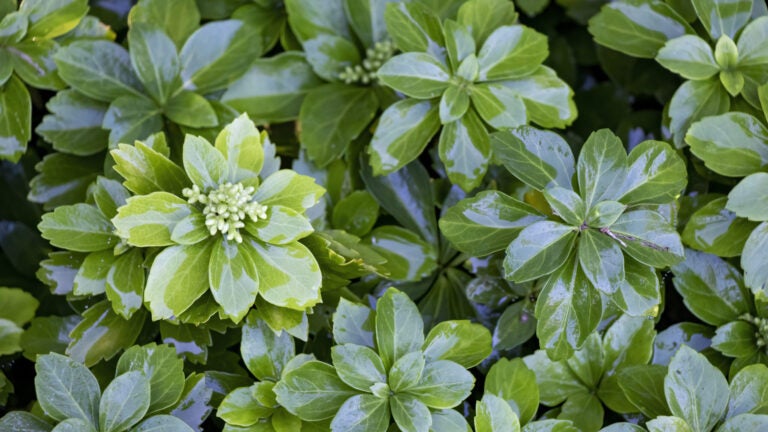
Q. My 15-year-old Mugo pine seems to be losing its internal greenery, with just the top showing green needles. I planted the pine and pachysandra at the same time. Could the aggressive pachysandra account for my Mugo pine appearing to dry out?
L.K., Acton
A. Yes. There was a battle for moisture, and your dwarf pine lost. I would throw it on the burn pile and leave the field of victory to the pachysandra. As our climate gets hotter and drier, cover the roots of trees and shrubs with moisture-retaining bark mulch instead of those old-fashioned, moisture-sucking ground covers that landscapers used to plant by the millions for a tidy appearance. However, if you already have periwinkle, ivy, lily-of-the-valley, or pachysandra ground covers, they may prove too tenacious to remove. Just don’t plant more.

Q. I’m at the end of my rope trying to control black swallow-wort, which seems to have taken over my entire yard. I don’t want to use pesticides, but spraying them with horticultural vinegar doesn’t work and trying to yank up all the plants is exhausting. I’ve reached out to experts who said to use anything with glyphosate. Do you have a suggestion?
N.J., Dorchester
A. This very bad invasive can totally take over woodlands or even your backyard because (like garlic mustard) it exudes chemicals that keep other plants from growing. It can appear out of nowhere because it is a milkweed relative whose seeds float on the wind. Monarch butterflies are fooled and lay their eggs on this toxic plant, and then it kills their caterpillars. So learn to recognize this evil-looking (3- to 7-foot) twining vine with glossy, dark green pointed leaves. Dig out the entire crown before it gets established. Its tiny flowers are five-pointed stars, sometimes pink but usually eggplant purple. Mowing several times a season can prevent seed production, but it won’t kill the plants. Clean all of your machinery afterward and stay out of patches dispersing seed. Systemic herbicides (which kill plants instead of insects, so they are not insecticides) such as glyphosate or triclopyr have been found effective in controlling swallow-wort with a single spraying between June and August, after flowering has begun and before seed pods form. Don’t spray a second time in the same season because sickened plants cannot effectively absorb more herbicide. I sparingly sprayed a small black swallow-wort infestation in my yard several years ago with glyphosate. I sprayed it a second time the following summer when it was blooming again, and it hasn’t returned. Don’t apply glyphosate near water bodies, and use it only sparingly. Visit http://nyis.info/invasive_species/swallow-wort/ for more information.





To comment, please create a screen name in your profile
To comment, please verify your email address
Conversation
This discussion has ended. Please join elsewhere on Boston.com