
Ask the Gardener: These trees can take the heat of climate change
Award-winning garden writer Carol Stocker takes readers' questions and offers ideas for climate-hardy trees. Get more expert advice at realestate.boston.com.
What to do this week: This is a good month to plant winter crops, lawns, cold-hardy woody plants, perennials, and bulbs. Don’t prune or fertilize trees or shrubs until their leaves begin to change color. Remove flower blossoms from tomato plants to encourage ripening. Dig potatoes after the tops have died down. Sow seeds of biennials such as poppies and forget-me-nots. Pull weeds before they go to seed, but do not compost them.
Q. What are some street trees to plant for the long haul in view of the changing climate?
D.S., Milton
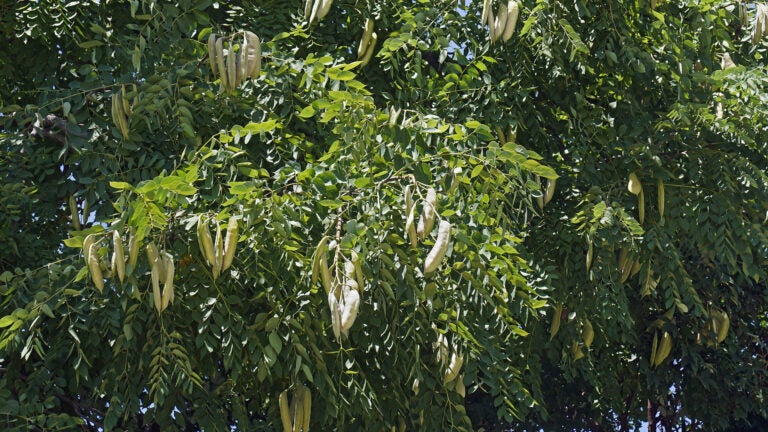
A. This is the best month to plant trees, which are our first line of defense against the heat waves of the future. But what species can best survive future weather extremes? John DelRosso, head arborist at Harvard’s Arnold Arboretum in Jamaica Plain, put together a list for me of drought-tolerant trees that have proved themselves there and are not usually bothered by some of the more common pests and diseases. His list includes the following medium native street trees: thornless honeylocust (Gleditsia triacanthos inermis), hackberry (Celtis occidentalis), Kentucky coffeetree (Gymnocladus dioicus), and northern catalpa (Catalpa speciosa). For large native shade trees, he suggested: cucumber tree (magnolia acuminata), northern red oak (Quercus rubra), and black oak (Quercus velutina). For front-yard native ornamental flowering and fruiting trees, he suggested: American holly (Ilex opaca), Eastern redbud (Cercis canadensis), Hawthorne (Crataegus macrosperma), and beach plum (Prunus maritima).
Q. I live in Vermont and want to visit a friend who lives in Boston. It is a long drive, however, and neither of us are letting people inside our homes yet. Can you suggest a public garden where we could meet halfway?
K.Z., Woodstock, Vt.
A. I found three possibilities about two hours or less from each of you. Mason, N.H., is home to Pickity Place, a picturesque and historic outdoor restaurant and nursery (603-878-1151; pickityplace.com). I enjoyed a five-course lunch with beef chimichurri in a beautiful large herb garden last week, then bought some mint plants to take home. Tarbin Gardens (603-934-3518; tarbingardens.com) in Franklin, N.H., has 5 acres of gardens and serves cream teas. There are about nine public and private garden destinations in and around Portsmouth, N.H., including a highly artistic 37-acre sculpture garden in Lee called Bedrock Gardens (603-659-2993; bedrockgardens.org). I also recommend the book “The Garden Tourist’s New England: A Guide to 140 Outstanding Gardens and Nurseries,’’ ($24.95 from enchantedgardensdesign.com) by Jana Milbocker, for more outdoor destinations for stir-crazy plant lovers.
Send questions and comments, along with your name/initials and community to [email protected] for possible publication. Subscribe to our newsletter at pages.email.bostonglobe.com/AddressSignUp. Follow us on Facebook and Twitter @globehomes.





To comment, please create a screen name in your profile
To comment, please verify your email address
Conversation
This discussion has ended. Please join elsewhere on Boston.com