
Ask the Gardener: Tips for more peony blooms
Ask the Gardener’s Carol Stocker talks about bolstering flower production, climate change, and the dreaded Japanese beetle.
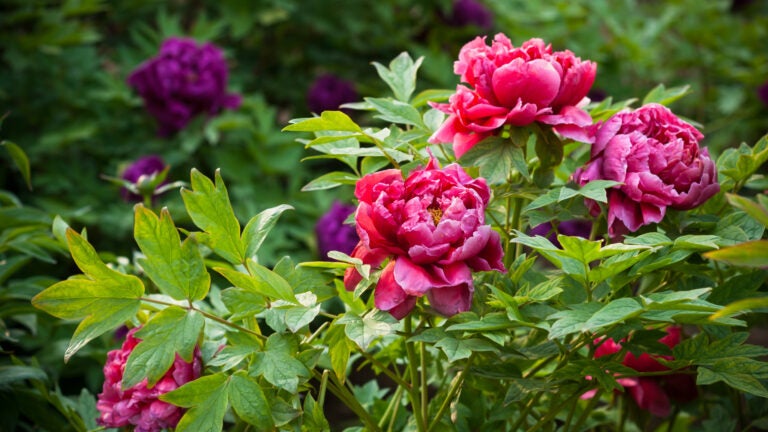
What to do this week: It has certainly been rainy. And the long-term forecast for New England is . . . more rain. My garden is not complaining that we have become the new Oregon coast. It beats the heat waves, droughts, and forest fires other parts of the country endure. On June 22, I attended the glorious Newport Flower Show. It was the best ever — that is until the show’s intricate outdoor garden displays were hit with a sudden, violent hailstorm. That’s not global warming, that’s “global weirding.’’ Anyway, this week you should finish harvesting beets, broccoli, kale, spinach, and lettuce. Also, transplant flowering annuals, culinary herbs, cucumber, cabbage, Brussels sprouts, tomato, squash, and onion. Cut back phlox, aster, and perennial mums by a third. Divide overcrowded bearded iris.
Q. Why did some of my peony buds dry up?
JGD, Needham
A. I see from the photo you sent that some buds did expand into big, juicy blooms, while others stayed tiny and dry. This is normal, since a lot of plants start more buds than they have the energy to complete. I don’t see any sign of disease. Botrytis blight sometimes turns buds and stems black in humid wet weather like we’ve had. When that happens, cut all of the blackened stems to the ground and sterilize the clippers with alcohol-soaked rags or prep pads so you don’t spread the fungus. How can you increase your peony’s blooms in the future? If it’s in the shade, dig it up and move it to full sun, planting it so the root tops are covered only with an inch of soil. Pinch off those small deadbeat buds around Memorial Day next year so the ones that are expanding nicely have a better chance to bloom.
Q. We have a Japanese beetle problem that starts every July. They love my grapes and blueberry bushes. I don’t want to use pesticides, so I end up picking them off daily. Is there something that I can do now — a preventive measure — that will get rid of them? I tried traps years ago and regretted it; it just attracted more.
S. M., Westminster
A. Pheromone traps can increase your beetle population. Zappers are even worse, not only attracting your neighbor’s insects, but killing mostly beneficials, like the predatory wasps that eat Japanese beetles. I hate this idea that the only good insect is a dead insect. That’s like saying: “Let’s kill all the krill in the ocean.’’ Soon you’ve got dead blue whales, which depend on the tiny sea creatures for food, and starving polar bears — like the Russian one photographed wandering through downtown traffic in Norilsk last week looking for food — who dine on the fish that eat krill. Similarly, insects are the foundation of nature’s food chain on dry land. If you kill them all, you get starving birds. When I was in Canada last week, I saw dead bugs on my windshield. That’s something I no longer see in the United States, where the biomass of our insects has dropped dramatically, thanks to all the spraying. And most commercial sprays used on Japanese beetles attack their nervous systems. Guess who else has a nervous system? You and me.
So how do you target Japanese beetles selectively? I commend your hand-picking. It is really the best way to go, because these are slow-moving insects that feed in handy clusters. And Japanese beetles are social, always looking to join their buddies. So if you pick them all off, new ones will stop coming, hopefully. Put down a dropcloth, and you can just shake them off in the morning, when they are especially slow, and slide them all into a pail of soapy water (one teaspoon per quart of water) to drown. Dump them on your lawn to feed the birds.
If you have the dead patches of lawn that signal immature Japanese beetle grubs are feeding on your grass roots, dump soapy water along the line where the live and dead grass meet to drive the grubs to the surface, where birds can eat them, too. Red cardinals relish Japanese beetles and their grubs even more than sunflower seeds. You can also cover crops with row covers now for the next eight weeks, or plant chive and garlic under your grapes and blueberries to repel the beetles.
Send questions and comments, along with your name/initials and community to [email protected] for possible publication. Subscribe to our newsletter at pages.email.bostonglobe.com/AddressSignUp. Follow us on Facebook and Twitter @globehomes.





To comment, please create a screen name in your profile
To comment, please verify your email address
Conversation
This discussion has ended. Please join elsewhere on Boston.com