
Anxious about the midterm elections? 10 design tips for a calmer home
From ideal lighting to the best colors, these designers offer tips that check all the right boxes.
With the midterm elections fast approaching, even your home — which should be an escape — can feel stressful.
Luckily, a sense of relaxation can be created with design elements that resemble a peaceful experience, said Boston-based designer Lisa Tharp. “Find inspiration from a time or a place where you felt very calm, and try to think back to any specific characteristics about that environment that supported that feeling,” Tharp said.
The right lighting, color, and texture can make a living space feel soothing — which Newton designer Erin Gates considers a priority.
“Especially these days, it’s essential,” Gates said. “I find myself also wanting to make my house feel safer, cozier, and more like a place that I feel super-relaxed.”
Whether you need a change in your space to ease Election Day angst or everyday stress, here are 10 tips from Boston-area interior designers on how to make your home feel more calming:
1. Get organized.
Function within a house is important for overall well-being, Tharp said. “If there’s a place to put the mail, instead of the pile that’s stacking up on the coffee table, spend five minutes trying to improve one functional aspect of your home [each day],” she said. Concord-based designer Barbara Elza Hirsch recommends starting a routine that keeps you organized, even if it’s as simple as making your bed. “Some people hate this idea, but there’s something about feeling in control by just making your bed in the morning,” Hirsch said.
2. Feature your favorite objects.
Bringing attention to the things that make us feel good is worth it, Tharp said. “If you make a space, give [the object] breathing room,” she said. “If you have a cluttered shelf and a beautiful sculpture that’s meaningful to you, just clear the shelf and give that sculpture pride of place.” Directing a spotlight to that object will also draw the eye to it and take the mind somewhere pleasant, she said.
3. Create a mix of lighting.
All of the designers agreed that a variety of lighting at different access points is more calming than primarily overhead lighting. Sconces and floor and table lamps are options to mix things up. Boston-based designer Nikki Dalrymple said thinking about not only what type of lighting to use, but also the bulbs is important. “Create mood lighting for the type of environment that you’re looking for,” Dalrymple said.
4. Pale, washed out colors are best.
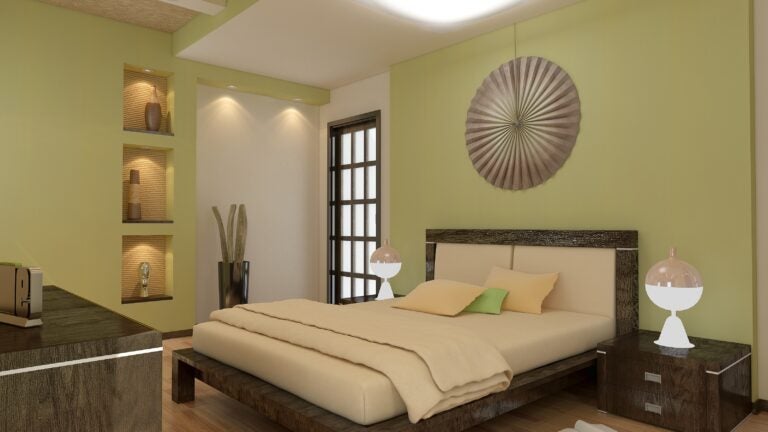
What one person may find calming, another person may not. However, Hirsch said, colors found in nature such as whites, blues, greens, and grays can induce a calming sensation. Gates said a light blush also does the trick. “Everybody is different and reacts to color differently, but I find that particularly bright colors tend to be more stimulating to the brain,” Gates said. “Paler, cooler colors tend to be more soothing.”
5. Repeat colors throughout the home.
If you repeat three or four colors in a room, there is a sense of cohesion and continuity that is restful to the eye, Hirsch said. “One of the worst things people can do is not take that into consideration when they’re decorating, especially in today’s open floor plans.”
6. Add drapery and wall fabric.
To make a space more serene with an added benefit of privacy, Gates recommends introducing simple white or pale linen drapery. “Also having fabric traveling up the wall, and not just on the furniture, really softens a room,” she said.
7. Bring in pleasant textures.
“Most people are very tactile,” Dalrymple said. The designers recommend adding soft pillows and throws to make a couch feel cozier or putting wool or woven rugs on the floor to soften what is already in the home.
8. Incorporate greenery.
“A room never really looks finished without some sort of life, whether it’s flowers or plants, and it’s an instant fix,” Gates said. “Put something in a cute pot and put it on your side table, and you’ve got that little injection of greenery.” For a free and natural arrangement, Gates recommends picking up tree branches from the yard and putting them in a vase.
9. Try new art.
“You can never underestimate the power of art pieces to create a calming atmosphere,” Hirsch said. “A lot of people enjoy landscapes, oceans, abstract [pieces], and beautiful black-and-white photography.”
10. Limit technology use.
Having one device from which to control all of your home technology is ideal for decreasing time spent on technology, Dalrymple said. “Technology is a double-edged sword,” she said. “There’s a lot of technology that actually helps you eliminate some of the headaches of having too much technology in the space,” such as an iPad control system.
Here’s hoping for calmer days ahead.
Subscribe to the Globe’s free real estate newsletter — our weekly digest on buying, selling, and design — at pages.email.bostonglobe.com/AddressSignUp. Follow us on Facebook and Twitter @globehomes.





To comment, please create a screen name in your profile
To comment, please verify your email address
Conversation
This discussion has ended. Please join elsewhere on Boston.com