
Now’s the best time to stop those creepy vines
Ask the Gardener's Carol Stocker offers ideas on how to keep those pretty vines from strangling your trees. Get more gardening advice at realestate.boston.com.
What to do this week: Clip and poison tree strangling vines such as bittersweet (orange berries) and porcelain berry (turquoise-blue berries) by cutting them off at a height of about 3 feet. Immediately spray or dip the cut end of each vine that is still attached to the ground into glyphosate herbicide (such as Rodeo or Roundup) for a few seconds before the cut dries and seals. You want the vine to suck the poison down to the roots, which are particularly vulnerable to this herbicide now. Hand weeding only works on very young plants. Bittersweet seedlings have orange roots and the berries are spread by birds. And by decorators, too, so please don’t use bittersweet in fall arrangements!
Q: Love your column. I read about dissatisfaction with my favorite vine and I wondered what you meant by “unless you like weeding.’’ I’ve been growing a Dutchman’s pipe vine over my pergola for nearly 20 years without any weed problem — just lovely shade, beautiful natural arches of branches and leaves, and a torrent of flowers in the spring.
S.G., Roslindale
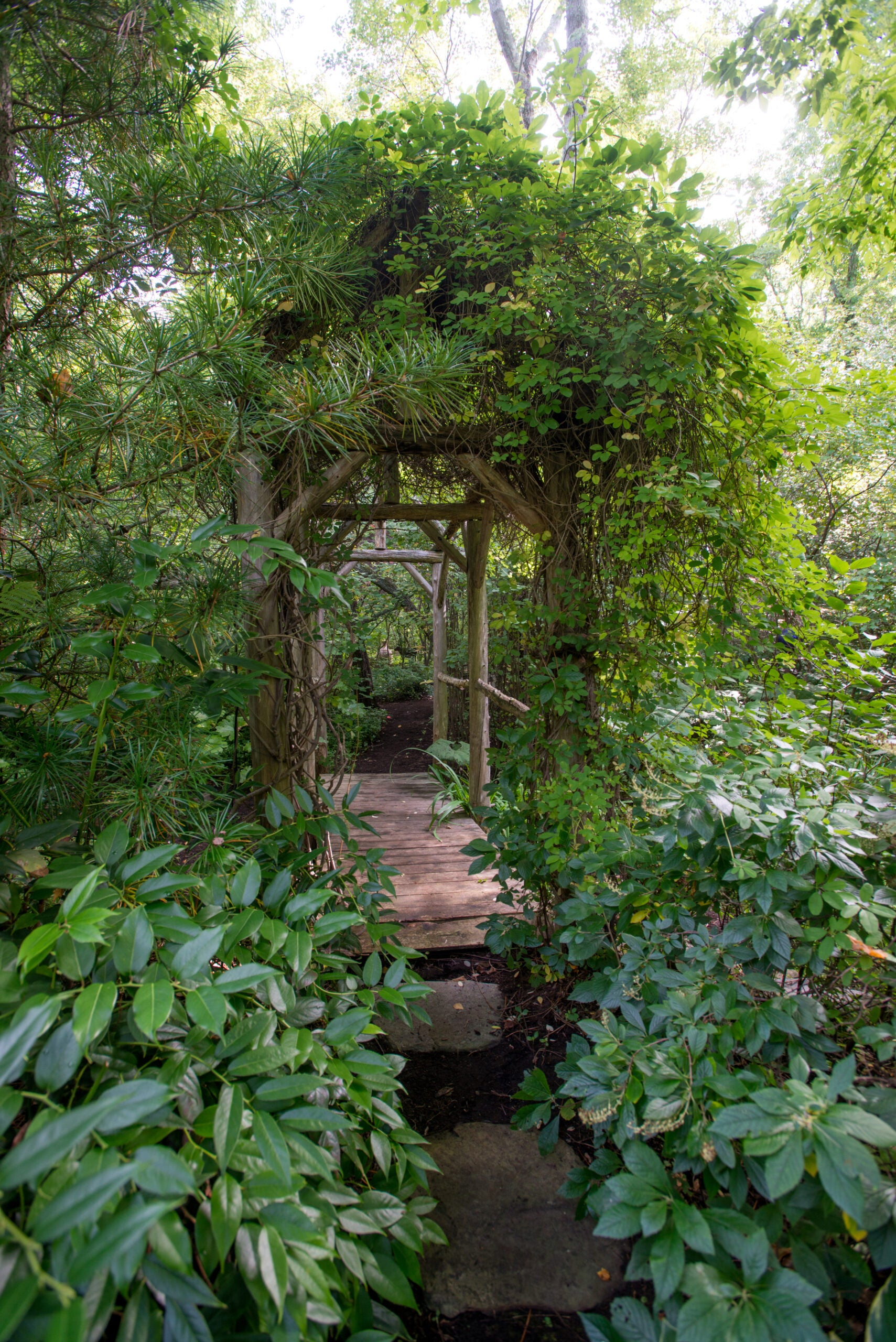
A: My DP (a.k.a. Aristolochia macrophylla) climbs my dahlias, hollyhocks, and tomato plants as well as my arbor. Maybe yours is in a more isolated location. Vines need to be off by themselves. They don’t mix well with others! However, this is indeed a great native vine for quick, dense coverage of a structure like a porch. The flowers are shaped like an old fashioned pipe (hence the name) but mostly hidden by the pretty heart-shaped foliage.
Q: If I fertilize only once, should I do it in October and what N-P-K (nitrogen, phosphorus, and potassium) amounts would you recommend and what can I expect?
Joe C.
A: Fertilize once between early September and early November. This late in the season, look for a fast release water soluble fertilizer. It is better to use too little than too much to prevent nutrient pollution from runoff, especially near the coast or in watersheds. A balanced 10-10-10 ratio of N-P-K is the industry standard, but if your lawn is thick it may need less nitrogen, and even if it is thin and weedy, don’t use more than a pound of actual nitrogen per 1,000 square feet of lawn. Organic fertilizers will have lower numbers. Fall fertilization exchanges slower greening up in the spring for an overall healthier lawn with stronger roots.
MassHort medals
Many of you have been reading me for a long time. On Thursday, in recognition of my almost four decades as a garden columnist at The Boston Globe, I was among the honorees at the Massachusetts Horticultural Society Honorary Medals Dinner, a 118-year-old tradition. I received the gold medal at the beautiful Elm Bank headquarters in Wellesley. So did MassHort’s former chair, Betsy Ridge Madsen, whose many contributions include helping preserve amateur horticulture at the Boston Flower & Garden Show.
Other recipients included Dale Deppe of Spring Meadow Nursery; holly specialist William Cannon of Brewster; Karen Perkins of Garden Vision Epimediums; educator Trish Wesley Umbrell of Natick Community Organic Farm; and well known author and editor Margaret Roach, the keynote speaker. Visit masshort.org.





To comment, please create a screen name in your profile
To comment, please verify your email address
Conversation
This discussion has ended. Please join elsewhere on Boston.com