
How to clean mossy roofs and sticky tables
Ask the Carpenter’s Rob Robillard discusses the pros and cons of power washing and varnish. For more home repair advice, go to realestate.boston.com.
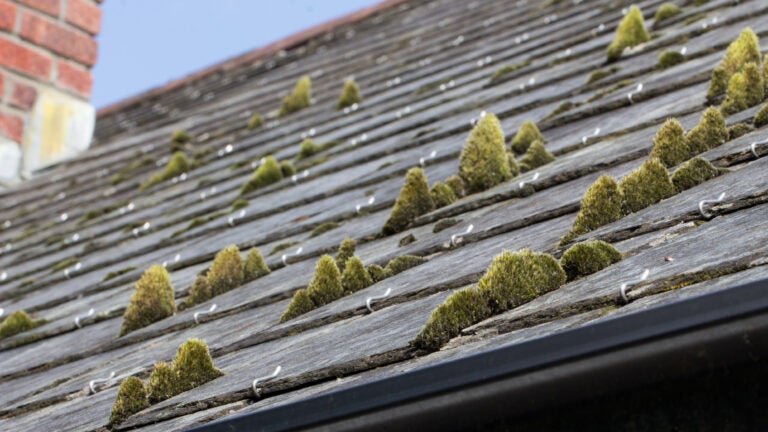
Q. I live in a very heavily shaded yard among lots of pine and oak trees. The top and front of my gambrel house roof has moss, which is heavy in some spots. Is it safe to have it power washed?
SUSAN GANNON
A. Roof stains are often attributed to an accumulation of dirt, defective shingles, mold, or mildew, but the most common culprit is actually blue-green algae known as Gloeocapsa magma that are spread via airborne spores.
The occasional cleaning might not harm your roof, but repeated use of harsh chemicals or the erosive effects of pressure washing can shorten the life of asphalt shingles. There are companies that will clean your roof. This is the safest route, because they have special lifts and equipment.
A note of caution: Moss and algae stains usually return. I would install zinc strips, which work well. When it rains, they release zinc ions, which kill the moss and coat the roof. Zinc strips can be installed at the top of the roof (below the ridge vent, cap, or the first row of shingles) and below any obstruction such as chimneys, skylights, dormers, etc. that block the natural flow of rainwater.
If you don’t want to install zinc strips, you should leave your roof alone until it is time to replace it. When you do, invest in a shingle that has a specially formulated granule that inhibits algae growth.
Q. My daughter purchased a pine dining room table at a consignment shop that is tacky to the touch. If I leave a piece of paper on the table, it sticks. Maybe the glossy finish has broken down? I would appreciate any suggestions on how to solve this problem.
NANNIE BEE

A. I agree; the problem probably stems from a failing finish. Drying oils in varnishes eventually destroy themselves, resulting in a sticky surface.
You can try cleaning the surface first with naphtha. It’s a highly flammable, oily liquid, so make sure you apply it in an area that is well ventilated, follow the manufacturer’s instructions, and dispose of the used rags outside. You could also apply a chemical stripper until you get to a surface that is not sticky, restain it, and then brush on polyurethane.
Rob Robillard is a general contractor, carpenter, editor of AConcordCarpenter.com, and principal of a carpentry and renovation business. Send your questions to [email protected] or tweet them to @robertrobillard. Subscribe to our free real estate newsletter at pages.email.bostonglobe.com/AddressSignUp.




To comment, please create a screen name in your profile
To comment, please verify your email address
Conversation
This discussion has ended. Please join elsewhere on Boston.com