
How to organize your closet and keep it that way
Even when a closet is carefully organized at the beginning, however, it might not take long for order to turn to chaos.
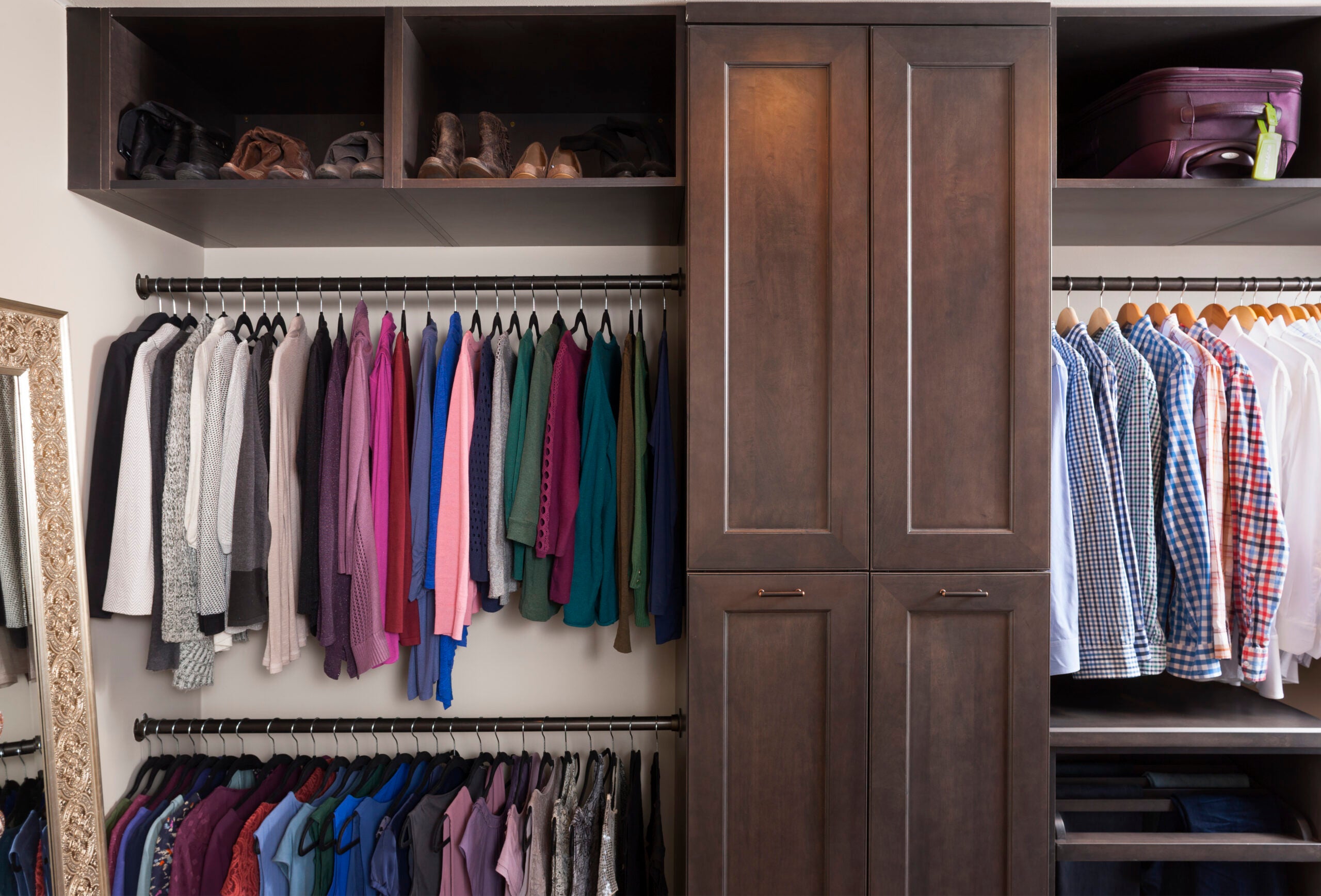
Most people don’t start out with a messy closet. Even when a closet is carefully organized at the beginning, however, it might not take long for order to turn to chaos.
‘‘It’s common for clients to struggle with keeping the momentum going,’’ said interior designer Caitlin Murray.
But there are planning and design strategies to help closets stay as organized as they were on day one.
We’ve asked Murray, founder of Los Angeles-based Black Lacquer Design, and two other experts — Delaware-based home designer and builder Marnie Oursler and Elena Eskandari, an interior design specialist with Case Design/Remodeling in the Washington, D.C., area — for advice on planning and living with efficient and attractive closet space.
Know your stuff and yourself

The same closet design doesn’t work for everyone, so analyze the types of items you need to store. If you’ll be hanging a lot of clothes, are they long or short? You may want two levels of hanging space positioned one above the other to maximize storage, Oursler said. Have a lot of shoes? Consider a row of built-in shoe cubbies along the floor.
Then choose a system you’ll actually stick with. If you plan to put everything on hangers but that’s an extra step you’ll probably avoid, then you’ll end up with piles of clothes in your bedroom.
While organizing, pare down: Even a well-planned closet may not stay organized if it’s very full. What do you really like and really wear? If you haven’t worn something in a while, Eskandari said, chances are you don’t need to keep it.
Murray agrees: ‘‘You really limit what things you’ll actually utilize when you’re dealing with a cluttered closet. If you can’t see anything or find anything, it might as well not even be there.’’
Small, visible compartments
‘I think the success of any [closet] organization is how you divide stuff and compartmentalize it,’’ Eskandari said.
She suggests separate spaces for everything, with more shelves fairly close together rather than a few spaced far apart. ‘‘How many sweaters can you fold without them falling over?’’ she asks. She’s also a fan of shelf dividers to keep one type of clothing or pantry item from another.
If you have compartments for everything, she said, ‘‘then everything is going to have its home.’’
These designers acknowledge that built-in shelving and compartments can be expensive, but they say it’s often worth the investment for a really efficient master bedroom closet or kitchen pantry.
Oursler notes that a closet with lots of built-ins may allow you to eliminate dressers and other storage pieces from your bedroom.
‘‘If we can put that storage in the closet,’’ she said, the bedroom will feel larger and more peaceful and may even have space for a sitting area.
As you plan these areas, focus on what you use most. ‘‘Store the items you reach for most often in the places where you have the easiest access, so you’re not constantly pushing everything around to find one thing,’’ Murray said.
And use transparent storage — clear bins on shelves or glass-faced cabinets/clear acrylic drawers are great if you’re doing built-ins — to make access even easier.
Keep it simple for kids

‘‘Kids have what I call a ‘rule of two moves.’ If it takes them more than that to put something away, it’s not going to go anywhere,’’ Eskandari said. ‘‘Don’t put as many hangers into children’s closets. They just won’t use them.’’
Oursler agrees that kids often do better with bins or baskets on shelves and simple cubbies for shoes.
If you’d rather your kids hang things up, hooks are more likely to get used than hangers. ‘‘Don’t overcomplicate things for kids or teenagers,’’ Eskandari said.
Great lighting, fun style
Murray recommends including plenty of light (natural light when possible) and painting closets ‘‘in a clean, bright paint, which not only makes any space feel a bit bigger, but it also makes the closet that much more functional.’’
Eskandari agreed: You can improve your closet’s lighting with minimal expense, she said, and being able to see what you’ve got will help you use and enjoy those items more often.
Aim for several different light sources, she said, rather than one overhead light. And cheer up the space with bold paint colors and wall coverings.
Your master bedroom closet is a space you visit at the start and end of every day. So make it fun. Closets will ‘‘feel that much more special and boutique’’ if you add items like ‘‘wallpaper, a dramatic chandelier, and a luxe rug,” Murray said.
Subscribe to the Globe’s free real estate newsletter — our weekly digest on buying, selling, and design — at pages.email.bostonglobe.com/AddressSignUp. Follow us on Facebook and Twitter @globehomes.



To comment, please create a screen name in your profile
To comment, please verify your email address
Conversation
This discussion has ended. Please join elsewhere on Boston.com