
Ask the Gardener: What’s eating your tulips? The usual suspects
Award-winning writer Carol Stocker weighs in on critters and planting for pollinators. For more gardening advice, go to realestate.boston.com.
What to do this week: Put out garden decorations, furniture, and fountains. Weeds are easiest to spot and pull while they are in bloom, but before they set seed. Do not compost them. Keep a sharp eye out for the white four-petaled flowers of garlic mustard (Alliaria petiolata) poised horizontally atop a 1- to 2-foot stem. Visit the University of Massachusetts Amherst Extension website (ag.umass.edu/landscape) for photos of this and other weeds, so you can identify them before they take over. While you’re there, get soil-testing information. Urban soil often contains too much lead to grow vegetables safely.
Q. Something is nipping my tulip buds. What is it? What can I do?
G.T., Weston
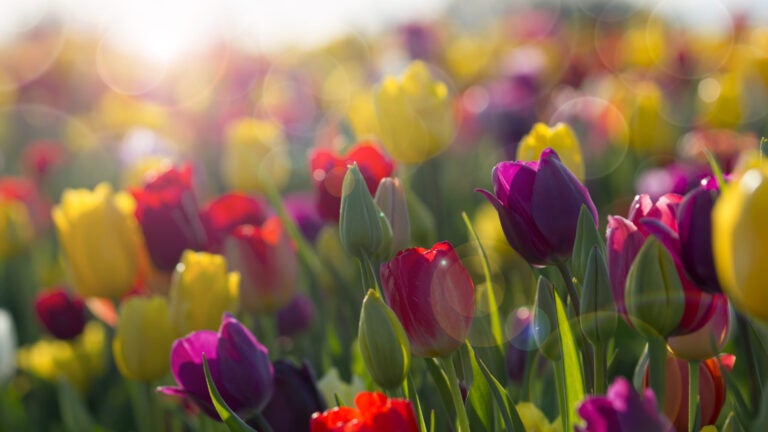
A. Rabbits, deer, woodchucks — oh, my! They love tulips as much as I do. I find it’s a lot less expensive and easier to buy them for floral arrangements than to guard them with weekly sprays of animal repellent. I do spray Deer Out, but not on my whole garden. Each year my garden evolves to contain more of the kinds of plants critters find distasteful. I’ve learned from trial and error to spray dahlias, hyacinths, crocuses, tulips, day lilies, Solomon’s seal, trillium, and lilies, but not my peonies, hellebores, epimediums, bleeding hearts, irises, fritillaria, alliums, and daffodils.
Q. I want to create a wildflower/pollinator garden in a patch of ground abundant with weeds. The plot is about 30 by 30 feet. It is bordered on two sides by woods and on the other two by a parking area. When the parking area was developed, the top soil was scraped off the weed patch, leaving only sand and rocks. How can I make this plot a good home for wildflowers and plants attractive to pollinators?
S.F., Sudbury
A. Don’t worry too much about improving the soil; many wildflowers thrive in sand and scree. One approach is to rake a mix of wildflower seeds across the area combined with a quarter-inch layer of weed-free, composted soil. Keep the area slightly damp with daily watering until the plants sprout. This will give you a riot of color, but only for one year. The weeds will take over again, and the flowers, which are mostly annuals in these mixes, will disappear.
For a more permanent garden, start by identifying and removing the most aggressive and invasive weeds, such as dandelions, knapweed, and other thistle relatives, plus all vines. I could write a whole column on how to kill various types of weeds. Some, like garlic mustard, can be easily pulled, while others, like most vines, cannot because broken roots multiply to grow new plants. You may want to use a broad spectrum herbicide at the very beginning. You can do this only before you have planted your wildflowers. After that, you are stuck with hand weeding. If you do kill all of the weeds, put down a 3-inch layer of mulch over the whole area to keep new ones from sprouting. The mulch is heavier than soil and should not wash away.
For a more permanent planting, I would buy perennials rather than sow seeds. It’s more expensive, but your chances of success are much greater. If you want to save money, do one section to start. After three years, you can dig up your perennials and divide the roots to have as many free plants as you want to fill the rest of the bed. Forget about fertilizer. Just keep any new plants watered weekly. Most roots grow out rather than down, so dig a hole for each potted plant that is the depth of the pot but three times its width. Shovel the “bad’’ soil into a wheelbarrow, and take the plant out of the pot and put it in the center of the hole. Mix the “bad’’ soil you dug up with an equal amount of “good’’ soil you’ve purchased. You now have twice as much soil as you dug out. Refill the hole with the mixed soil, and use the extra to build a little wall a couple of inches high around the plant to keep water from running off. This moat will disappear eventually, further enriching the soil. Fill in the areas between the “soil moats’’ with mulch.
Send your comments and questions to [email protected] for publication. Please include your name or initials and your community. We run questions of general interest in the column, which runs every other week. Subscribe to our newsletter at pages.email.bostonglobe.com/AddressSignUp.





To comment, please create a screen name in your profile
To comment, please verify your email address
Conversation
This discussion has ended. Please join elsewhere on Boston.com