
Ask the Carpenter: Readers respond to smoke alarm nuisance
And we turn to the state Department of Fire Services for advice.
Dear Readers:
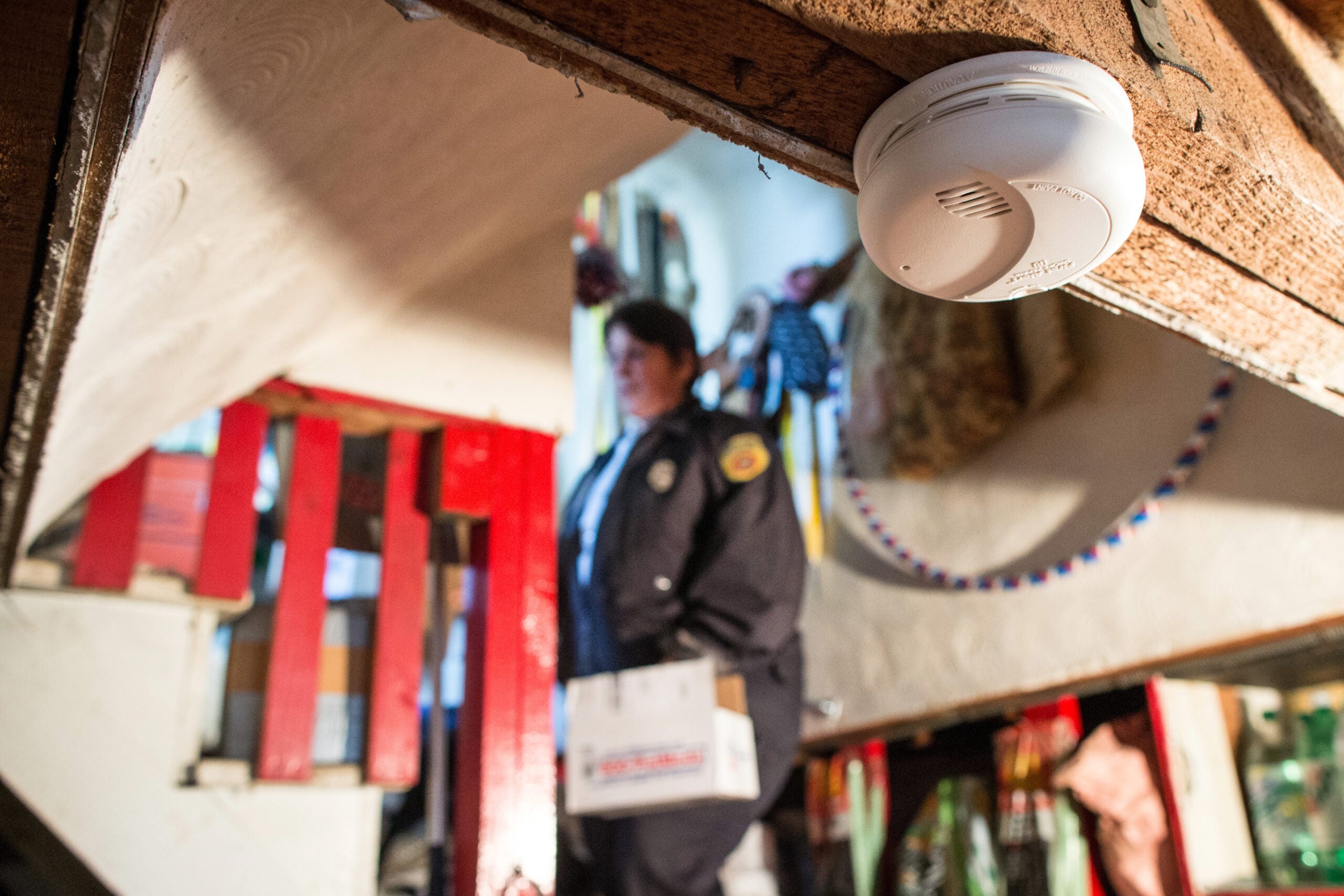
I received a lot of feedback after a reader wrote about having trouble with nuisance alarms with her new smoke detector, which was on the second floor of a modified Cape (“Ask the Carpenter: Can you paint over exterior house stain?’’ Aug. 3). The reader feared that the attic was heating up the ceiling on the second floor, triggering the alarm. Readers rushed to rescue, suggesting that the hapless homeowner switch to a different type of smoke detector.
For more information, we once again turned to the state Department of Fire Services. We asked Jennifer Mieth, the public information officer, for an update on new regulations regarding smoke detectors and for insight on what could be triggering these false alarms.
“A lack of working smoke alarms is a major factor in so many fire deaths,’’ Mieth said. “If people are having trouble with nuisance alarms, it is important not to disable them, but instead to reach out to the local fire department to evaluate the specific issues. Smoke alarms are designed to work within a specific temperature and humidity range. It normally does not reach 130 degrees [Fahrenheit] on the ceiling of a home (as opposed to the attic where we don’t put smoke alarms). It is quite possible that an alternative sensing technology could be more appropriate for the specific situation causing nuisance alarms, still meet the code, and provide needed protection (such as a rate-of-rise heat alarm). The Division of Fire Safety in the Department of Fire Services can provide technical assistance to local fire departments if needed.’’
According to the Department of Fire Services’ “Guide to Massachusetts Smoke & Carbon Monoxide Requirements,’’ there are two kinds of smoke detectors/smoke alarms: photoelectric smoke alarms and ionization smoke detectors:
Photoelectric smoke alarms
■ Use light to detect smoke.
■ Are more effective in detecting smoldering fires, which have been attributed to more fires involving death.
Ionization smoke detectors
■ Use radiation to detect smoke.
■ Are more effective in detecting flaming fires.
■ Increase the risk of nuisance alarms caused by steam and cooking smoke.
Requirements for “typical one- and two-family residences permitted after August 27, 1997’’
■ One smoke alarm on every habitable level of the residence.
■ One smoke alarm at the base of each stairway.
■ One smoke alarm outside of each separate sleeping area.
■ One smoke alarm inside every bedroom.
■ A minimum of one smoke alarm must be installed for every 1,200 square feet of living space per level.
■ Must be hardwired and interconnected smoke alarms with a battery backup.
■ If the smoke alarm is within 20 feet of a kitchen or bathroom (containing a bathtub or shower), the smoke alarm is required to be a photoelectric alarm.
“When replacing expired alarms, the latest regulations require the new alarms be photoelectric with a hush button feature to silence nuisance alarms,’’ Mieth said. “Intensifying smoke will override the hush feature. Alarms can be photoelectric alone or in combination with ionization technology. They may also provide smoke and carbon monoxide detection in the same device.
“The biggest change is that replacement battery-powered alarms will have to have a 10-year, sealed, nonreplaceable, nonrechargeable battery,’’ she said. “These batteries won’t ever have to be changed for the life of the smoke alarm. The entire unit, the smoke alarm and the battery, will need to be replaced at the end of 10 years, and the alarm will give you an end-of-life warning.’’
Rob Robillard is a general contractor, carpenter, editor of AConcordCarpenter.com, and principal of a carpentry and renovation business. Send your questions to [email protected] or tweet them to @robertrobillard. Subscribe to our free real estate newsletter at pages.email.bostonglobe.com/AddressSignUp.



To comment, please create a screen name in your profile
To comment, please verify your email address
Conversation
This discussion has ended. Please join elsewhere on Boston.com