
Woodpeckers looking for love in all the wrong places
Contractor Rob Robillard fields readers’ responses to column on woodpecker damage.
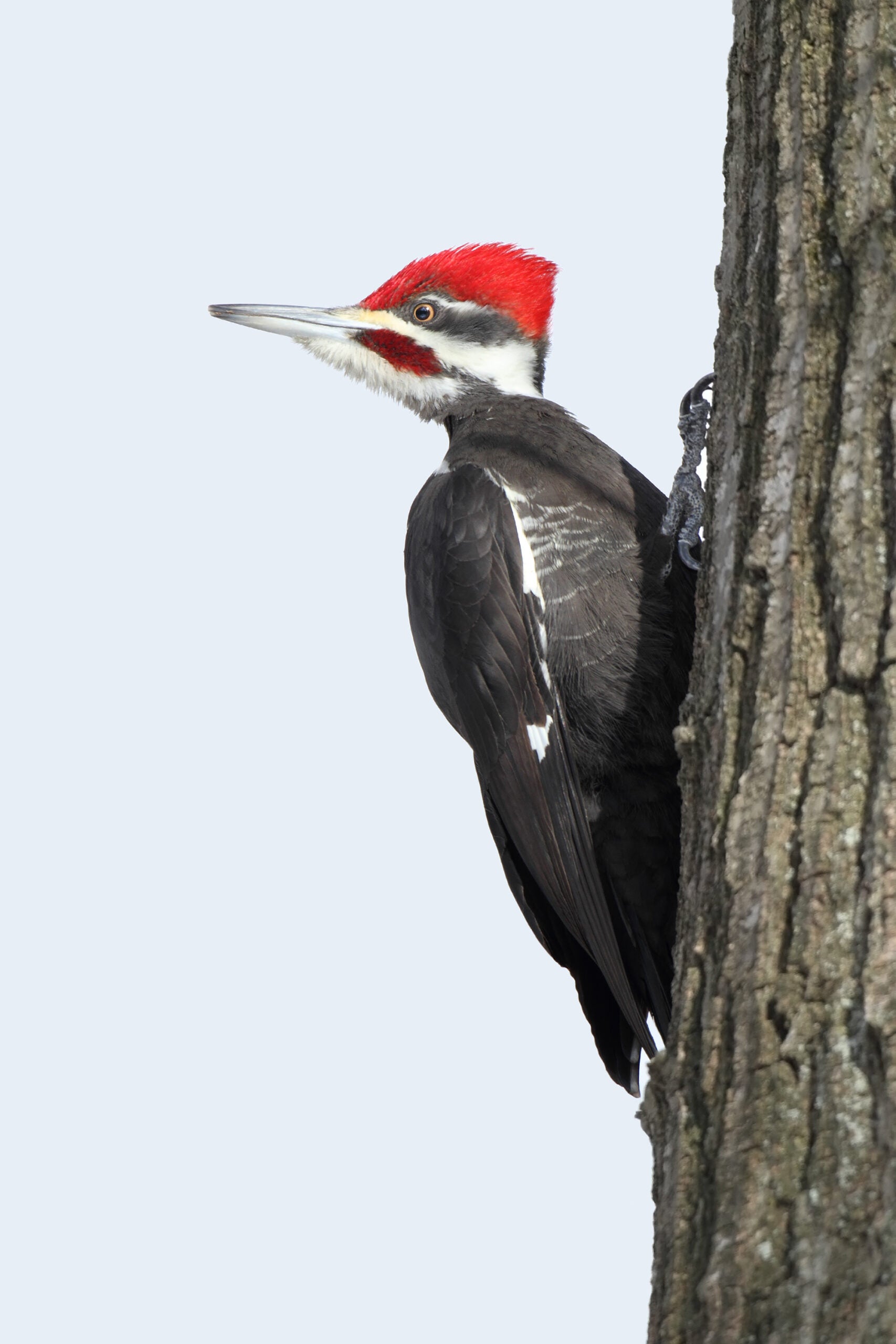
Q. I read Neil Frieband’s question regarding woodpeckers in your column (“Does your roof need soffits?’’ Nov. 15) with interest. I’ve had the same problem for some time. They’ve been pecking away at one location on my house despite the recent installation of fascia and cedar shingles and no evidence of insect infestation in the walls. It is very likely that they are attracted to the sounds coming from my PC tower. It is adjacent to the exterior wall, and they seem to be attracted only to that location and only when the computer is in operation. I shoo them away (pounding on the wall doesn’t bother them). On the plus side, my applications are running bug-free.
ANDY MOYSENKO, Chelmsford
Q. Woodpeckers made a hole small enough to get in and build a nest in the north side of my house. I re-painted and re-sided the entire section. They came back even though evidence of food (bugs) was impossible. I put shiny Mylar against the house and moved it around. After a while they went elsewhere. Sometimes they aren’t looking for bugs.
JEFF DUNFORD
Q.I’m really glad to see you taking over this “Ask’’ column. I was a carpenter and remodeler for more than 40 years. The advice you’ve been offering is wonderful and accurate.
Today I read the question about woodpecker damage. I recently bought my future retirement home in West Barnstable. I started noticing the woodpecker damage soon thereafter. It’s an open post-and-beam house, so sound really travels.
I did some research, and sometimes these woodpeckers aren’t looking for bugs; they are making a racket to attract a mate. Also learned that stuffed owls won’t do much at all. In my opinion, the best cure is to cut a silhouette of a hawk in flight out of plywood, paint it black, and hang it out by the eaves.
Keep up the good work.
RICK CUTLER, Arlington
A. What do you call a woodpecker without a beak? A headbanger! No, seriously, it seems like a lot of you folks with woodpecker issues either have carpenter ants or amorous birdies. Andy, your hypothesis is very interesting. Have you tried moving the PC tower, and if you did, did they stop pecking at the house? Did you know that the oldest known pileated woodpecker lived for more than 12 years? That’s a longer life span than most personal computers.
Jeff’s and Rick’s e-mails prompted me to turn to the Cornell Lab of Ornithology, a world leader in the study, appreciation, and conservation of birds.
According to the folks at Cornell, these pesky birds visit your home for three reasons:
1. To drum on it, which “may serve as a territorial signal similar to birdsong, and it may also serve to attract a mate. Both sexes are known to drum.’’
2. To roost or nest in it
3. To forage for food
Drumming
Many things are fair game: wood and aluminum siding, downspouts, chimneys, vents, trim and fascia boards, stucco . . .
Holes made by drumming are usually very small dents, clustered along the corners or fascia and trim boards of a house, according to Cornell. “The holes may sometimes be as large as an inch across, round, cone-shaped, and generally shallow.’’
Roosting and nesting
Roosting and nesting holes are often found on homes near wooded areas that have natural wood or a dark-colored stain and either clapboard, board-and-batten, or tongue-and-groove wood siding, according to Cornell. Resawn shakes and shingles apparently aren’t as appealing, and woodpeckers, like the carpenters I know, are more drawn to redwood and cedar.
When beginning to drill nesting or roosting holes, woodpeckers, those experts at Cornell say, often make several holes until settling on the right spot. Once found, they will drill through the siding and plywood sheathing and nest in your insulation.
Foraging
Woodpeckers searching for food will create almost perfectly horizontal or vertical rows of holes, depending on the type of siding, according to Cornell.
What can you do?
Cornell offers lots of advice on what works and what doesn’t on its website (www.birds.cornell.edu). Among the don’ts: sticky repellents, which can hurt the bird and stain your siding, and plastic owls, to which the birds will become acclimated. Among the dos: an electronic distress-call system and reflective tape that can hang freely and blow in the breeze.
Rob Robillard is a general contractor, carpenter, editor of AConcordCarpenter.com, and principal of a carpentry and renovation business. Send your questions to [email protected] or tweet them to @robertrobillard.





To comment, please create a screen name in your profile
To comment, please verify your email address
Conversation
This discussion has ended. Please join elsewhere on Boston.com