
These native plants attract butterflies
Award-winning garden columnist Carol Stocker identifies a mystery plant and talks a frustrated reader out of digging up her blueberry bushes.
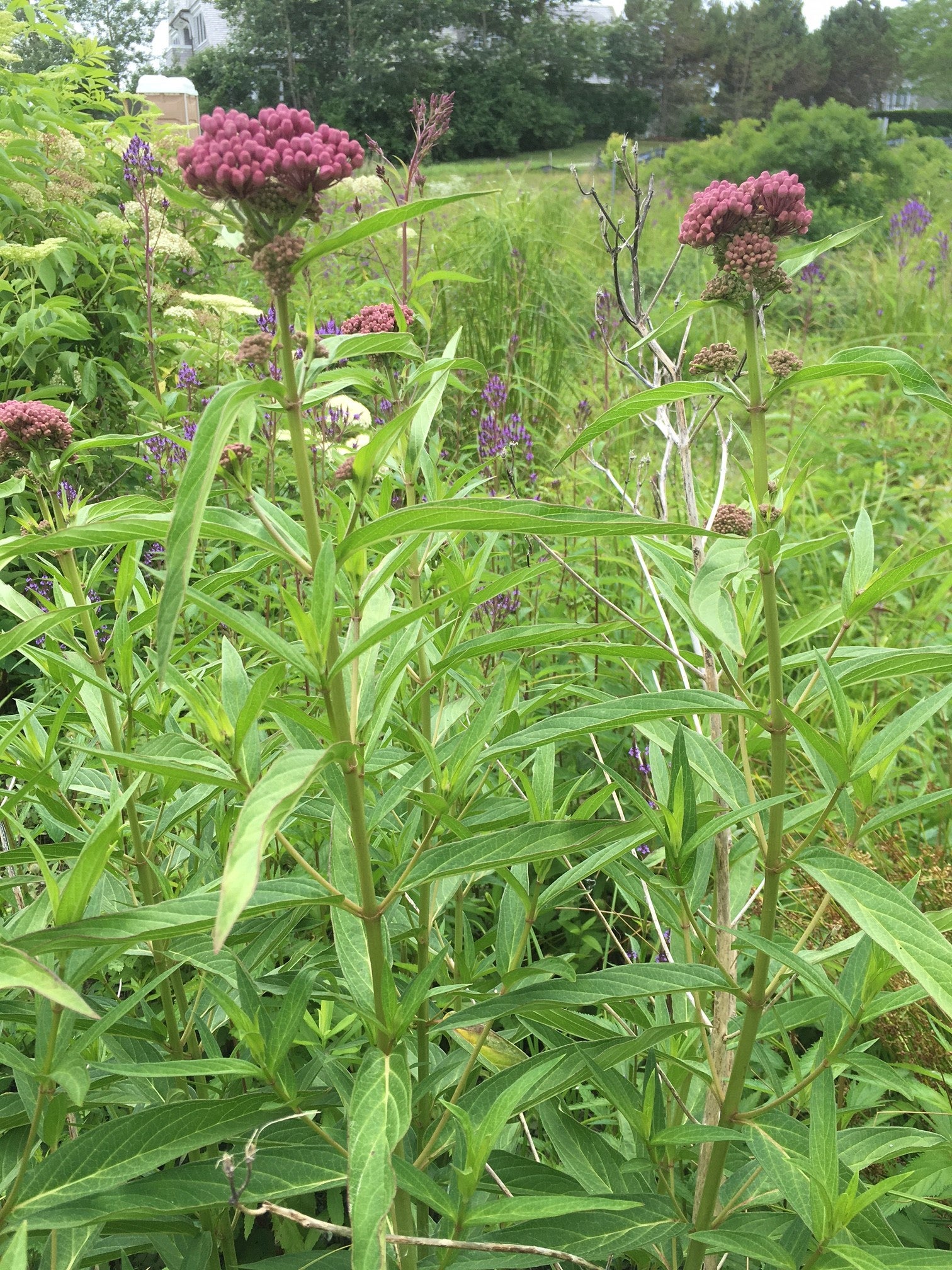
Q. I was in Chatham recently and saw this purple-flowered plant (pictured) growing in a wetland. It’s about 3 to 4 feet high, supposedly native. Do you know what it is ?
JUDITH DARRELL-KEMP, Milton
A. It’s a swamp milkweed (Asclepias incarnata), according to “Wildflowers of New England,’’ the informative new field guide to local native plants by Ted Elliman and the New England Wild Flower Society. Like its better-known cousin, the orange butterfly milkweed (Asclepias tuberosa), swamp milkweed is a host plant for the threatened monarch butterfly and attracts many other pollinators, too. Despite the name, its long-blooming pink-to-magenta summer flowers don’t require much watering. And since butterfly weed is now really trendy, who knows? Swamp milkweed may become the next hot perennial among the ecologically minded. Butterflybushes.com is a mail-order source for this and other host plants for various showy butterflies in trouble. Some butterflies are like the monarchs, laying their eggs on only a few particular kinds of native plants. So when those plants disappear, so do those butterflies. For instance, to save the stunning pipevine swallowtail butterfly, we need to plant Dutchman’s pipe (Aristolochia macrophylla), which once draped Victorian trellises but has since gone out of style. In another example, Eastern-tailed blue, orange sulphur, and clouded sulphur butterflies all lay their eggs on native false indigo (Baptisia australis).
Of course, to get the butterflies, you have to let their eggs hatch and their caterpillars feed on your plants. This requires a shift in perspective, to say the least. But the chain continues when your yard attracts birds, who raise their young on these caterpillars — nature’s baby food for nestlings.
So I urge gardeners to select native plants, like this swamp milkweed, and not to poison the insects they attract. Do this and your pleasure and knowledge will deepen as your garden gradually turns into a true nature sanctuary instead of just an artistically pleasing collection of flowers. The Wild Flower Society also sells native butterfly-host plants at its headquarters in Framingham, as well as many nature books, including “Attracting Native Pollinators’’ by the Xerces Society and “Wildflowers of New England.’’ Visit www.newenglandwild.org for more information.
Q. I think I’m giving up on my three blueberry bushes. For the third time in four years, I’ve no berries to harvest. I constructed a substantial cage using metal conduit and plastic netting. Three weeks ago, I had what looked like a great crop of green berries and was confident they would be safe from those pesky birds. I noted that the berries seemed to be disappearing, and one day I heard a rustling in leaves in the cage and noticed a very fat chipmunk. I never realized anything would eat the green berries. Shall I dig the bushes up and sell them on eBay?
WAYNE KIVI, Yarmouth Port
A. Keep them. Highbush blueberries (Vaccinium corymbosum) are great decorative native shrubs that have a dirty little secret: Everything else will eat the berries before you do. I’ve tried netting only to catcha catbird. (At least it wasn’t a mockingbird.) Metal cages sometimes work, but I’m not about to build one. So now I just let the birds have my blueberries. I usually do beat the critters to the raspberries, but a key problem with blueberries is that animals DO eat them before they turn blue. It’s not a fair contest. Friends I just visited said they’ve had success flying a helium balloon with scary owl’s eyes. But an hour later we all drove to a blueberry farm (which fires cannons — this is in the country) to pick several tasty gallons. So success is a relative term.
I still grow blueberries as shrubs for their ecological and ornamental qualities. They attract birds (duh!). And because of their brilliant red fall foliage, they are widely recommended as a replacement for that gaudy and invasive Asian burningbush (Euonymus alatus) that’s now banned because it takes over natural areas where animals spread its seeds.
Please send your questions and comments along with your name/initials and your community to [email protected].



To comment, please create a screen name in your profile
To comment, please verify your email address
Conversation
This discussion has ended. Please join elsewhere on Boston.com