
Wu testifies in favor of transfer fee that would boost affordable housing dollars
“We know that the majority of our residents are housing-cost burdened and that prices continue to go up,” she told lawmakers.
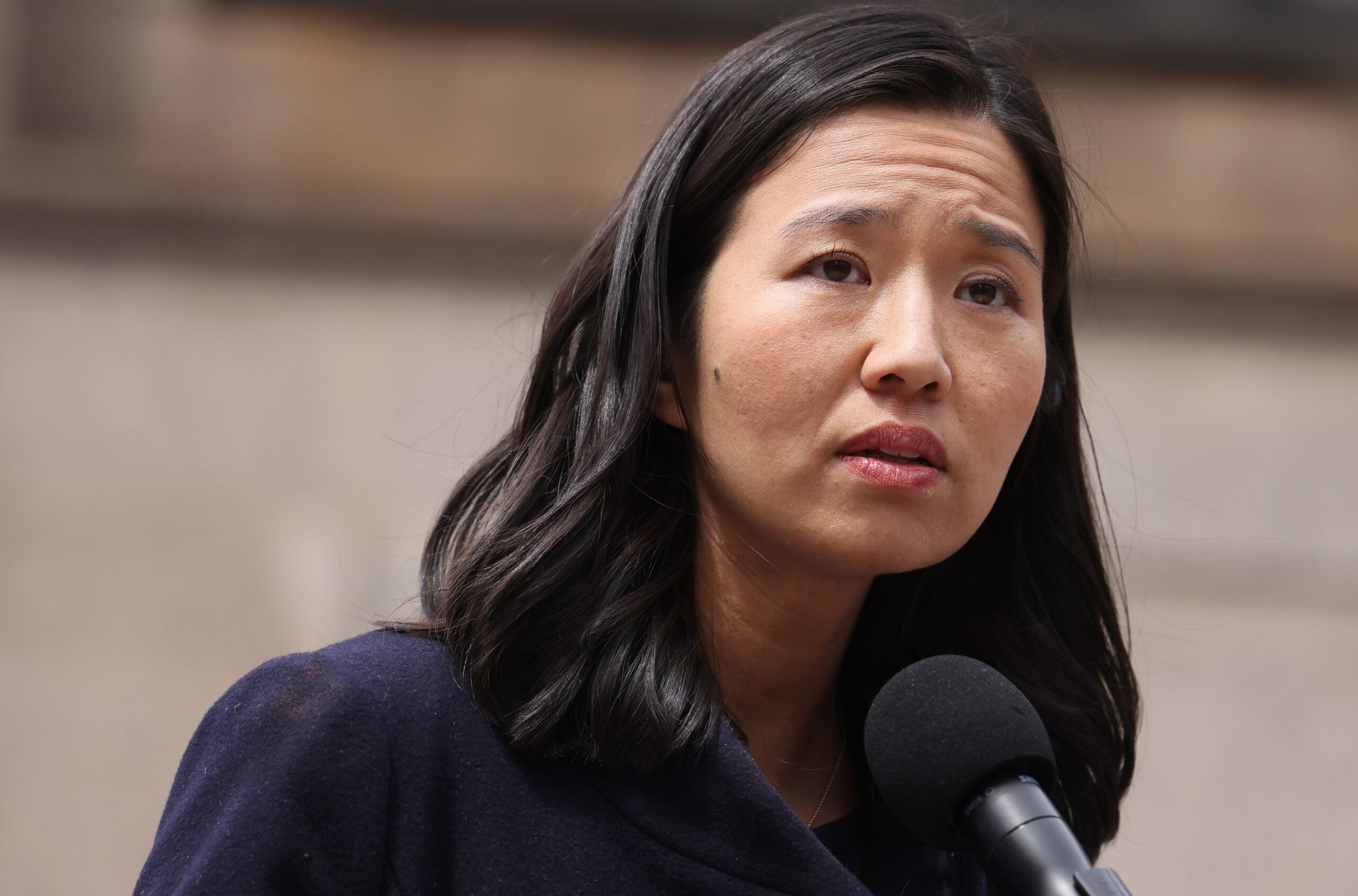
A proposed transfer fee on high-end real estate transactions could help boost affordable housing efforts in Boston.
Mayor Michelle Wu, and members of her team, spoke at a hearing for the proposal before the state Legislature’s joint Committee on Revenue Tuesday.
“We know that the majority of our residents are housing-cost burdened and that prices continue to go up,” she told lawmakers. “After seeing a brief dip during the pandemic, housing prices in Boston’s market are right back where they were and increasing. There are deep racial and income disparities among those who are housing insecure as well.”
Wu noted that while the city receives federal and state dollars to help, the new transfer fee would greatly assist in a couple of ways and affect only a small percentage of transactions. Only sales over $2 million would be subject to the fee, which could be up to 2 percent. Using 2021 numbers, Wu noted that it would have been imposed on 700 transactions and brought in $100 million. That reflects about 7 percent of the roughly 10,000 real estate sales the city sees each year.
“This is not about increasing upfront costs. This is not about adding to the burden as developers are looking to cobble together the permitting costs and getting through the process,” she said. “This is [about] adding a very small transaction fee at the point of sale where the resources are there to be able to make a huge impact across our city.”
The legislation also would make more seniors citizens eligible for a 41C tax exemption.
“It would nearly double the number of senior homeowners who are eligible and qualify,” Wu said. “I have met so many of these seniors who have spent their lives in our city, building our communities, and are now trying to hold on to a family home to pass something on to the next generation. This increased exemption will provide peace of mind and stability to our older adults, their families, and the communities that they are an integral part of. Allowing the city of Boston the flexibility to raise local revenue will immediately give us the tools to address our urgent housing challenges.”
Sheila Dillon, the city’s housing chief, echoed Wu’s contentions, providing statistics on why increasing the number of people eligible for the tax exemption is important.
Some 15,000 seniors “are rent burdened,” Dillon said, noting that they have to decide whether to pay for housing, food, or medication. There are also 40,000 households on the Boston Housing Authority’s waiting list, and many of them have children.
“We go after every single dollar at the state and federal levels,” Dillon said, “but it’s not enough. We need so much more, and we need new tools.”
If the new measure is enacted, Dillon said, the housing budget she oversees would double.
“We need revenue sources that are available to us year in and year out as we plan our way out of this [housing] crisis,” she said.
The waiting lists for senior affordable housing are also long, according to Emily Shea, commissioner of the city’s Age Strong Commission. Sometimes the wait is four, five, or even 10 years.
“They’re keeping their heat low, they’re turning off their lights, they’re skipping meals,” she said.
“The 41C property tax exemption is another one of the tools in our toolbox.”
In a letter opposing the transfer tax, the Greater Boston Real Estate Board, said the city doesn’t need to impose an additional fee to fund affordable housing, noting that the Boston has used the Community Preservation Act.
“Our opposition to H.4637 is rooted in inherent inequality of a new sales tax on real estate and the economic impact on the real estate industry,” the board said. “Our members have been living through a period of intense uncertainty for tw0 years, struggling with an extraordinary global health crisis and the economic distress it has caused. Boston is experiencing a below-average return to physical work. What this suggests is that financing for office buildings will be more challenged in Boston given the lighter use of office space.”
Subscribe to our newsletter at pages.email.bostonglobe.com/AddressSignUp. Follow us on Twitter @globehomes.




To comment, please create a screen name in your profile
To comment, please verify your email address
Conversation
This discussion has ended. Please join elsewhere on Boston.com