
Sign up for the Today newsletter
Get everything you need to know to start your day, delivered right to your inbox every morning.
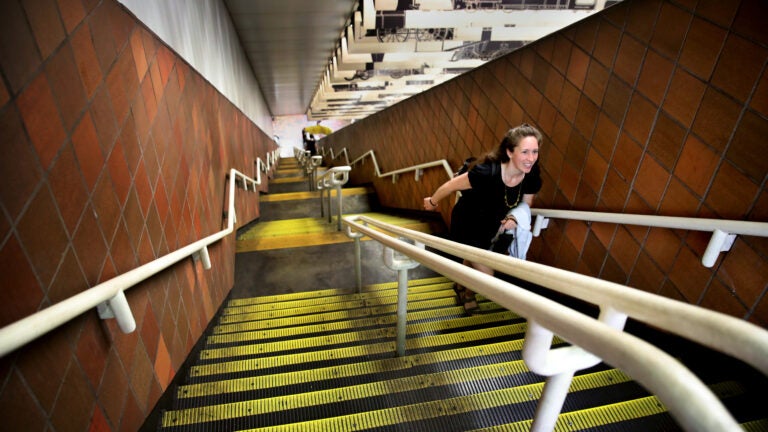
To say that Porter Square Station has a lot of stairs would be an understatement.
Most opt to ride the adjacent escalators, which take a total of nearly two minutes. But some brave riders do embark on the daily or twice-daily hike up or down the steps in the 120-foot-deep station.
For others, it depends.
“I take the escalator, but if I don’t have time to go to the gym, then on my way back, so on my way up, I take the stairs,” Arianna Bresci, who commutes through the station every day, recently told Boston.com. “It’s painful.”
One commuter guessed the seemingly endless stairway has 500 steps.
Another guessed 450.
There are in fact a grand total of 199 stairs: 60 stairs from Somerville Avenue to the lobby, 117 from the lobby to the tracks, and 22 more to the lower track, an MBTA spokesperson confirmed.
“At the end of the day, you’re exhausted, and even going down that many stairs is punishing,” Bradley Clarke, president of the Boston Street Railway Association, told Boston.com. “Going up that many stairs in the morning takes away all the energy you had for the day.”
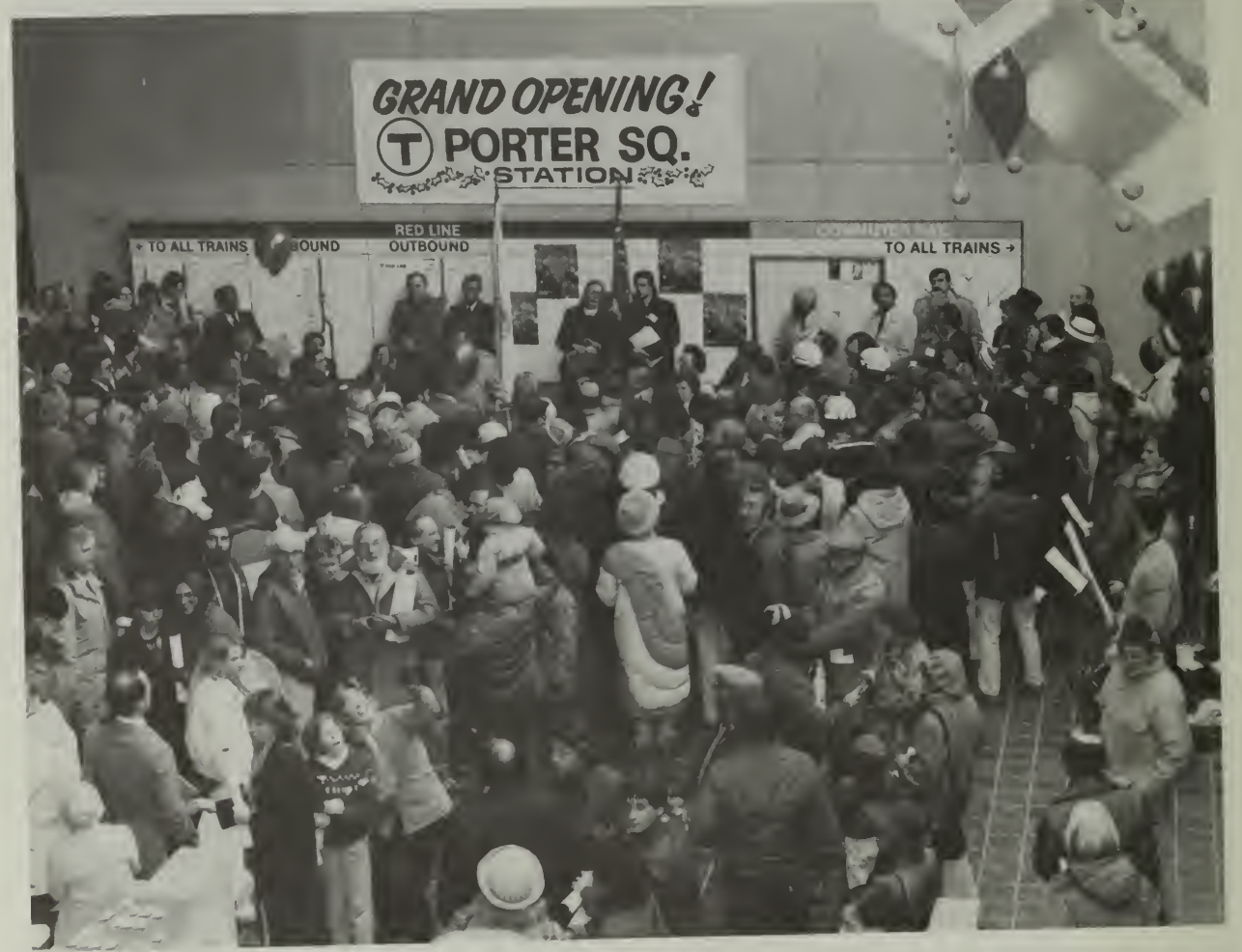
Porter Square Station, which opened in 1984, is the deepest station in the MBTA system.
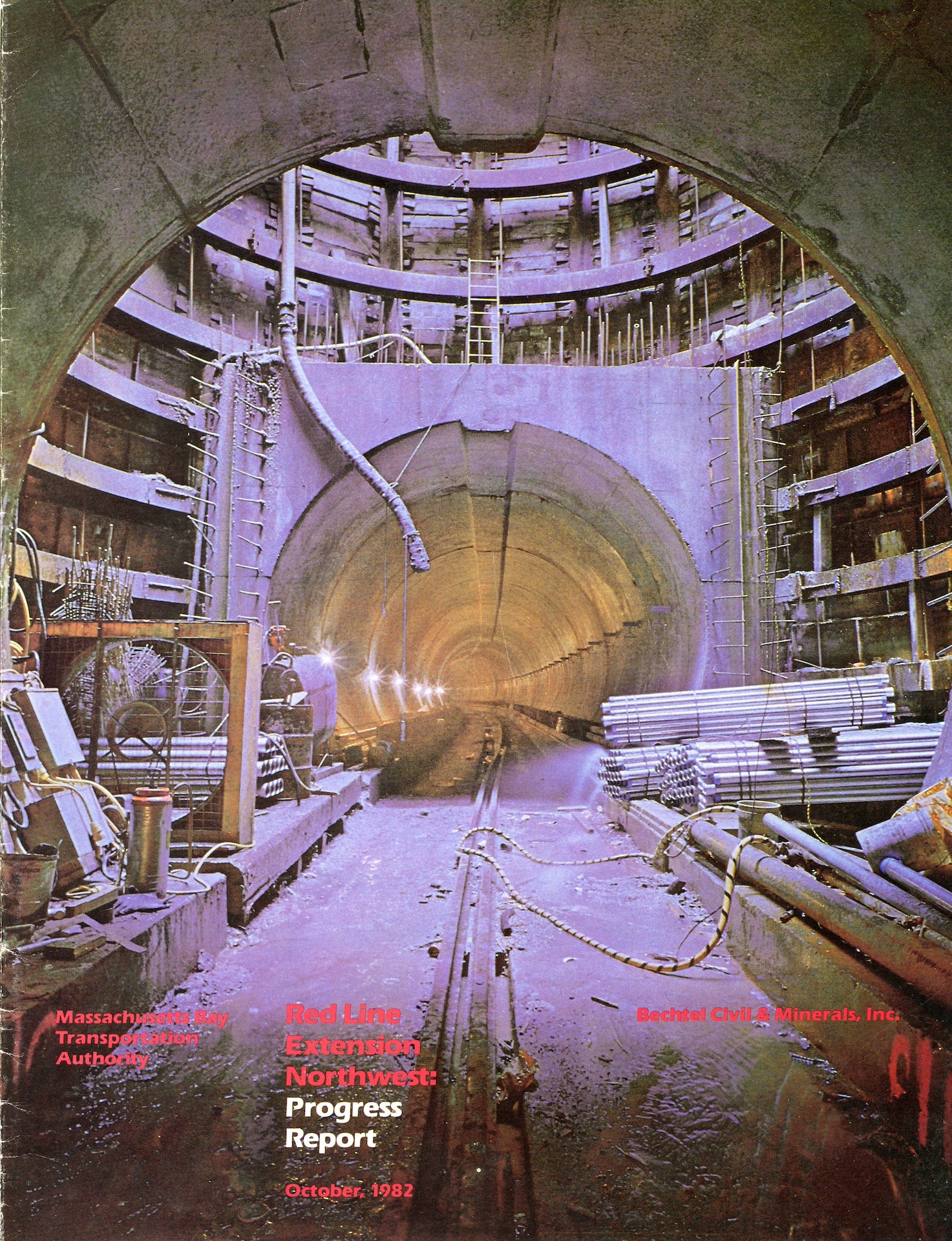
It is so far underground that it was built through solid bedrock.
Steven Beaucher, author of “Boston in Transit,” said workers used “crazy equipment” that looked like a “giant spider” to drill into the walls in order to make the station as deep as it is.
The station was made in such a way because it had to go under the Fitchburg commuter rail line as well as private property that the T did not own on the surface, Beaucher told Boston.com
“They put it way underneath the railroad tracks and Porter Square,” he said. “Then it goes underneath the shopping center, and then it goes under homes and streets between Cambridge and Davis Square.”
Although there is an escalator directly next to the mountain of stairs, commuters know that they are oftentimes out of service.
“When you go up 199 steps, you’re exhausted,” Clarke said. “Hardly the way a commuter wants to feel on the way to or from work.”
Last year, a caller on “Boston Public Radio” pressed MBTA General Manager Phillip Eng on the issues with the escalators, saying that Porter Square’s go “to the center of the earth.”
“It’s so far down,” the caller said. “And it’s down more than it’s up.”

On a recent commute, Bresci said the “up” escalator was not working, so she was forced to take the stairs — after she had just gone to the gym.
Alex Shoemaker, who commutes through Porter Square three times a week, said at least one of the escalators is out of service every time she goes through the station.
“They take turns being out of service almost every time I’ve been here,” she told Boston.com.
Clarke said issues with the escalators are widespread, and the elevators are a far walk from the stairs.
“It isn’t just Porter Square. The escalators all over the T are constantly being maintained,” he said. “They are prone to failure.”

Get everything you need to know to start your day, delivered right to your inbox every morning.





To comment, please create a screen name in your profile
To comment, please verify your email address
Conversation
This discussion has ended. Please join elsewhere on Boston.com