
Sign up for the Today newsletter
Get everything you need to know to start your day, delivered right to your inbox every morning.
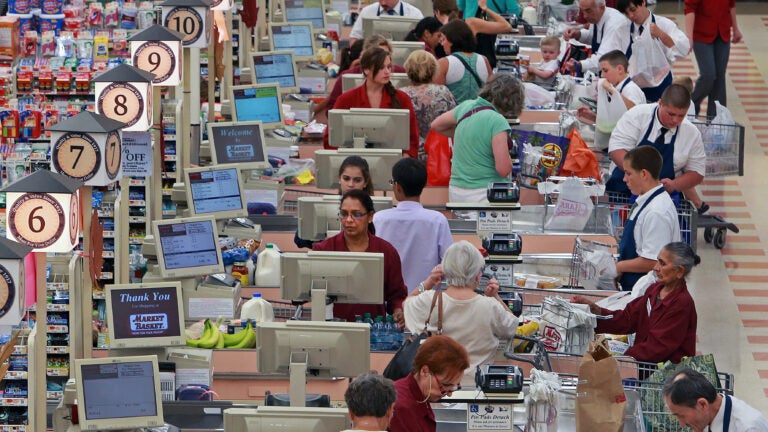
For many, shopping at Market Basket is like taking a step back in time.
During a brief grocery store trip, customers experience person-to-person customer service and checkout — a rare thing in an industry commonly characterized by impersonal interactions.
The “old school store,” which is always “crowded” and “insanely busy,” has roughly 30 registers at its Waltham location, city resident Doug Peterson said. And no self-checkout option.
“They’re almost always fully staffed with people, actual people,” Peterson, who frequents the store roughly three times a week, told Boston.com. “One person rings your groceries, one person bagging.”
In 2023, the Food Industry Association reported that 96% of retailers surveyed offered self-checkout.
So why hasn’t Market Basket followed suit?
The lack of self-checkout is “very purposeful,” says Grant Welker, co-author of the book “We Are Market Basket.”
“That’s what helps create that draw for generations of shoppers is you go into a Market Basket and seemingly every checkout aisle, without exception, is open,” he recently told Boston.com. “That personal relationship is just core to what Market Basket is.”
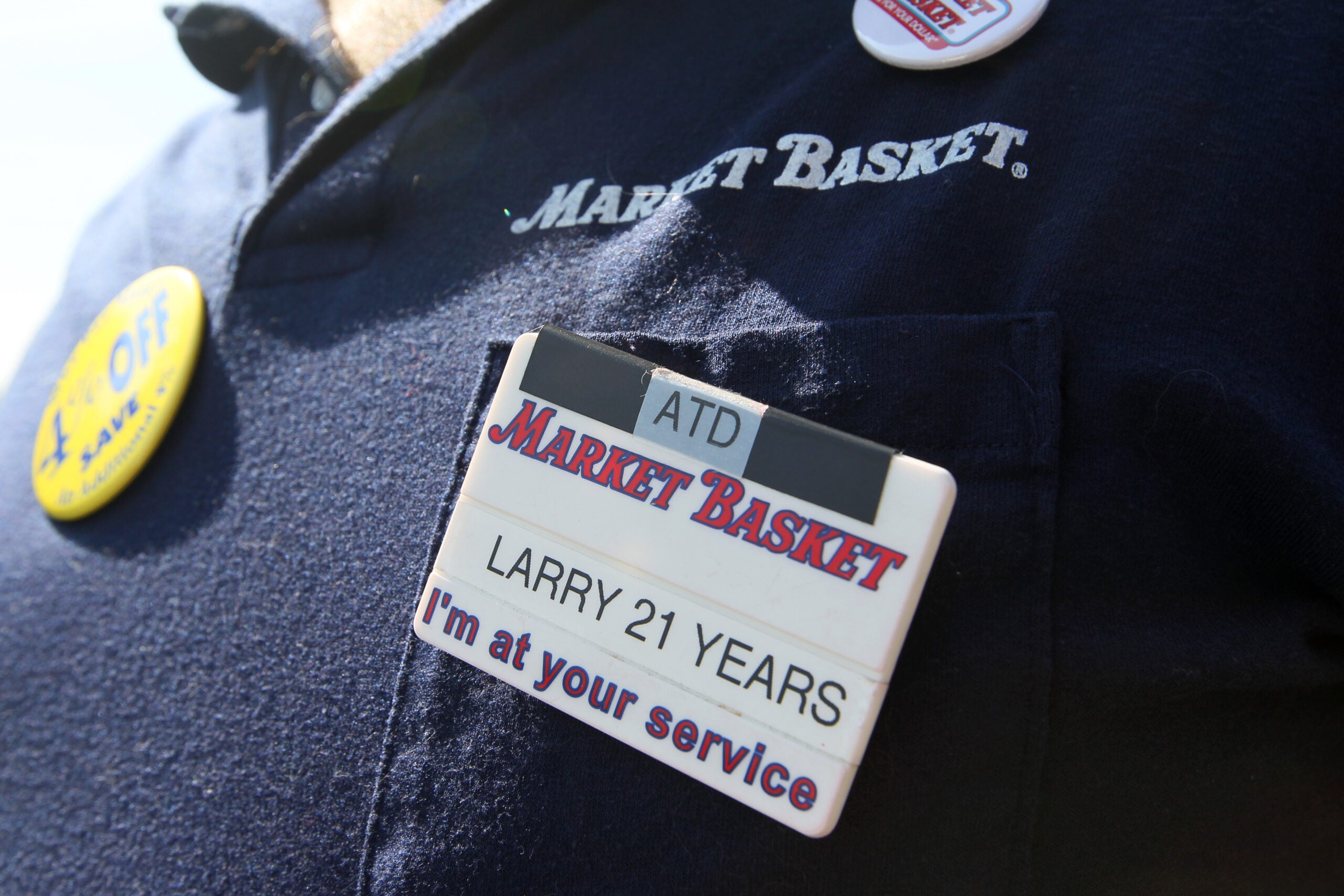
Every Market Basket employee has a name tag with their name and years of service.
“That number for years of service is always surprisingly high, especially in an industry where there’s such high turnover,” Welker said.
Because of the company’s “employee-centric” approach, Peterson said installing self-checkout would be out of line with the store’s values.
“Self-checkouts would be against a lot that Market Basket stands for,” he said. “That’s one of the things they’re built on.”
For MeLinda Williams, a loyal customer who goes to the New England grocery store chain once a week, not having self-checkout is a perk.
“I am going there to do my job of food shopping,” she told Boston.com. “Why would I have to ring myself out and bag it also? That baffles me.”
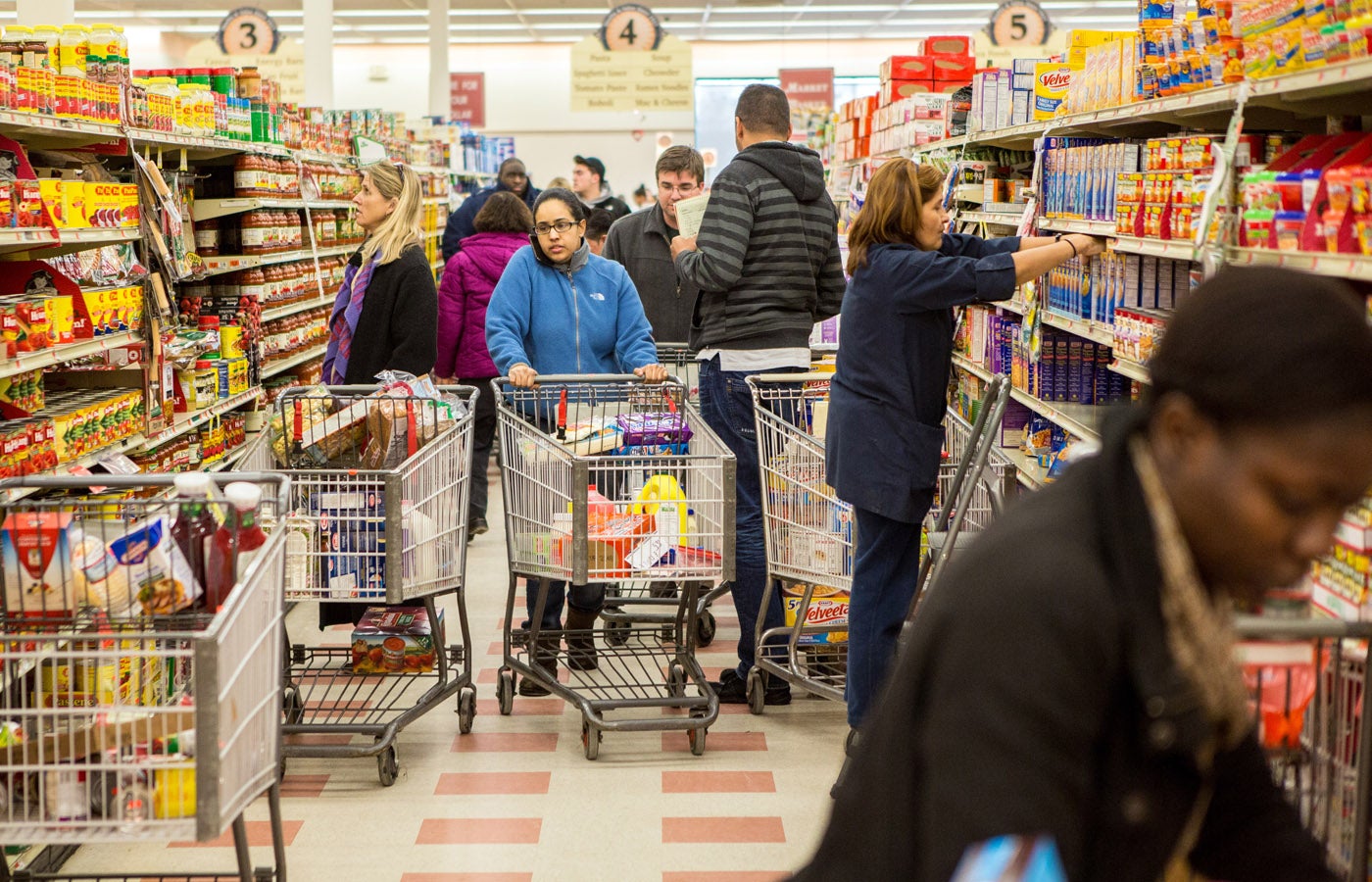
In response to a Facebook commenter a few months ago, Market Basket echoed these shoppers, writing that the company believes the “connection to the community is an integral part of the ‘More for Your Dollar’ shopping experience.”
“At this time we do not offer online ordering and are not considering adding self-checkouts,” Market Basket wrote. “It is important to our team of valued associates that they have the opportunity to provide the direct in-store experience and service that our customers deserve.”
A Market Basket spokesperson recently told Boston.com that the store’s “philosophy on self-checkouts is longstanding.”
“For many years, CEO Arthur T. Demoulas has firmly stated that ‘it is a core company philosophy to provide personalized service to our valued customers and hopefully by doing so, we may make the customers day a better one,'” the spokesperson wrote.
Sylvain Charlebois, a food distribution and policy researcher at Dalhousie University, said the decision to install self-checkout stations is about “image.”
“I think a lot of grocers see the implementation of self-checkout as part of their branding,” he told Boston.com. “The experience in-store is quite important, but the exit is equally as important.”
Charlebois said disliking self-checkout is the “automatic response” from most people, especially for trips with over 20 items.
“Below 20 items, it’s less complicated and less work, but anything over 20 seems to be problematic for a lot of people,” he said.
In March, Target imposed a limit of 10 items in self-checkout stations in nearly all of their stores nationwide in an effort to expedite customers’ checkout process.
Like Market Basket, Trader Joe’s does not have a self-checkout option.
In a company released podcast, former Trader Joe’s president Jon Basalone said the national grocery chain does not plan on implementing it, either.
“We believe in people,” he said. “We’re not trying to get rid of our crew members for efficiency’s sake.”
Just over 10 years ago, Market Basket strikes swept across New England.
The protests were unique in that employees weren’t asking for raises or better treatment — they were demanding that CEO Arthur T. Demoulas be reinstalled following a family feud that ousted him from his position.
Customers joined Market Basket employees in the impassioned demonstrations.
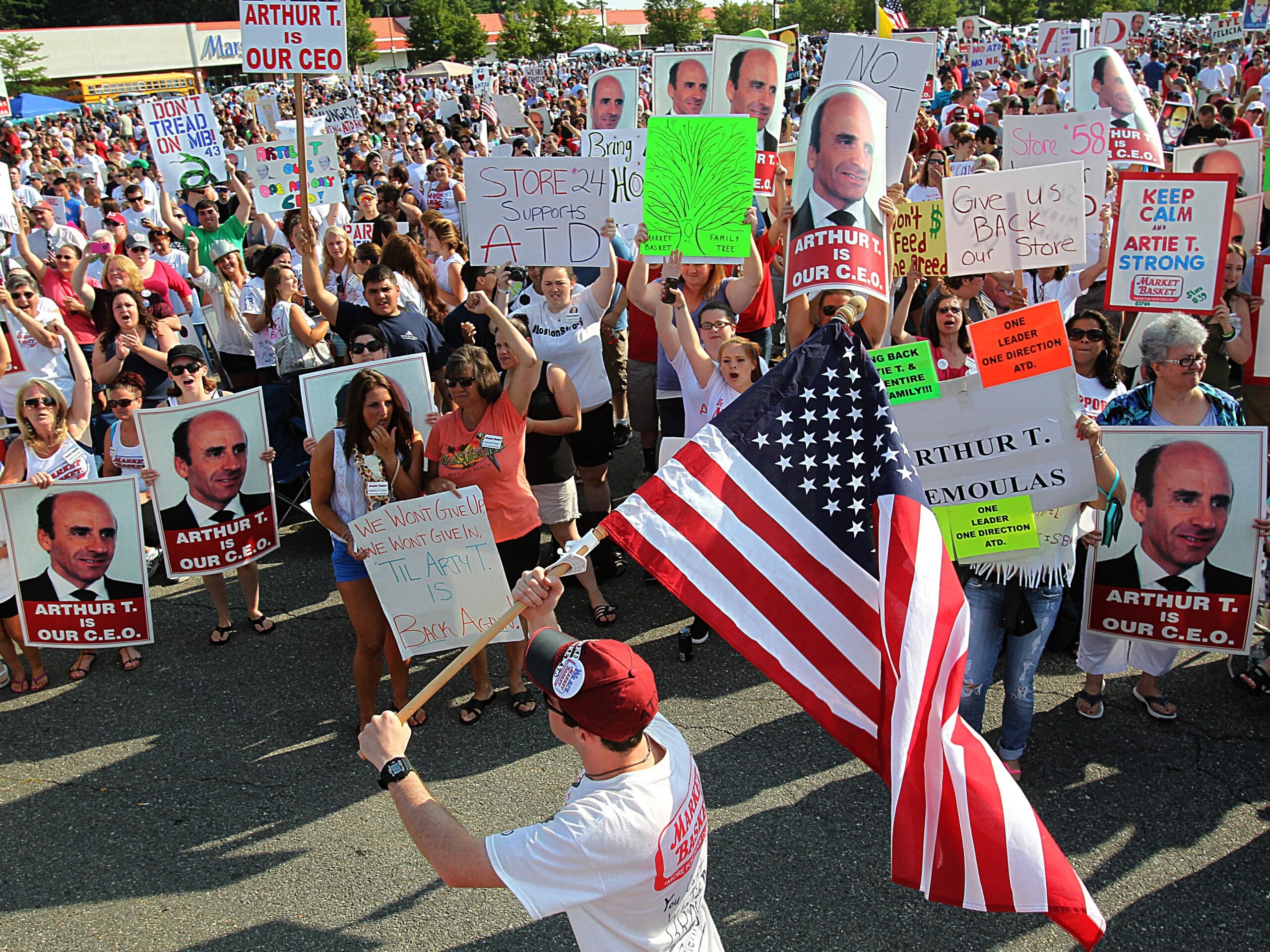
The protests were successful. And in August, Market Basket gave out bonuses to employees to mark 10 years since the walkouts.
Welker, who closely followed the Market Basket strikes as they unfolded, said the personal connection the store prides itself on is what motivated the pushback.
“It was just natural that people felt like they had to stand up for the company and save it as they knew it because Market Basket is unlike any other,” he said. “There was solidarity, not just with [Arthur T. Demoulas], but with all those employees that they got to know over the years shopping there.”

Get everything you need to know to start your day, delivered right to your inbox every morning.




To comment, please create a screen name in your profile
To comment, please verify your email address
Conversation
This discussion has ended. Please join elsewhere on Boston.com