
T says cold weather caused Tuesday’s Red Line, commuter rail issues
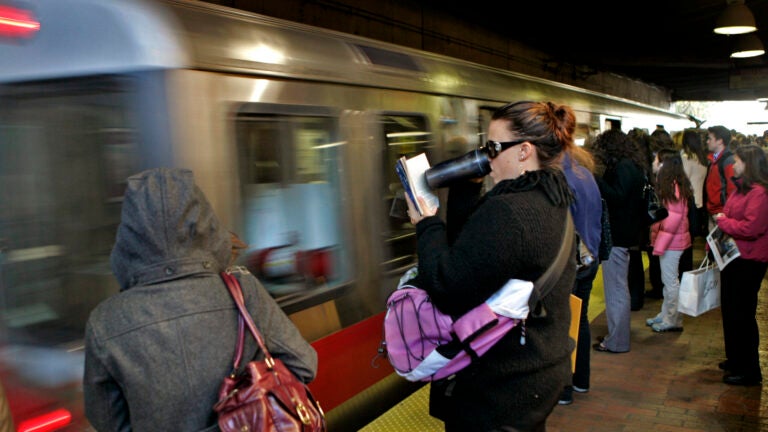
Rail problems caused a passenger-less commuter rail train to derail overnight, leading to serious delays and cancellations during Tuesday morning’s commute. Another rail issue, this one during rush hour, forced shuttle service along the Red Line’s Ashmont branch. And in the middle of the day, the Red Line saw severe delays due to a broken rail at Central Square.
Welcome back, winter weather. In all three instances, the MBTA believes, sections of rail broke because of cold temperatures.
“The exact cause remains under investigation, but it is believed to be related to the extreme drop in temperatures (from fairly mild to bitterly cold),’’ MBTA spokesman Joe Pesaturo said in an email. “Such a drop can be very stressful on a running rail.’’
After last February’s weather caused deep service issues across the MBTA, the state has not been shy to herald its $83 million “winter resiliency’’ plan to improve the system’s seasonal performance.
The T faced its first snowfall of the winter last week and saw some issues throughout the day, though weather was not a factor in all of them. (Snow and ice aside, the T’s repair backlog tops $7 billion.)
But Tuesday’s early January deep-freeze—temperatures were between 8 and 15 degrees during the morning rush hour—brought bigger problems to an agency whose leaders have pledged improvement over last winter’s brutal commutes. And it raised fresh questions about the T’s capability to follow through on that promise.
The overnight derailment sent a northbound commuter rail train on the Haverhill line off-track between Andover and Lawrence before passenger service had begun, according to Keolis, the private company that operates the commuter rail for the MBTA.
Typically, when rail breaks, it disrupts the signals, preventing the train from traveling over the broken rail, Secretary of Transportation Stephanie Pollack said in a Tuesday afternoon press conference.
However, because the train was traveling over the rail at the time it broke, three cars were derailed, Keolis Deputy General Manager Franck Dubourdieu said. The train carried two commuter rail employees who were not injured, and was not traveling above the track’s top speed, according to Keolis.
The incident led to canceled and delayed trains north of Boston Tuesday morning, affecting more than just the Haverhill line, Keolis said. The rail was repaired by the afternoon.
On the Red Line, the T switched to bus service around 8 a.m. on the Ashmont branch due to broken rail at Savin Hill. Normal service resumed about two hours later, the T said on Twitter. Later in the day at Central Square, shuttle service was not required, but the problem caused delays in the early afternoon. The broken rail portions on the Red Line were outfitted with equipment “to preserve the integrity of the rail,’’ until it is permanently replaced overnight, Pesaturo said.
Pollack said the T and Keolis regularly inspect rail for potential breaks during cold weather, with the goal of addressing them before they occur. Still, she said, some rail breaks each year, and Tuesday’s breaks were not the first of the season.
“The commuter rail actually experienced one in Plymouth earlier this winter, and it didn’t disrupt service, so folks don’t know about it,’’ Pollack said.
She said ongoing investigations into Tuesday’s incidents would explore whether some portions of rail may be more brittle than others.
Officials ranging from MBTA General Manager Frank DePaola to Gov. Charlie Baker have publicly expressed confidence in the T’s winter preparation this year.
Pollack defended the resiliency plan in the face of Tuesday’s rail problems, and said aspects of the response to the morning’s issues—including communication with customers, prepared bus service for the Red Line, and relatively quick fixes to the rails—marked improvements over last year’s debacle.
That may not be much solace to riders who in the new year again found themselves facing rush hour delays and cancellations because of winter weather. Pollack cautioned Tuesday that the season is unlikely to be without its commuting blemishes.
“I want people to understand that being prepared for winter does not mean that there will be no service disruptions whatsoever,’’ she said.




To comment, please create a screen name in your profile
To comment, please verify your email address
Conversation
This discussion has ended. Please join elsewhere on Boston.com