
Selfies are more dangerous than sharks
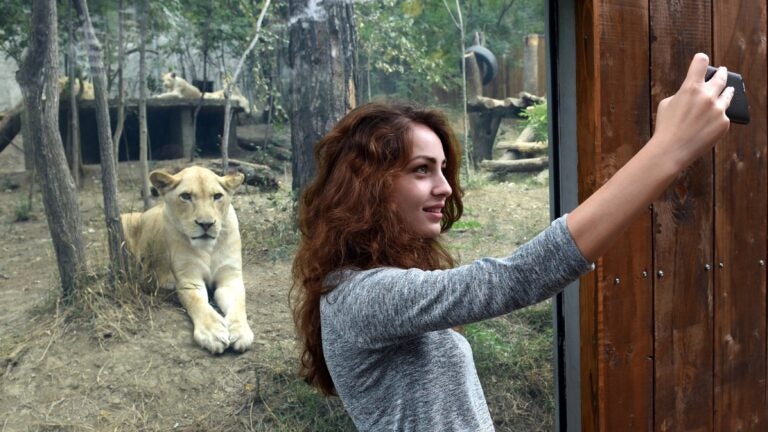
For years, statistics have emphasized how unlikely swimmers are to die in shark attacks, noting that bees or falling TVs claim more lives than the menacing ocean dwellers. Now, selfies have joined the long list of seemingly harmless acts and objects that result in more deaths than sharing the water with sharks.
According to a report compiled by Mashable, eight people have died worldwide this year following shark attacks, but 12 have lost their lives in the pursuit of extreme selfies.
A tourist at the Taj Mahal is the most recent victim, dying after he fell down a set of stairs mid-selfie and hit his head. Other incidents this year have included the death of a man who was gored by a bull while posing for a selfie during Spain’s annual bull running festival, and a Houston teenager who accidentally shot himself in the head while snapping a selfie and holding a loaded gun.
Almost 80 years have passed since someone in Massachusetts died of a shark attack, and the odds of being attacked are 1 in 3.7 million. Selfie deaths, however, are on the rise, and some tourist attractions are taking precautions.
A park in Denver has closed to visitors after too many attempted to get close-up selfies with wild bears. The Russian government has launched a “safe selfie’’ campaign, urging people to avoid taking selfies in front of trains or near wild animals and reminding them that “Even a million ‘likes’ on social media are not worth your life and well-being.’’
So while memories of Jaws and its theme song continue to haunt viewers 40 years after the film hit theaters, the front-facing camera on smartphones is proving to be more deadly.
Related gallery: Sharks that roam the waters of New England
[bdc-gallery id=”111399″]




To comment, please create a screen name in your profile
To comment, please verify your email address
Conversation
This discussion has ended. Please join elsewhere on Boston.com