
Bostonians and architects continue to fight over city hall
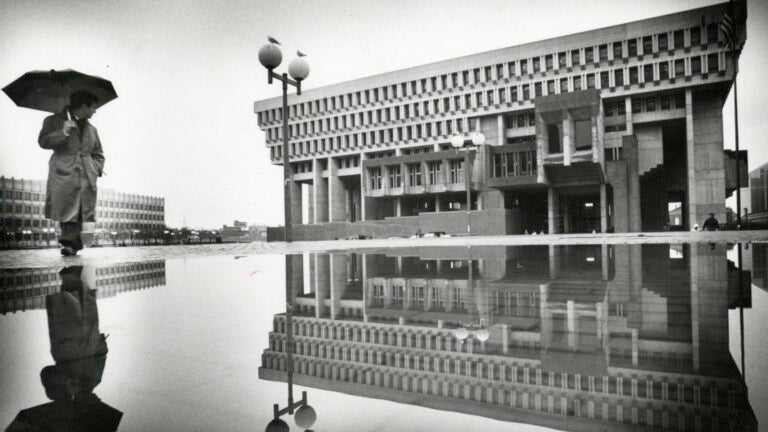
Boston City Hall doesn’t have the greatest aesthetic reputation—Paul McMorrow wrote that it was “an atrocious waste of space when it first rose above the grave of Scollay Square in the 1960s’’ in a 2013 Boston Globe column, and advised the next mayor to tear it down.
“Its great crime isn’t being ugly; it’s being anti-urban,’’ he wrote. “This is not a political problem, but a design one.’’
Even John Collins, the mayor who oversaw the design competition that resulted in the giant concrete structure, reportedly “yelled in horror’’ upon its unveiling, McMorrow wrote. The architects promised “it will grow on you.’’ It’s an example of Brutalist architecture, which has fostered debate between architects and observers.
Brutalist sounds pretty, well, brutal, but the term comes from the French béton brut, meaning raw concrete, a podcast on the style explains.
Roman Mars’ podcast 99% Invisible dove into the contested, concrete world of Brutalism this week, and brought up Boston’s role in its history. Around the 1920’s, concrete was seen as the material to change the world, Mars explains, and was associated with “humble, capable, and honest’’ connotations.
In the early 1960s, Boston was desperate to assume those characteristics.
A Slate blog accompanying the podcast, titled “Bostonians hate their city hall, but architects love it,’’ details the contrasting opinions all this concrete has sparked.
When Boston City Hall was built in 1968, critics were put off by the concrete style. It was called “alienating’’ and “cold.’’ And since it was a government building, this criticism became impossible to remove from politics. Boston City Hall became a political pawn as mayors and city council members vied for public support with promises to tear it down.
Architecture students appreciate [concrete buildings] because they know that working with concrete requires great skill and finesse. Every little detail has to be calculated in advance because once the concrete is poured, there’s no going back to make adjustments.
Boston City Hall isn’t the only example of this kind of concrete jungle, but might be the most vocally opposed. Though maybe that’s just the Boston way.
Read the full Slate post here.
City Hall over time
[bdc-gallery id=”115232″]





To comment, please create a screen name in your profile
To comment, please verify your email address
Conversation
This discussion has ended. Please join elsewhere on Boston.com