
Campaign Pushes For a Woman’s Face on $20 Bill
The Women On 20s campaign is working towards getting a woman’s portrait on the $20 bill.
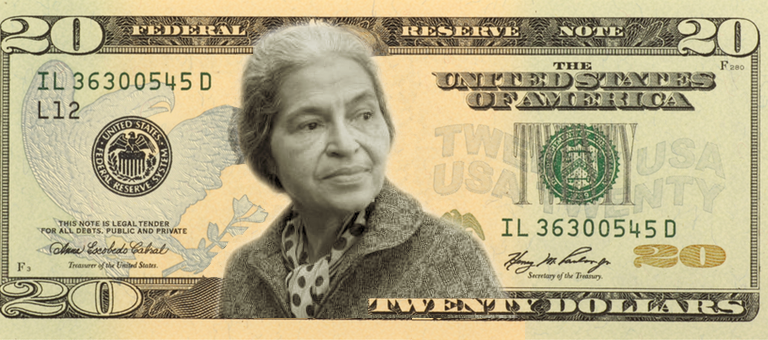
“A Woman’s Place is on the Money.’’ That’s the slogan of a campaign that is underway to get a woman on the $20 bill. And the choice for the new face of the bill is in the hands of the public. The aim of the campaign, Women on 20s, is to garner enough support to convince President BarackObama that it is time for a woman’s portrait to be put on paper currency in time for the 100th anniversary of the 19th Amendment, which gave women the right to vote.
Mary Smoyer, a volunteer at the Boston Women’s Heritage Trail and a retired second-grade teacher, was excited to learn of the campaign.
“To have a woman on such a public thing as the $20 bill would be sensational,’’ said Smoyer. “Everybody would be seeing her face constantly.’’
Susan Ades Stone, executive director of Women on 20s, said the idea was generated three years ago by Barbara Ortiz Howard.
“Like most of us, she hadn’t paid much attention to the portraits on the bills,’’ said Ades Stone. “But one day she got to thinking that the centennial of women’s right to vote was coming up in 2020, and wouldn’t it be nice if our country could celebrate that with the face of a woman on the $20 bill. She wanted to honor the women who helped shape the country we are today by making them visible in our everyday lives, just like the great men in our wallets.’’
The secretary of the U.S. Department of the Treasury is in charge of the designs and portraits that appear on paper currency, and by law only a deceased person can appear on U.S. currency or securities.
The hope is President Obama can direct the secretary of the Treasury to make the change if enough public support is gathered. Ades Stone said getting at least 100,000 votes is a goal, since that is the number used to petition the White House for executive action.
“It would make a huge difference, I think, for people thinking about the importance of women in the world,’’ Smoyer said.
[fragment number=0]
And why replace Andrew Jackson? The campaign argues the seventh president’s support of the Indian Removal Act of 1830, which resulted in the relocation of Native American tribes off their lands, including the forced removal the Cherokee nation from their land east of the Mississippi River to present-day Oklahoma. More than 4,000 Cherokees died on the march, which became known as the “Trail of Tears.’’
The campaign is in its primary voting phase, offering a selection of 15 candidates to be featured on the bill. Voters can select their top 3 choices from the 15, which has already been narrowed down from a larger list that included Amelia Earhart, Helen Keller, and Maya Angelou, among others.
Some of the candidates have connections to the Boston area.Frances Perkins was born in Boston, Clara Barton was born in Oxford, and Rachel Carson spent time working in Woods Hole.
Ades Stone said the length of the primary round is open-ended to allow as many people as possible the chance to participate since the campaign is also about education.
Smoyer said she expected there would be an immediate excitement for young students if the change were to occur, because even though people may not realize all the faces on money are men, the change would likely cause huge excitement to look at who is on money and why.
Susan B. Anthony became the first woman to have her likeness on coinage in the United States when President Jimmy Carter changed the size of the one-dollar coin in 1978. But, the W20 campaign argues, less than 800 million coins were made, and people got tired of confusing them for quarters. In 2000, the Shoshone guide Sacagawea appeared on the gold dollar coin, but still, W20 agues, the dollar coins were not popular. Helen Keller is on the reverse side of the Alabama quarter, but all other coins featuring women in the U.S. are commemorative.
Seeing a woman’s face on an important, frequently used piece of currency would have a subtle, but important long-term impact, according to Smoyer.
“On girls, it builds their self-esteem, and on boys it builds their respect for women, which is a very important thing in our country and in the world,’’ said Smoyer.
[fragment number=1]
Smoyer pointed to the number of statues of women in Boston as an example of how few times important, historical women are represented in day-to-day life. The Boston Women’s Heritage Trail worked on a project 10 years ago to get a statue of three women on Commonwealth Avenue, because out of all the statues of men in Boston, there were only three. And, Smoyer said, if people continue to only see statues of men, it makes it easy to forget that women have added just as much to the world. Now there are four statues of women in Boston.
In the most recently built statue, Smoyer said the women depicted are the local women who she thought could have made the ballot for the $20 bill: Abigail Adams, Phillis Wheatley, and Lucy Stone. Smoyer suggested Abigail Adams would be the local equivalent to Eleanor Roosevelt, who famously wrote in a letter to her husband, President and statesman John Adams, to “remember the ladies,’’ when the Constitution was being written. Lucy Stone worked for women’s rights in Massachusetts, and Phillis Wheatley was the first published African-American poet and African-American woman
After the winners of the first round are announced, voters will get another chance to submit their first choice from three finalists. The woman with the most votes will be proposed as the new face of the $20 bill to President Obama, who already expressed support for the idea of putting women on paper currency during a speech in Kansas City in July 2014.
[fragment number=2]
“I think if I were officially choosing somebody, I would probably choose between Rosa Parks and Eleanor Roosevelt,’’ said Smoyer.
Vote for the new face on the $20 bill here.



To comment, please create a screen name in your profile
To comment, please verify your email address
Conversation
This discussion has ended. Please join elsewhere on Boston.com