
Sign up for the Today newsletter
Get everything you need to know to start your day, delivered right to your inbox every morning.
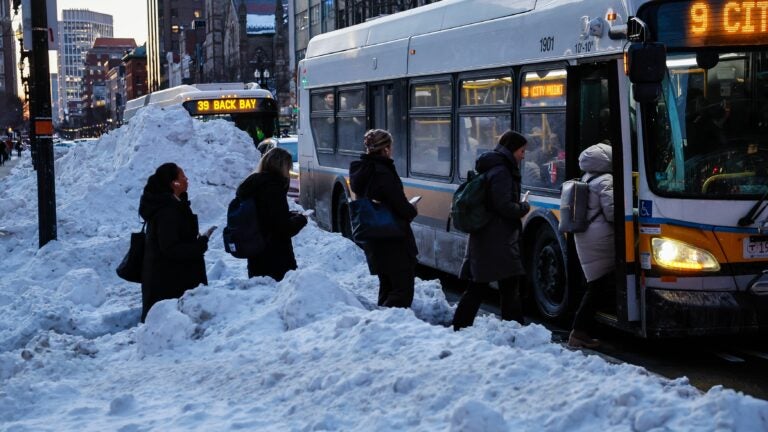
Frigid temperatures and stubborn snow drifts have been the ultimate stress test for the MBTA this winter as delays and cancellations mount while commuters’ patience wears thin.
And with more snow looming in Tuesday’s forecast, are T riders destined to suffer? Speaking to The Boston Globe after the snowstorm in late January, MBTA General Manager Phil Eng struck an optimistic tone as he urged patience.
“I want riders to know that even in future storms, we will get better,” Eng told the Globe. “While riders did experience delays over the last few days, we are working to fix these problems, not just accept the problems.”
Easier said than done; following last month’s storm, snow piled up outside some bus stops and commuter rail stations, switch equipment often became frozen with ice, and the Red Line’s oldest cars struggled in single-digit temperatures, a T spokesperson acknowledged.
“The regular Red Line schedule requires 20 trains,” Lisa Battiston explained via email. In the days after the late January storm, however, “there were often six newer trains in service.” While Battiston said those newer trains performed well, the MBTA was still warning Red Line riders of longer wait times and reduced service days after the storm passed through New England.
So, why run the older Red Line cars in the first place?
“If the MBTA were to remove all of the oldest Red Line cars from service, customers on platforms would have to wait 45 minutes or more for a train,” Battiston explained. “Because the oldest cars are needed to meet ridership demand, MBTA crews have been working around the clock to keep the cars operating safely.”
After all, winter conditions can wreak havoc on the T’s various modes of transportation. For example, street-level subway lines like the Green Line and Mattapan Trolley are more likely to see delays, buses may need to slow down or adjust their routes, and ferry schedules might be suspended or delayed when snow and ice sweep through Greater Boston.
During last month’s storm, frozen switch equipment also caused even more headaches and delays “as crews worked to free the switch, only for melted water to refreeze,” Battiston noted. She said the T is working to avoid similar issues in the future by acquiring “crib heaters” that run between rail ties and installing them in problem areas on the Blue and Red lines.
Other workarounds include storing buses and trains indoors overnight when possible, cycling train sets in and out of railyards, inspecting overhead wires for ice buildup, and keeping crews on standby to respond to any emergencies that arise during winer storms.
“Many modes operated extremely well during the recent snow event — we are proud of the many dedicated onsite and frontline MBTA workers who braved extreme weather conditions to come to work every day at the T, often exposed to the frigid temperatures,” Battiston said.
Like Eng, she preached patience for riders weathering the next several weeks of winter commutes.
“During future storms, the MBTA will continue to work around the clock to provide safe and reliable service to riders, who depend on us the most during extreme events like these,” Battiston said.

Get everything you need to know to start your day, delivered right to your inbox every morning.



To comment, please create a screen name in your profile
To comment, please verify your email address
Conversation
This discussion has ended. Please join elsewhere on Boston.com