

Sign up for the Today newsletter
Get everything you need to know to start your day, delivered right to your inbox every morning.
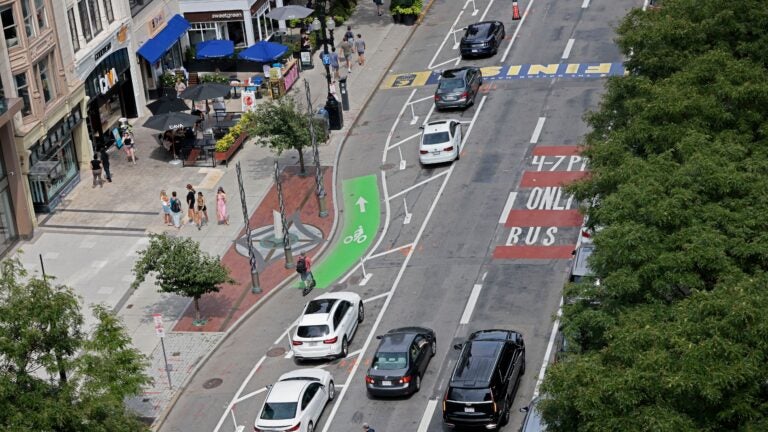
Boston will remove a controversial bus lane on Boylston Street after city officials concluded it “has not functioned as intended to justify the space allocation” since its installation last summer, Mayor Michelle Wu announced Wednesday.
“We have heard from community members that this needs to be changed,” she said during an appearance on GBH’s “Boston Public Radio.” Boylston Street’s dedicated bike lane will remain, Wu confirmed.
The bus lane was first installed temporarily to facilitate shuttles during the MBTA’s 2022 Orange Line shutdown, then made permanent in July 2024. But in a letter to Back Bay community leaders, Wu said the lane has often failed to provide a clear path for buses, as it’s “regularly used for driving and parking on parts of the street that are very constrained serving area businesses, hotels, and the Boston Public Library.”
Speaking to “Boston Public Radio” hosts Jim Braude and Margery Eagan, Wu denied the bus lane removal was a response to her mayoral opponent Josh Kraft, who received cheers last week when he declared Boston’s streets had become “jammed up by poorly conceived, hastily installed bus and bike lanes.”
The city will start removing the bus lane in the coming weeks, weather permitting, she said in her letter.
Wu pledged to work with local stakeholders to reallocate the space “to improve overall flow (including for MBTA buses) and address loading needs.” The city will also ramp up enforcement to address traffic caused by double-parking from food deliveries and construction, especially between Dartmouth and Clarendon streets, she said.
The Boylston Street traffic changes have long been a sore spot for Back Bay neighbors. While proponents argued the redesign would make Boylston friendlier for those traveling by means other than a car, others have griped about impacts to traffic, parking, pedestrians, and local businesses.
In addition to removing the bus lane, Wu has tapped Michael Brohel, Boston’s superintendent of basic city services, to review recent roadway changes, speak with stakeholders and engineers, and report back in 30 days with recommendations for adjustments, according to her letter. The city will also convene an advisory group “focused on the transition from temporary to permanent infrastructure that matches the form, function and history of our neighborhoods,” Wu said.
“Outside of family and sports, there is almost nothing that inspires the passion of Bostonians like our roads, and there will be times when committed residents will not agree with each other on changes,” she acknowledged. “We welcome the ongoing dialogue with you and the entire community to make the best possible choices for our city and prepare for our brightest future.”

Get everything you need to know to start your day, delivered right to your inbox every morning.




To comment, please create a screen name in your profile
To comment, please verify your email address
Conversation
This discussion has ended. Please join elsewhere on Boston.com