
A girls’ Catholic school in Wenham filed a $26 million bankruptcy. Faculty and family feel like they’ve been swindled.
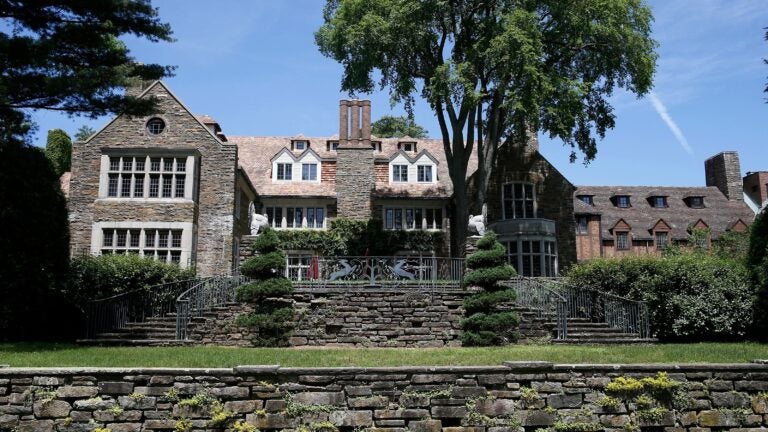
Nearly a decade after it opened at a historic estate in Wenham, the Academy at Penguin Hall is closed, its dream of educating girls in the Catholic tradition ending in a $26 million filing in bankruptcy court.
The 48-acre estate, with a stone manor as its centerpiece, was set to be auctioned on Sept. 17. The public auction has been temporarily postponed due to the bankruptcy proceedings.
Before the filing, the academy had collected $500,000 in tuition for the 2025-26 school year, which led to parents filing lawsuits and a complaint with the state attorney general’s office.
Faculty at the grade 9 through 12 academy went unpaid for the final six weeks of the school year. In 2023, the school owed $187,922 in unpaid federal taxes, court filings show.
Faculty and parents said they feel like they’ve been swindled with little hope for recovery or compensation.
“Twenty-six million dollars is a lot of debt for a tiny school,” said Deena Flaherty, who is out $24,000 paid toward tuition for her daughter’s senior year.
The academy’s board of trustees, which includes its president, Molly B. Martins, and her husband, Al Martins, who is also a member of the board, filed the bankruptcy claim on June 11.
Two days later, on June 13, the small college preparatory school, which commanded tuition of $42,000 a year, announced its closure.
Court documents show at least two dozen outstanding loans, staggering debt, including more than $300,000 owed to National Grid for utilities, and overdue bills due to Verizon, the town of Wenham, a marketing firm, a photography studio, and sports equipment suppliers, to name a few.
Martins Construction Co., owned by Al Martins, is owed $5 million, the filing states.
The academy followed the Roman Catholic school tradition of faith, service, and learning, but did not operate under the jurisdiction of the Archdiocese of Boston.
The school’s brick-and-stone buildings, sweeping lawns, and wooded land were inviting, and the small class sizes were unmatchable, said Flaherty.
“It looks like Hogwarts, it is the most beautiful property, so it has this allure,” Flaherty, who lives in Marblehead, said in an interview. “It was a tiny school. My daughter’s class as a rising senior was 17.”
The academy enrolled 70 students for the 2024-2025 school year, down from more than 150 students at its peak just before the COVID-19 pandemic outbreak in early 2020.
Flaherty filed a consumer complaint with the office of Massachusetts Attorney General Andrea Joy Campbell on July 11, claiming fraud and asking for an investigation.
“We had to put a deposit and start paying monthly in February, and there’s no way they went into that much debt from February on, so they clearly knew they were just taking our money,” Flaherty told the Globe.
“The amount of debt incurred in this tiny business is astronomical,” Flaherty wrote in the complaint.
“They took and did not refund $500,000 from parents for 25/26 tuition and closed and did not refund,” the complaint said. “That is fraud.”
A spokesperson for Campbell’s office declined to confirm or deny receipt of the complaint or any investigation.
The estate, originally built in 1929 as a summer home for a Detroit socialite, stood vacant for several years before the school bought the property for $10.3 million in 2016.
Before becoming a school, the estate had served as a retreat house for nuns, a conference center, and the headquarters for the former agency Mullen Advertising. (Now known as MullenLowe of Boston.)
Penguin Hall struggled with financial woes since it opened in the fall of 2016, with the hope of filling a void in faith-based learning for girls north of Boston.
It was formed with the joining of the new school and Nazareth Academy, a fully accredited girls’ school in Wakefield that also operated in the Catholic tradition.
But enrollment declined over the years, taking a toll on tuition, the school’s largest source of revenue. Donations failed to alleviate the shortfall.
In an email, board chair Molly Martins told the Globe she was devoted to the students and dedicated to the school’s mission “to educate, enlighten and empower young women to live and to lead exemplary lives,” and she worked hard to keep the academy on solid financial footing.
The financial trouble is linked, in part, to the sale of the school’s mortgage by a bank to a development company, Martins said.
A philanthropist pledged a minimum $2 million gift, but withdrew the offer due to negative publicity over the bankruptcy filing, she said.
The academy was forced to close abruptly “just when it was turning the corner and looking forward to a prosperous future,” Martins said in the email.
Flaherty said she and her husband began making tuition payments in February toward their daughter’s senior year, which was debited monthly from their banking account.
Academy officials regularly emailed parents to assure that the school would be open in the fall, Flaherty said, including a message sent on June 9.
A few days after the school’s abrupt closing, another monthly tuition payment automatically was taken from parents’ accounts, Flaherty said.
Teachers said paychecks regularly bounced until they just stopped altogether.
Along with not being paid for the last six weeks of school, faculty had their health insurance canceled and allege that they are owed more than $250,000 for money that was taken from their retirement accounts, records show.
Michelle Kline, who was hired as the academy’s director of college counseling in February, said her second and third paychecks cleared when she deposited them, but later bounced.
When she received her fourth paycheck, Kline said she and the rest of the faculty were advised that they should not deposit the checks due to insufficient funds.
A few days later, everyone who hadn’t received wages was given $100 in cash “to hold us over,” Kline said.
Kline’s next paycheck came as a wire transfer from Martins Construction, and the next one was a wire transfer from the academy.
Kline said this was about the time she realized, “I bet they’re not paying my taxes.”
Faculty and staff voiced their frustrations and met with the board of trustees, but despite it all, Molly Martins maintained a positive front, Kline said.
“Molly always used the words ‘investors,’” and would say, ‘We’re going to figure this out,’” Kline said.
Kline estimates that she is owed $15,000 to $16,000. “I don’t have a good feeling about recovering the money from Penguin Hall,” she said.
“It was just such a mess in the end,” she added. “I think we just all chose to believe that people don’t do this to other people.”
Martins said she understands the anger.
“It is understandable that many people are angry and need someone to blame,“ Martins wrote in the email. ”I am the face of the school, therefore the obvious target.“
But the blame is misplaced, she said.
“I and the dedicated board of trustees would never take any actions to betray or defraud anyone,” Martins said. “Every decision was always made for the benefit of the girls.”





To comment, please create a screen name in your profile
To comment, please verify your email address
Conversation
This discussion has ended. Please join elsewhere on Boston.com