
A Somerville church said it was ‘called by God’ to open a homeless shelter. Neighbors took them to court.
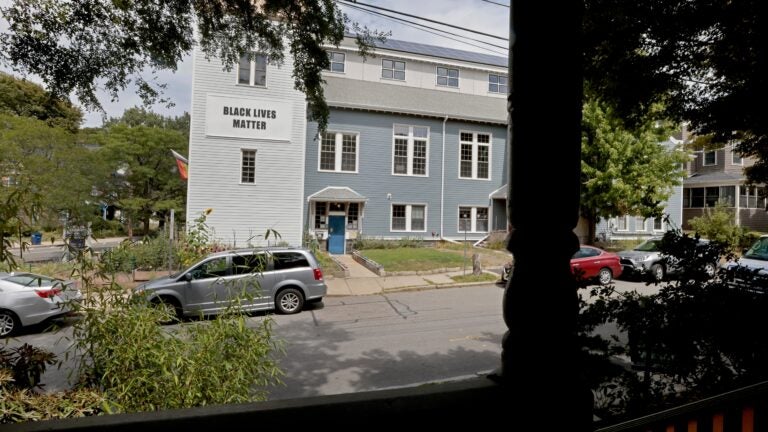
SOMERVILLE — As a light rain fell over Davis Square on Wednesday, a judge, teams of lawyers, a pastor, a nonprofit director, and a few others quietly toured the basement of the First Church of Somerville and inspected each of the space’s rooms.
They saw mattresses still wrapped in plastic piled up next to empty lockers and unassembled bed frames, a large kitchen, and a newly remodeled bathroom — components of what was supposed to be the city’s newest homeless shelter.
The tour, which included a walk to nearby Davis Square, where there has been increased concern about violence and open drug use, was a legal formality. It came before a trial set to begin in Land Court on Tuesday that will decide the fate of the shelter the church wants to open here and served as a reminder for the supporters of the shelter of the time lost as the lawsuit winds on.
“It’s difficult for me to understand,” said Brett Smith, who lives three doors down from the church and is its treasurer, of what has some of his neighbors so concerned about a population that so clearly needs help. “Everybody is very quick to talk about the problems, and I don’t know how those problems are helped by maintaining the status quo.”
Built last year but never used, the shelter is at the center of a case that is testing both the state’s religious freedom protections and the lengths people will go to push back when they feel quality-of-life concerns over homeless populations are being brushed aside as NIMBY-ism.
Last year, a group of neighbors sued to stop the Somerville Homeless Coalition from opening an adult overnight shelter, arguing that a city board was wrong to approve it, because local zoning rules explicitly say such a thing isn’t allowed.
Leaders of the progressive church, who say its members were “called by God” to open the shelter, claimed an exemption from local zoning because of Massachusetts’ Dover Amendment, which lets churches avert certain rules when they build things for religious purposes.
The plan calls for relocating an existing 16-bed shelter based at a different nearby church, which is in disrepair. But this version at First Church Somerville would be bigger, with space for 20 men and six women, and would be the only handicap-accessible shelter in the city.
“The Gospel teaches us that our neighbor is the person in front of us in need,” the Rev. Jenn Macy, the church’s lead pastor, told a Globe reporter last week, a day before the tour for lawyers and others. “You do not have to look far from our church steps to see that our neighbors need our help, now.”

The tour, meant to give everyone involved in the trial a chance to see spaces for themselves, took them around the neighborhood to the addresses of the plaintiffs who have been fighting for nearly a year to keep the shelter from opening.
Then the tour continued on a six-minute walk to the center of Davis Square, at a time when both residents and the people who hang out there say they are seeing bigger and more volatile crowds.
At least three neighbors believe the religious exemption the church cites shouldn’t apply in this case and alleged in their suit filed last September that it’s being used to overrule people who have legitimate concerns about the consequences of turning their residential neighborhood into a refuge for the city’s unhoused.


The Somerville Homeless Coalition, which still needs a permit from the city before it can open, believes it could have been bringing people in off the street to this space long ago were it not for the strife with neighbors, according to Michael Libby, the coalition’s executive director.
Neighbors say it didn’t have to be this way.
Michael Chiu, who has lived a few houses down from the church for more than 30 years, is not a plaintiff in the lawsuit but his wife, Maren, is. Chiu believes the lawsuit might have been avoided if neighbors had more say in it from the beginning.
“Somerville has a long tradition of engaging neighbors to discuss changes,” Chiu said. “And that just wasn’t done.”
Chiu said he and other concerned neighbors aren’t opposed outright to a shelter in the church. But they felt burned when they found out about the project just days before construction began and were frustrated when the church did not adopt some of their ideas, including a request to build a new fence as a barrier between the shelter and a nearby residential street. Macy, the church’s pastor, told the Globe the barrier would make its accessible entrance harder for guests to reach and disrupt a community garden.
Libby, the homeless coalition’s executive director, has said he regrets the way the organization communicated its plans early on and has since hosted community meetings to take feedback and make the case that its 40 years of experience managing a nearby shelter should put abutters at ease.
As the site visit wrapped up Wednesday, the drizzle outside continued, turning the sidewalk a dark gray.
Inside the church basement, with its long dinner tables ringed by empty chairs, it was dry.



To comment, please create a screen name in your profile
To comment, please verify your email address
Conversation
This discussion has ended. Please join elsewhere on Boston.com