
Boston’s indie game developers forging a new path for industry
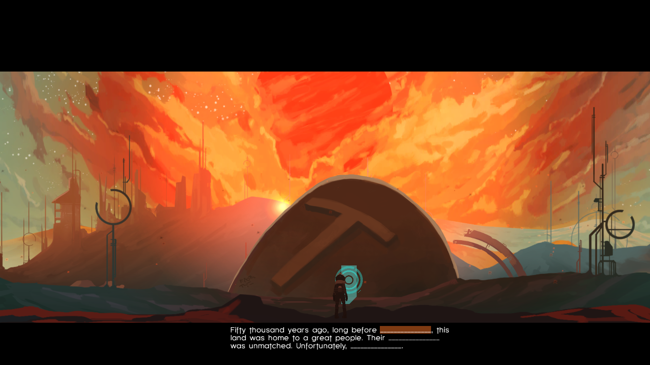
The lone survivor of an exploration team from Earth lands on a remote planet and finds a ruined civilization. Walking through relics, the echo of every single footstep is all she can hear. She stops by a sculpture, where a quill pen floats in the air.
“Fifty thousand years ago, long before _____________, this land was home to a great people. Their __________________ was unmatched. Unfortunately, _____________’’, reads the writing prompt jumping out on the computer screen.
“Elegy for a Dead World,’’ released December 2014 by Dejobaan Games, is a video game about writing. The three mysterious and ruined worlds in the game are based on the works of British romantic poets Percy Bysshe Shelley, John Keats, and Lord Byron.
As players explore the world, they will find hundreds of rocks, sheets of paper, and floating quills—writing tools waiting for the explorer. Ultimately, all the writing will build a story about this civilization that—the developers hope—will be inspired by the players’ real lives.
As the game goes on, players must describe the landscape with fewer and fewer writing instructions and hints, but with more chances to mix their own ideas into the story. Some topics are personal, such as a short story about the final days of someone who has died on the planet, a song about resignation, or a poem about war. When the story is done, the writer can share it with other players online.

A screenshot of “Elegy for a Dead World’’ in which the explorer is writing on a fallen sculpture.
Boston has been a hotbed of indie game design since the industry’s beginning. Infocom, one of the first commercial video game companies in the world, was founded in 1979 by MIT staff and students. Over 30 years later, some of the previous Infocom staff are still in the industry.
In a market flooded by violent games, such as first-person shooters, these local studios are trying to make something different: Imagine a video game “palate cleanser.’’
For “Elegy’s’’ two lead developers, Ichiro Lambe and Ziba Scott, this game is their “palate cleanser.’’ Scott is a member of the Indie Game Collective, a group of eight local indie game studios. Lambe is one of two advisors for the collective.
“Sometimes… when you are doing anything creative, you get sort of too much of it,’’ said Lambe, the founder and president of Dejobaan Games, a 16-year-old indie game company in Boston.
About two years ago, with his mind stuck on two other projects, Lambe approached Scott, the founder of Popcannibal LLC, another local indie game company, and said “let’s do something really small together, and see what could come out of it.’’
When he said “really small,’’ Lambe meant a five-day project.

Ichiro Lambe answered game developers’ questions in a panel at a major game convention PAX EAST 2015 in Boston.
In the early 1980s, Lambe’s father sat him down in front of a TI-99/4A computer when he was about 7 years old. He said when he was 10 years old, he wanted to make a game that would allow players “to walk (from left to right) and see different things.’’ At the age of 14, he made a simple online text-based game with a friend and sold it.
Then, 24 years later, he paired up with Scott to make his dream come true.
After five days, they had their first draft sketched out on a few sheets of paper. It was a game where players simply read what the developers had written. In the kitchen of Indie Game Collective, they called over another indie game developer, Eric Amussen. They asked him to give his first reaction to the drawings.
“I was looking for symbols or patterns that might give an indication of what this civilization valued and where things went wrong,’’ Amussen said.
“He told a story that we didn’t anticipate,’’ Lambe said. Because of his reaction, Lambe and Scott decided to leave writing space for players, using prompts to guide them to create their own story. As a result, the five-day idea turned to a big project that took them a year and a half to complete, which became “Elegy for a Dead World.’’
As an indie game studio, Dejobaan doesn’t have the resources to compete with big game companies in the field of building mainstream games.
Fire Hose Games, based in Cambridge, doesn’t either.
“You have to do something different to survive, because you can’t afford to make something that is already well-known,’’ said Eitan Glinert, the president of Fire Hose Games.
From Nothing to An Industry
The video game history in Boston can be traced back to the 1970s, when some MIT staffers and students were fascinated by the first text-adventure game, “Adventure’’ (also known as “Colossal Cave Adventure’’), and decided to make their own games. This group of young people in Cambridge later became known as the founders of Infocom, one of the first commercial video game companies in the world.
Among all the interactive fiction games that Infocom has produced, the text adventure game series “Zork’’ was its most famous and popular.
[fragment number=0]
“They sold their discs in sandwich bags,’’ said Sean Baptiste from Fire Hose Games.
Though Infocom went out of the business in 1989, the enthusiasm of the community has survived. In the 1990s, a lot of game companies came out of Cambridge and Boston.
Lambe said gamers largely had a very specific fomula, when he started putting out his games in the late 1990s. In their mind, games should have been like “Quake,’’ “Duke Nukem 3D,’’ and “Half-Life.’’ Independent games were frowned upon.
Instead of competing with the top game companies, he decided to focus on the emerging Palm Pilot game market. People played the games for 10 minutes waiting for the bus or subway. It was those players—who would never see themselves as gamers—that funded his game company in its first few struggling years.
[fragment number=1]
“We have one of the best indie game communities out there, period,’’ Fire Hose’s Glinert said. “We have regular meetups. We have people that help each other and are nice to each other.’’
Michael Carriere is a leader of another local game developers’ community–Boston Indies–and founded the Indie Game Collective in 2012.

Michael Carriere was working in the new office of Indie Game Collective with other members.
In additon to working with each other, members of the Indie Game Collective also spend part of their Fridays hosting visitors who are interested in seeking advice about making games.
Before lunch on a recent Friday, Carriere met with a college student from Southern New Hampshire University who asked for some tips to prepare for getting into the industry. Then he spent lunch with a high school student who wanted to see what a game developer’s normal day looked like. He asked the student to test a game his team is working on to understand the testing process and how to interpret feedback.
“‘Elegy’ is a reflection on game developers, because that’s exactly what we have to do,’’ Carriere said. “Every time we create a new game, we have to create something that we want others to be interested in. And when you’re playing ‘Elegy,’ that’s exactly what you have to do.’’
Dejobaan has five prototype games in development now. The developers regularly bring ideas in and put them aside, returning to them later to see if the idea can work. It’s similar to Lambe’s “walking to the right’’ idea, which resurfaced as “Elegy for a Dead World.’’ The only difference is that idea was put on the shelf for 28 years.
“When I wake up in the morning, I think about games. When I go to bed at night,’’ he paused and put his hand on the chest, “I mean it’s right here. I think about games.’’





To comment, please create a screen name in your profile
To comment, please verify your email address
Conversation
This discussion has ended. Please join elsewhere on Boston.com