
FCC Votes Down NFL Blackout Rule; NFL Now the Bad Guy All on Its Own
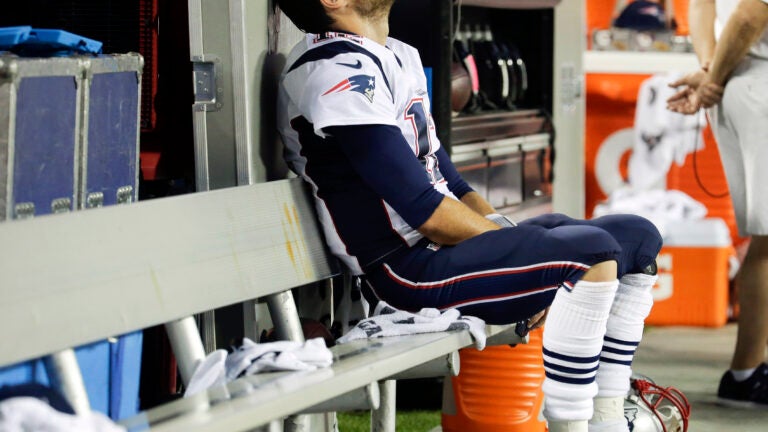
The FCC has done away with its rule that helped prop up the NFL’s blackout rule.
What does that mean? Quite possibly, very little.
The NFL blackout policy calls for local broadcast stations not to show a team’s home game in the local market if tickets to that game have not been sold out within a few days of kickoff—a rarity, yes, but definitely a pain for fans when it comes to pass in their neck of the woods. The policy has long been backed by an FCC regulation that was voted away on Tuesday.
Imagine, for instance, that the Patriots are playing Miami in December, the Patriots are 2-11 and nobody wants to go to the game. This almost certainly would not happen, because the Patriots always sell out and teams have tricks up their sleeves to avoid blackouts. Also, I highly doubt the Patriots will be 2-11 in December. Still, just imagine. (Some might say it’s too bad Monday night’s Patriots game wasn’t blacked out.)
That game would not be broadcast in New England, because the NFL wants to punish you for not ponying up for a ticket to an awful game.
The NFL makes maybe a few thousand dollars in ticket sales due to the threat of the blackout rule. The league actually says with a straight face that this encourages it to strike TV deals with free, over-the-air broadcasters rather than cable stations—nevermind that between its current contracts with networks NBC, ABC, and FOX, the fees already increase by 7 percent each year and by 2022 will net the league $3.1 billion in a year. And nevermind that it also has a contract with cable station ESPN.
So the FCC vote is nice. But even after the unanimous decision, the NFL’s policy remains in place as part of its private dealings with broadcasters. So if you don’t have cable or satellite, the local broadcast of that December Patriots game still would not be available through your antenna.
The FCC’s rule change, speaking in terms of effects, makes it possible for cable or satellite companies to show an out-of-town broadcast to a local audience that has been blacked out. That won’t happen, however, if the broadcasters don’t agree to let cable companies do so. We’ll see whether they do, but The New York Times notes they may well balk at that, because it could invoke the wrath of the massive nonprofit that still employs Roger Goodell.
The only thing we know Tuesday’s vote does for sure is take away the FCC as a partner in blame for the NFL’s blackout practice. Now the league will have to shoulder the burden of enforcing such a strongly anti-fan policy all by itself. Hooray, sure, but the role of the bad guy is becoming a well worn look for the league.




To comment, please create a screen name in your profile
To comment, please verify your email address
Conversation
This discussion has ended. Please join elsewhere on Boston.com