
Get the latest Boston sports news
Receive updates on your favorite Boston teams, straight from our newsroom to your inbox.
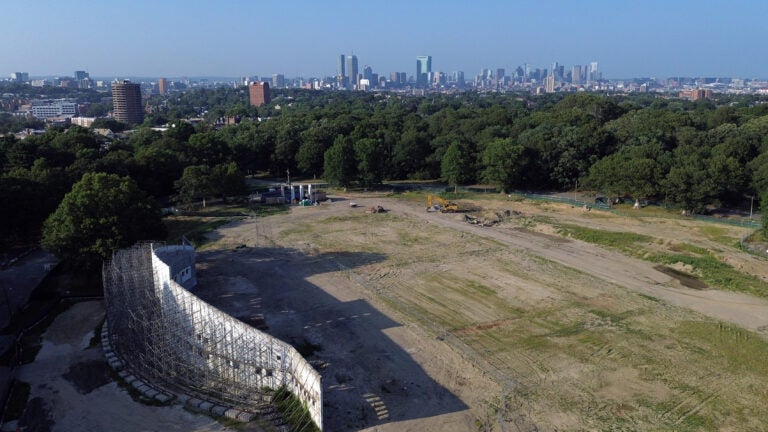
The New England Revolution soccer team, owned by Patriots owner Robert Kraft, voiced its support in court for the controversial White Stadium renovation, likening the process to its own soccer-specific stadium proposed in Everett.
“The New England Revolution is concerned that this lawsuit might impede development of the White Stadium renovation, jeopardize the broad range of important benefits that the renovation will bring to Massachusetts, and will deter future projects as well,” lawyers representing the team wrote in an amicus brief filed last week.
Spearheaded by Boston Mayor Michelle Wu, the renovation of White Stadium in Franklin Park which is used by Boston Public Schools students, is funded through a public-private partnership with Boston Legacy FC, a new professional women’s soccer team.
In contrast to the Kraft Group, Josh Kraft, Robert Kraft’s son and Wu’s one-time mayoral opponent, opposed the project and criticized Wu’s handling of the project, accusing her of “catastrophic” mismanagement.
The price tag for Boston taxpayers has ballooned to $135 million, while the women’s soccer team will spend $190 million. The team is expected to pay more than $252 million in community benefits over the next 15 years, the largest community benefits agreement in the city’s history, officials said previously.
A Superior Court judge ruled in favor of the city last year, but opponents of the plan appealed the judge’s decision. In December, the case was added to the docket of the Supreme Judicial Court, and in early January, the court began accepting amicus briefs, where parties not directly involved in the case but have an interest or opinion, can file in support of either side.
The Revolution filed in support of the city and its soccer partners, arguing that, like the Everett Stadium partnership, the project will support the community, revitalize the area, and bring soccer scholarships and mentorships to students.
According to the brief, as part of an agreement reached, Boston and Everett will both reap the benefits of a stadium, bringing in millions to revitalize Charlestown, infrastructure, and transportation near the soccer-specific stadium.
“The New England Revolution knows well the benefits that public-private stadium projects deliver to local communities,” the brief said. “The Everett Stadium partnership illustrates many of the benefits that the White Stadium renovation will likewise bring to Massachusetts communities. The renovation will also help forge deep and lasting bonds between that community and Boston Legacy FC.”
The Franklin Park Defenders, the group behind the lawsuit that includes the Emerald Necklace Conservancy and more than 20 citizens, argues that a private stadium development violates Article 97 of the Massachusetts Constitution. The article requires a state Legislature vote to approve any change in use of public park and recreational land, prompting an environmental review and alternate plans.
“Defendants argue that the 14-acre ‘Stadium Parcel’ was never dedicated as permanent parkland, ignoring that the land was expressly taken by the City of Boston in 1883 for that very purpose,” the opponents wrote in SJC filings, adding that Boston took the land “for the sole and express purpose of 6 creating public parkland.”

Receive updates on your favorite Boston teams, straight from our newsroom to your inbox.





Be civil. Be kind.
Read our full community guidelines.To comment, please create a screen name in your profile
To comment, please verify your email address