
MIT researchers say they’ve created a temporary remedy for wrinkled skin
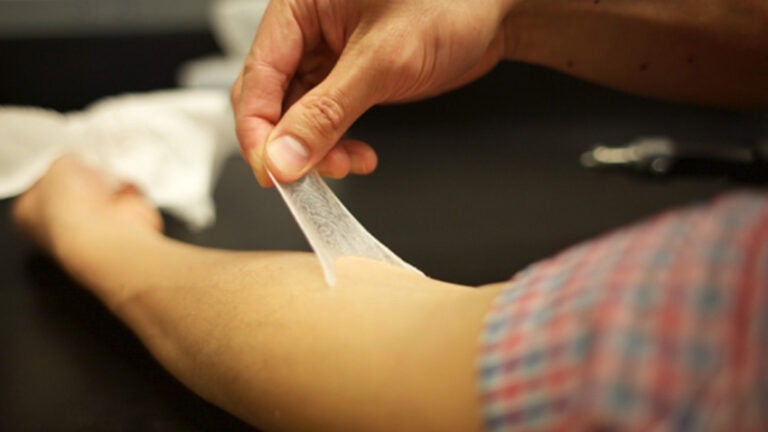
Scientists may have found a way to replace wrinkled skin with a younger-looking alternative — temporarily, at least.
“What we’ve been able to do is create a cream basically that you can put on the skin,” Robert Langer, a chemical engineer and professor at MIT, said in a video. “And then once it’s on the skin, it can actually form essentially an elastic second skin.”
Researchers at MIT, Massachusetts General Hospital, Living Proof, and Olivo Labs combined efforts to develop the cream, an MIT release announced Monday. The technology, which took around 10 years to make, involves a silicone-based polymer, which is an invisible cream. When it’s applied to the skin along with a second cream that serves as a catalyst, the two combine to tighten and even skin, making it mimic the elasticity of younger skin. Tests with subjects have shown that it reduces the presence of under the eye bags and can also help to moisturize dry skin for around 24 hours, according to the release.

The test subject receives the treatment on the right side of her face, while the right remains unchanged.
But the research could yield more than cosmetic advances. Scientists believe the technology, which is immune to water and soap, could create a seal to deliver drugs that treat eczema or provide protection from ultraviolet light, the release said. Sagging skin is also more susceptible to extreme temperatures, toxins, microorganisms, radiation, and injury, and researchers hope that products such as this can help eliminate the impact of some of those factors.
“It’s an invisible layer that can provide a barrier, provide cosmetic improvement, and potentially deliver a drug locally to the area that’s being treated,” Daniel Anderson, a chemical engineering professor at MIT, said in the release. “Those three things together could really make it ideal for use in humans.”
Watch a video demonstrating the results here:




To comment, please create a screen name in your profile
To comment, please verify your email address
Conversation
This discussion has ended. Please join elsewhere on Boston.com