
Mass. doctors declare racism a public health crisis, launch initiative to combat it
The Massachusetts Medical Society has gathered several healthcare experts to combat healthcare-related issues caused by structural racism.
As lawmakers moved this week to reintroduce the Anti-Racism in Public Health Act, which would confront deep disparities in racial equity from a health perspective nationwide, the Massachusetts Medical Society also recognized racism as a public health crisis and assembled an advisory group to prioritize antiracism in its policies.
Related Links
-
Racial Justice
Ayanna Pressley, Elizabeth Warren renew efforts to pass Anti-Racism in Public Health bill
-
COVID
Mass. leaders are pushing for a more equitable COVID vaccine rollout. Here’s how.
-
COVID
A parallel pandemic hits health care workers: Trauma and exhaustion
-
Racial Justice
‘This is the time to reconstruct’: Here are 4 ways Ayanna Pressley says the country can recover from the pandemic, and work toward equality
Supporting more than 25,000 physicians in the Commonwealth, the society has gathered a group of several healthcare leaders and public health experts to address and combat healthcare-related issues caused by structural racism, as well as implement the organization’s Antiracism Action Plan.
“The Massachusetts Medical Society views health care as an inalienable human right, and for far too long injustice and racism in myriad forms has interfered with that right, which has led us into an inexcusable public health crisis that causes illness and premature death for our Black and Brown patients,” Society President Dr. David Rosman said in a statement. “Our pointed aim is to correct this and, as importantly and simultaneously, address all forms of racism that affect patients, physicians and our colleagues in the health care workforce.”
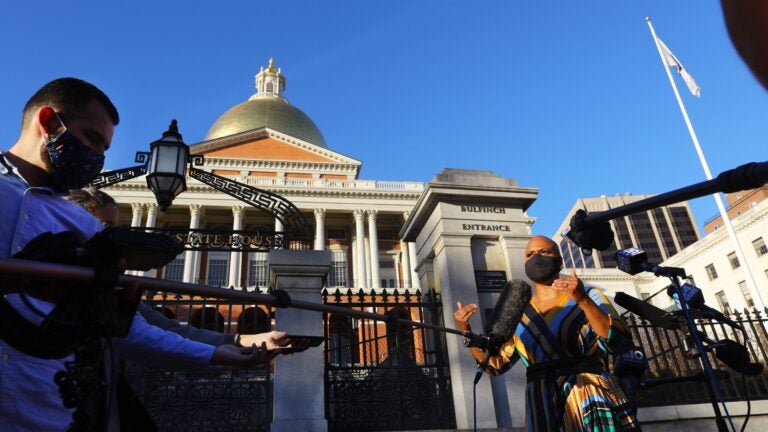
Meanwhile, U.S. Rep. Ayanna Pressley hosted a virtual community conversation on Thursday evening about the importance of renewing her Anti-Racism in Public Health Act, and the necessity of anti-racist policymaking at large.
Excited for this one. So much to cover.
Drop me a note or question you’d like to hear discussed with @BLeeForCongress and @DrIbram ⬇️ https://t.co/vrQjKH0lsV
— Ayanna Pressley (@AyannaPressley) February 3, 2021
Just an hour beforehand, Boston City Councilor Michelle Wu held a live conversation on her Facebook page about vaccination outreach and building trust for the vaccine in communities of color.
https://www.facebook.com/michelleforboston/videos/274489557346652/?__cft__[0]=AZURYhfk27ADomt2G8jrZnxqdKalxi6oFzu4e0y_abHURe9nj60MEFNyAfh_x-ExKr67EcymDs1o7JJvAs0qkscxzZcIgITmt5fyuBbXobCBBEYbQ-eXmtiLs-JxcoW1pynYimQ-CPfcdVqG7Fj4qoa1ToMX8MzgB195g5D4LAWxHA&__tn__=%2CO%2CP-R
Their discussion comes as polls and surveys continue to show more hesitancy from Black and Latinx residents when it comes to receiving the vaccine — highlighting longstanding mistreatment of Black people by medical institutions in the U.S., and an overarching doubt in the government’s actions regarding health care issues.
Pressley said in a late December statement that officials and medical experts must be the ones to make amends and earn back the trust of communities of color as the vaccine is distributed.
The Massachusetts Medical Society said that through its Antiracism Action Plan, it’s committed to right those wrongs by promoting equity and racial justice, supporting physicians who have been marginalized, and prioritizing antiracism in its strategic plan.
Through their working group, the organization said it would also focus on supporting and providing resources to underrepresented people in medicine who face abuse and discrimination in their places of work, addressing racism and reducing racial inequities affecting patients and public health, and educating physicians, along with all other society members, about racism.



To comment, please create a screen name in your profile
To comment, please verify your email address
Conversation
This discussion has ended. Please join elsewhere on Boston.com