
Pressley, activists say if you’re disabled while Black, police violence is a particular problem
“When we say Black Lives Matter, we must also state and affirm that Black disabled lives matter."
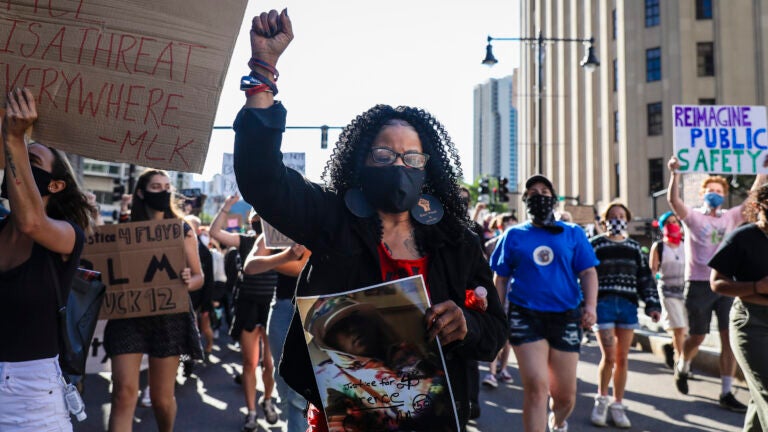

Terrence Coleman
When reflecting on the police shooting of Boston man Terrence Coleman in 2016, U.S. Rep. Ayanna Pressley said that along with the discussions surrounding the Black Lives Matter movement, there also has to be recognition for Black people who have disabilities.
Coleman, 31, had struggled with schizophrenia, and his mom, Hope, recalled the last few moments of his life during a recent panel discussion including Pressley and Lawyers for Civil Rights. Hope said she remembers how her son was sitting outside, and she worried he was getting too cold. She also thought he hadn’t taken his medicine.
As Hope Coleman remembers her son telling paramedics that he didn’t want to go to the hospital for an evaluation, and the scuffle that led to him being fatally shot – Coleman’s family disputes claims that Terrence Coleman was armed with a knife – she’s overcome with emotion. She’s taken part in marches and events since her son’s death four years ago, and she’s filed a federal lawsuit seeking justice. Her pain over her son’s death remains raw.
“I’m fighting for justice,” she said. “It’s time for change.”
Pressley highlighted the importance of recognizing that when calling for racial justice and an end to police brutality, it’s important to include those who have disabilities.
“I think too often the headlines fail to recognize the ways in which there has been intersectional criminalization and structural racism,” Pressley said. “So when we say Black Lives Matter, we must also state and affirm that Black disabled lives matter because a very high percentage of the lives that we have been robbed of, who have been unjustly criminalized, profiled, surveyed, lynched, brutalized and murdered, were Black disabled individuals.”
Related Links
-
Local News
Boston city councilors are looking to send nonviolent 911 calls to health and outreach workers. Here’s what to know.
-
Local
Here’s what Rachael Rollins said after protesters stood outside her office calling for justice for Black men killed by police
-
Protests
Protest in Boston calls for reopening cases of Black people killed by law enforcement
Discussions surrounding the circumstances of Coleman’s death, and his mother being forced to recount what happened, make people uncomfortable, Pressley said. But she said that Americans should remain uncomfortable with incidents like this. She said Boston isn’t exempt from police brutality and racial justice issues.
She said that a reason why certain laws “are unjust and harmful” is because those who are “closest to the pain” often aren’t included in discussions.
“And I do believe the people closest to the pain should be the closest to the power informing the policies that we are writing,” Pressley said.
Pressley pointed out some troubling statistics. For all American men, regardless of race, from ages 25 to 29, being killed by police is the sixth leading cause of death, according to research published last year. For Black men, they are 2.5 times more likely to be killed by police than white men; roughly 1 in 1,000 Black men and boys are killed by police over a lifetime.
Other research shows that those who have a disability, or are suffering from a mental health issue, make up between one third and one half of all those killed by police officers.
“No community is immune from this reality, and no community can ignore that reality,” Pressley said. “And that includes Boston.”
Sophia Hall, a supervising attorney for Lawyers for Civil Rights, underscored the importance of saying something in the face of injustice. However, she said while video footage is important, she also wishes it wasn’t needed.
“As you can see how critically important it is to have video evidence when something occurs, it’s a shame,” she said during the panel discussion. “It’s really a shame that there are so many people who disbelieve about the experience that communities who are over-policed and who have been over-policed for decades experience.
“But the reality is that for some, that is a myth, there is question there, there is lots of scrutiny, and so the benefit of bystanders who stand up who say something, who record, who speak out, who watch out for their fellow man, that does make all of the difference,” she said. “You see that is the reason why we’ve been able to reignite this sort of national advocacy around police violence.”
She also mentioned the difficulties of dealing with law enforcement when being Black and also having a disability.
“For people particularly in Terrence’s situation who not only have to overcome a disbelief that in this country we conflate Blackness with criminalization, which is 100 percent true, you also have to overcome a belief that we conflate mental health disabilities with criminalization,” Hall said. “And so people in Terrence’s experience not only find themselves more often in violent encounters with law enforcement, but they’re even further away from finding common ground with law enforcement that does not reflect their race, their language, their lived experience, and an inability to be able to come together to resolve problems without violence.”
Watch the full panel discussion:
https://www.facebook.com/LawyersForCivilRights/videos/600721700614451/?__tn__=%2CO-R
Get Boston.com's browser alerts:
Enable breaking news notifications straight to your internet browser.



To comment, please create a screen name in your profile
To comment, please verify your email address
Conversation
This discussion has ended. Please join elsewhere on Boston.com