
Sign up for the Today newsletter
Get everything you need to know to start your day, delivered right to your inbox every morning.
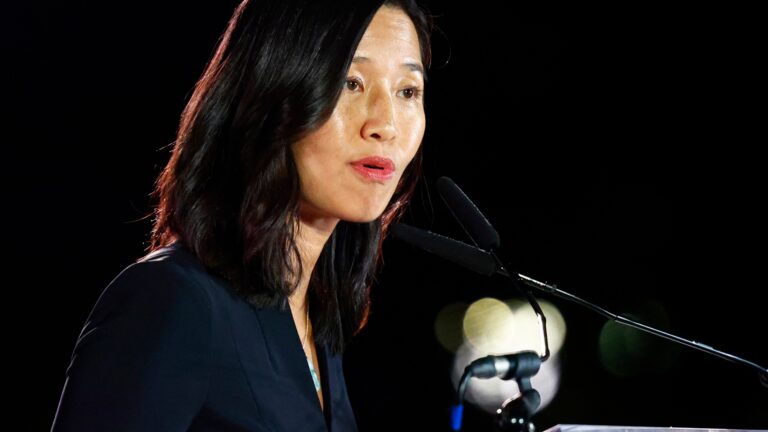
Last week, the Massachusetts Senate voted to reject Boston Mayor Michelle Wu’s plan to temporarily shift more of the city’s property tax burden onto commercial properties. Wu responded to the vote Tuesday, criticizing specific senators who opposed the plan and airing broader complaints about the power that the Legislature wields over municipalities.
The rejection of Wu’s plan comes after years of her trying to force the issue on Beacon Hill. When the COVID-19 pandemic caused commercial property values to decline in Boston, residential property owners were forced to pay more in property taxes to make up for the lost revenue that was no longer coming from commercial properties. Wu has been adamant about defending homeowners, who are seeing a 13% residential property tax hike this month.
In order to shift the city’s property tax formula, Wu needs approval from the Legislature. But Boston already taxes commercial properties at 175% the residential rate, and her efforts were opposed by fiscal watchdogs and powerful real estate and business leaders. Two other versions of Wu’s plan were approved by the City Council and the House of Representatives in 2024 but ultimately died in the Senate without a full vote.
A third version was passed by the City Council last February. Wu made a renewed push to get it over the finish line late last year after securing her second term in a dominant reelection campaign.
An ally of Wu’s offered her plan as an amendment to other legislation being debated by the Senate last week, in order to force a vote on the issue. It was rejected 33-5.
Wu was asked about the vote Tuesday during her appearance on GBH’s “Boston Public Radio.” She said that she was glad to finally see a vote in the Senate but bemoaned the ways in which senators may have been influenced by other entities.
“We’re in a system where the state chooses, and often is influenced by, the Chamber of Commerce more than the conscience of their own communities,” she said.
Wu highlighted the fact that her plan was supported by nearly the entire City Council, every state representative from Boston, and four out of the six senators from the city. She called out Sens. Nick Collins and William Brownsberger by name, saying that they voted “against their communities.”
Collins and Brownsberger, who each represent parts of Boston, have been two of the most outspoken opponents of the tax shift plan. During the same session when Wu’s plan was rejected, the Senate voted in favor of a bill sponsored by Collins and Brownsberger that would allow municipalities to offer rebates and credits to taxpayers in certain years with major “tax shocks.”
When asked about the power of the Legislature, Wu said that municipal leaders throughout Massachusetts have similar gripes.
“Something’s got to give,” she said on GBH. “This is not just Boston, this is a frustration that I know and hear from communities everywhere.”
The current system has resulted in the Senate putting more effort into shutting down “common sense” proposals from municipalities than finding statewide solutions for communities dealing with tax revenue problems, Wu said.
The fact that Massachusetts voters could be faced with a record number of ballot questions this year shows that people are desperate to see action from state lawmakers, she added. But an overreliance on ballot initiatives can lead to problematically broad laws that are not the result of a nuanced decision-making process, she said.
For example, the mayor has been skeptical about the current ballot initiative that would enact statewide rent control. Wu is a fan of rent control but would prefer that individual municipalities have the power to dictate their own policies rather than a blanket statewide cap on rent increases.
While advocating for the tax plan, Wu often mentioned actions taken by former Mayor Tom Menino in 2004 that similarly shifted the property tax burden onto commercial owners.
“Unlike 20 years ago, our current state Senate leadership has a very different relationship with corporate interests and the real estate sector,” she said.
Get everything you need to know to start your day, delivered right to your inbox every morning.




To comment, please create a screen name in your profile
To comment, please verify your email address
Conversation
This discussion has ended. Please join elsewhere on Boston.com