
Sign up for the Today newsletter
Get everything you need to know to start your day, delivered right to your inbox every morning.
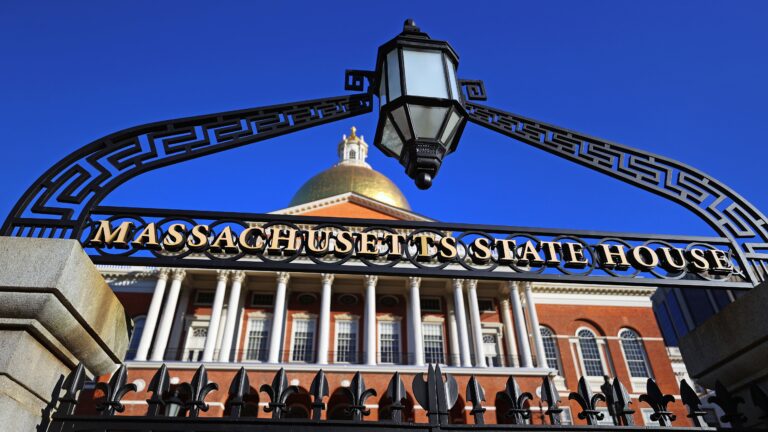
A version of Boston Mayor Michelle Wu’s plan to shift more of the city’s property tax burden onto commercial properties was rejected in the Massachusetts Senate on Thursday.
Lawmakers did approve of a bill sponsored by two senators who have been opposed to Wu’s plan, Sens. William Brownsberger and Nick Collins. This bill is aimed at blunting the impact of “tax shock” years, when residents are faced with property tax increases of more than 10%. When this occurs, the legislation would allow cities and towns to offer rebates and credits to taxpayers.
Homeowners in Boston are seeing a 13% residential property tax hike this month, something that Wu said she wanted to avoid through the adoption of her plan.
Boston is heavily reliant on property taxes. Since commercial property values have fallen in recent years, the city has had to make up the difference by collecting more in residential property taxes. Homeowners saw a 10.4% average year-over-year increase in property taxes last year.
Wu has tried three times to get a plan passed that would temporarily raise the cap on the commercial property tax rate before gradually returning to the current formulation over a number of years. But any changes to the residential tax formula must go through the State House. Wu’s plans twice progressed through the City Council and the House of Representatives last year, only to stall in the Senate. After winning reelection last fall, she made a high-profile push to get the tax shift proposal through the State House one more time.
To get a vote on the Senate floor, Sen. Michael Rush of West Roxbury offered an amendment that mirrored Wu’s proposal.
“This burden has disproportionately hurt working families in the city of Boston, as well as seniors on fixed incomes,” he said on the Senate floor. “My constituents have reached out to me to let me know how hard these tax increases are.”
The amendment was rejected 33-5. Joining Rush in voting for the amendment were Sens. Lydia Edwards, Liz Miranda, Sal DiDomenico, and Pat Jehlen.
“In addition to having overwhelming support from the people of Boston, the City’s residential tax relief legislation has had support from 12 of 13 Boston City Councilors, all 16 Boston state representatives, and now four of Boston’s six State Senators,” a city spokesperson said in a statement. “We’re grateful to Senator Rush for putting this amendment forward, and Senators Lydia Edwards, Liz Miranda, Sal DiDomenico and Patricia Jehlen who voted for this today.”
Brownsberger argued against Wu’s plan, saying that it would open the door for municipalities across the state with similar tax structures as Boston to pursue shifts like this.
“If we voted for this amendment and passed it today, the result would be that we would have the request from every other city that classifies today,” he said.
Get everything you need to know to start your day, delivered right to your inbox every morning.




To comment, please create a screen name in your profile
To comment, please verify your email address
Conversation
This discussion has ended. Please join elsewhere on Boston.com