
Sign up for the Today newsletter
Get everything you need to know to start your day, delivered right to your inbox every morning.
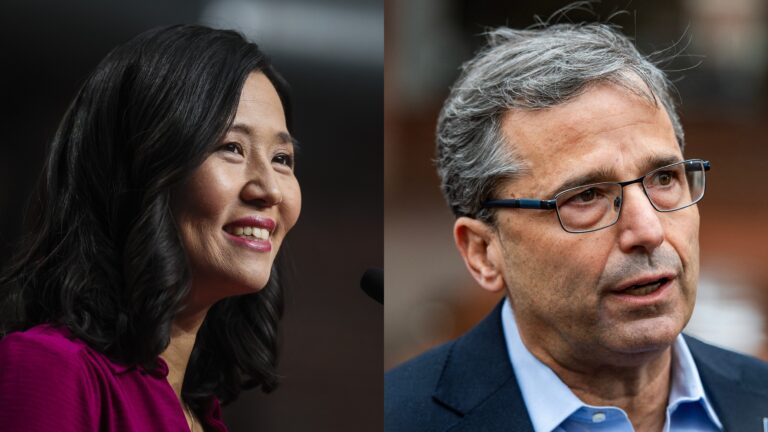
Boston Mayor Michelle Wu formally kicked off her reelection campaign over the weekend, laying out her priorities for a possible second term and taking plenty of swipes at the race’s other major challenger, Josh Kraft. While Saturday’s event marked the official launch of the mayoral race, Kraft announced his campaign in early February and Wu has been telegraphing for months that she wants another four years in City Hall.
Where does the race stand now, and what issues could dominate the contest? Here’s what to know.
Wu made history when she took office in 2022, becoming the first woman and first person of color elected mayor in the city’s history. She easily defeated Annissa Essaibi George, a former City Council colleague, by running on an unabashedly progressive platform. During that campaign, Wu advocated for free public transportation, a municipal-level Green New Deal, rent control, and a different approach to real estate development.
Kraft may be best known for his last name, but the son of Patriots owner Robert Kraft has a long history as a philanthropic leader in Boston. He spent 30 years with Boys & Girls Clubs of Boston, including 12 years as president and CEO. Kraft also fostered relationships throughout the city as president of the New England Patriots Foundation and chair of the Urban League of Eastern Massachusetts. But he has never held elected office before and only recently moved within the city’s boundaries.
City Councilor Ed Flynn and real estate developer Thomas O’Brien both toyed with the idea of challenging Wu, but ultimately decided against it. Meanwhile, community activist Domingos DaRosa launched a “grassroots” campaign as an independent last month. Potential candidates have until mid-May to file paperwork to run.
Both Wu and Kraft are Democrats, but the mayoral election is formally nonpartisan. A preliminary election will be held on Sept. 9 to narrow down the race to two candidates, and the municipal election itself will take place on Nov. 4.
Kraft acknowledges that he is facing an uphill battle. Unseating an elected incumbent mayor is extraordinarily difficult in Boston. In fact, the last time it happened was in 1949 when James Michael Curley was ousted after serving time in federal prison for mail fraud.
Wu is also popular. Polling from Emerson College conducted in February found that 43% of Boston voters would support Wu compared to 29% getting behind Kraft. In addition, that polling showed that 57% of voters have a favorable view of Wu.
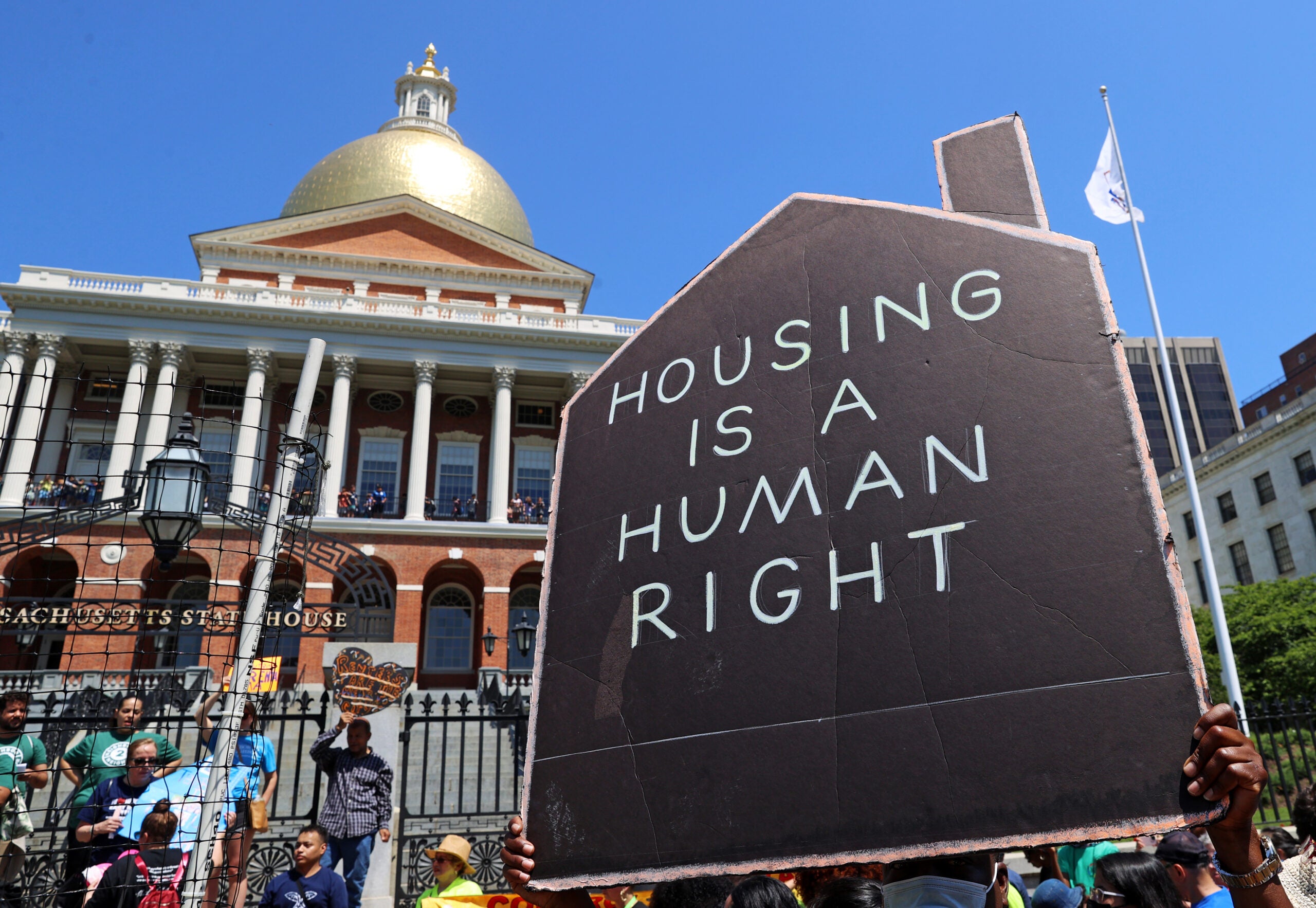
Housing affordability is a major concern for residents and will likely be a major factor in the election. It’s no secret that Kraft views this as the number one issue facing voters: he said as much in the first post made to his new Substack blog. A “Housing Access & Affordability Plan” is also prominently featured on Kraft’s campaign website, and the first video produced by his team centered on housing.
Kraft’s plan has three components: streamlining the process for building new units that have already been permitted, implementing an “opt-in rent control” strategy, and allocating tax revenue from the new units to help first-time homebuyers.
The Wu administration says it has done more to boost affordable housing than any other administration since the ’90s.
Wu introduced a rent control plan in 2023. It passed through City Council, but she failed to win enough support from lawmakers on Beacon Hill. Kraft’s rent control plan takes many cues from Wu’s, but differs significantly in that it would be optional for landlords. Property tax breaks would be used as incentives for their participation.
Wu slammed Kraft’s proposal as “fake rent control,” labeling it instead as a “good landlord tax break.” Some advocates see Kraft’s plan as a step in the wrong direction, while others are mixed. Real estate developers, who have had a contentious relationship with Wu, appear interested.

President Donald Trump’s return to the White House is affecting life for Americans in dramatic ways across the country, and Boston is no exception. The city and Wu herself are in the administration’s crosshairs due to so-called sanctuary policies that limit the ways in which local police can cooperate with federal immigration authorities.
Trump’s “border czar” Tom Homan has been particularly aggressive, singling out Wu and Police Chief Michael Cox in national media appearances for purportedly letting violent criminals walk free. He vowed to “bring hell” to Boston, and ICE operations around the city are being heavily publicized by the Trump administration. Cities like Boston will likely see continued focus from ICE and “more collateral arrests,” Homan said.
But in relentlessly attacking her, the Trump administration and its allies also gave Wu a national spotlight to build momentum and tout one of her signature accomplishments: a stunning decrease in homicides and gun violence. She is an unabashed champion of the Boston Trust Act, the city’s sanctuary policy, and attributes the public safety improvements partly to the trust that law fosters between residents and police. Wu earned widespread praise for how she handled attacks from GOP lawmakers in Washington last month.
Kraft does not differ significantly from Wu on the topic. He supports the Trust Act and has come out strongly against Trump’s plans for mass deportations and Homan’s rhetoric.
As Wu testified before Congress, Kraft attended a rally organized by immigration advocates in Boston. Before Wu spoke to tens of thousands of anti-Trump protesters in Boston last weekend, Kraft marched with the crowds from Boston Common to City Hall and voiced his displeasure at Trump and Elon Musk.
Robert Kraft has a friendly history with Trump. Josh Kraft insists he has never voted for Trump or supported the president financially. But his father’s connections could become a political albatross, especially if the Trump administration continues to target and thus elevate Wu.
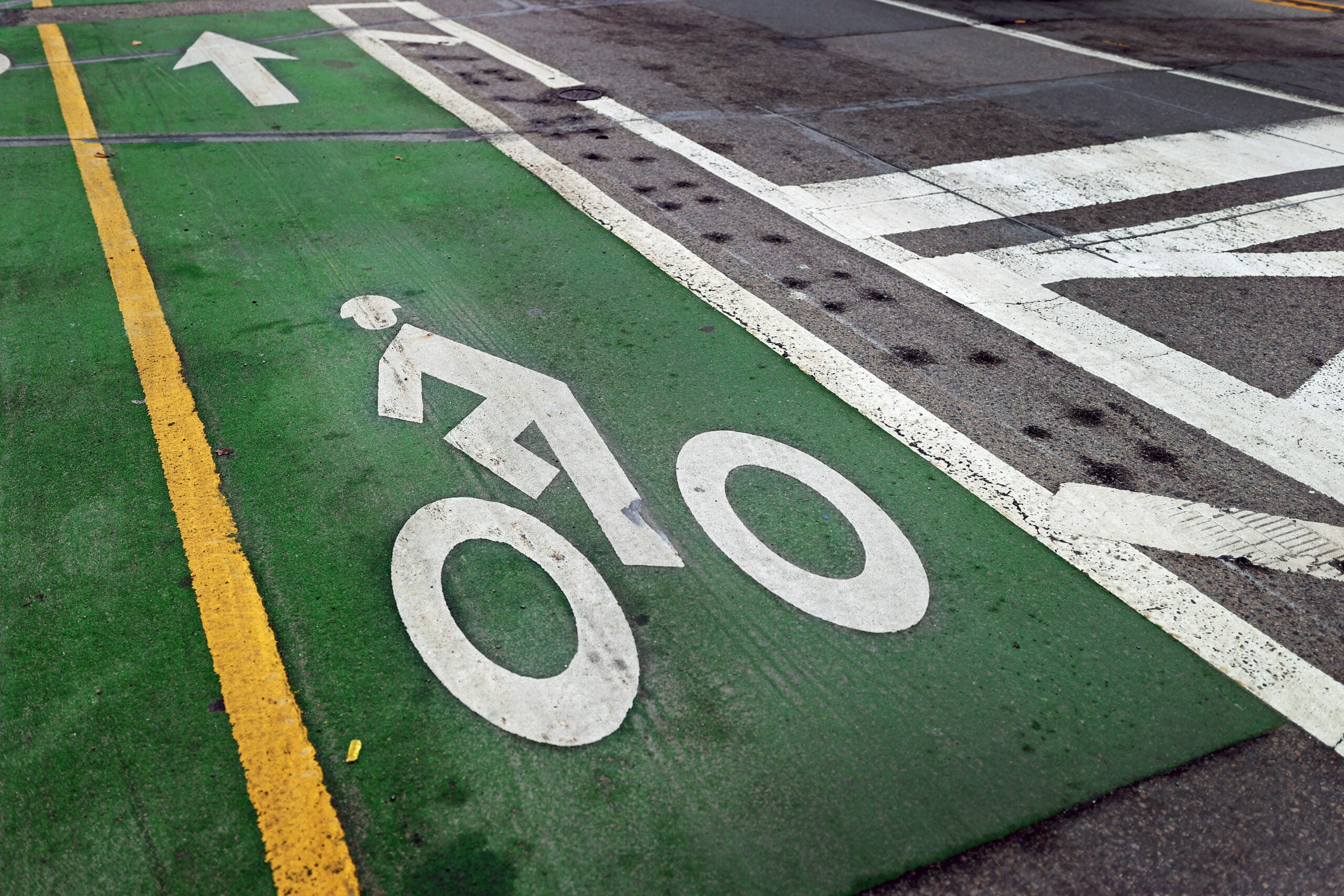
When Kraft announced his candidacy, one of the loudest cheers he received from supporters was after he said that Boston’s streets were being “jammed up by poorly conceived, hastily installed bus and bike lanes.”
Capitalizing on the frustration many Boston residents feel about the addition of bike and bus lanes throughout the city could be a potent strategy for Kraft. The Emerson poll found that 48% of voters think there are too many bike lanes in Boston, compared to 35% that think there are an adequate number and just 17% who think there are too few bike lanes.
Wu ran in 2021 on a transit-oriented platform and has been a vocal advocate for bike infrastructure, even riding to work on occasion. But the mayor has changed her tone recently, courting those who feel the city installed too many bike lanes too quickly at the risk of alienating cyclists and bus commuters.
In February, the city removed a controversial bus lane on Boylston Street. It had only been installed last summer, but the administration concluded this year that it had “not functioned as intended to justify the space allocation.”
Later that month, Wu initiated a 30-day review of all the road infrastructure changes her administration has made over the past three years. Wu faced criticism from cyclists after the city abruptly removed the flexible posts that protect some bike lanes, and implied that better balance must be maintained between prioritizing bike lanes and other traffic.
Wu has said that her administration wanted to “move as quickly as possible” and did not adequately take into account community feedback when evaluating new bike and bus lanes. After the 30-day review, officials determined that “project communications and community engagement were inadequate” and that “many felt that their feedback was given insufficient attention.” They suggested prioritizing “consensus over speed” and establishing more clear timelines about future projects.
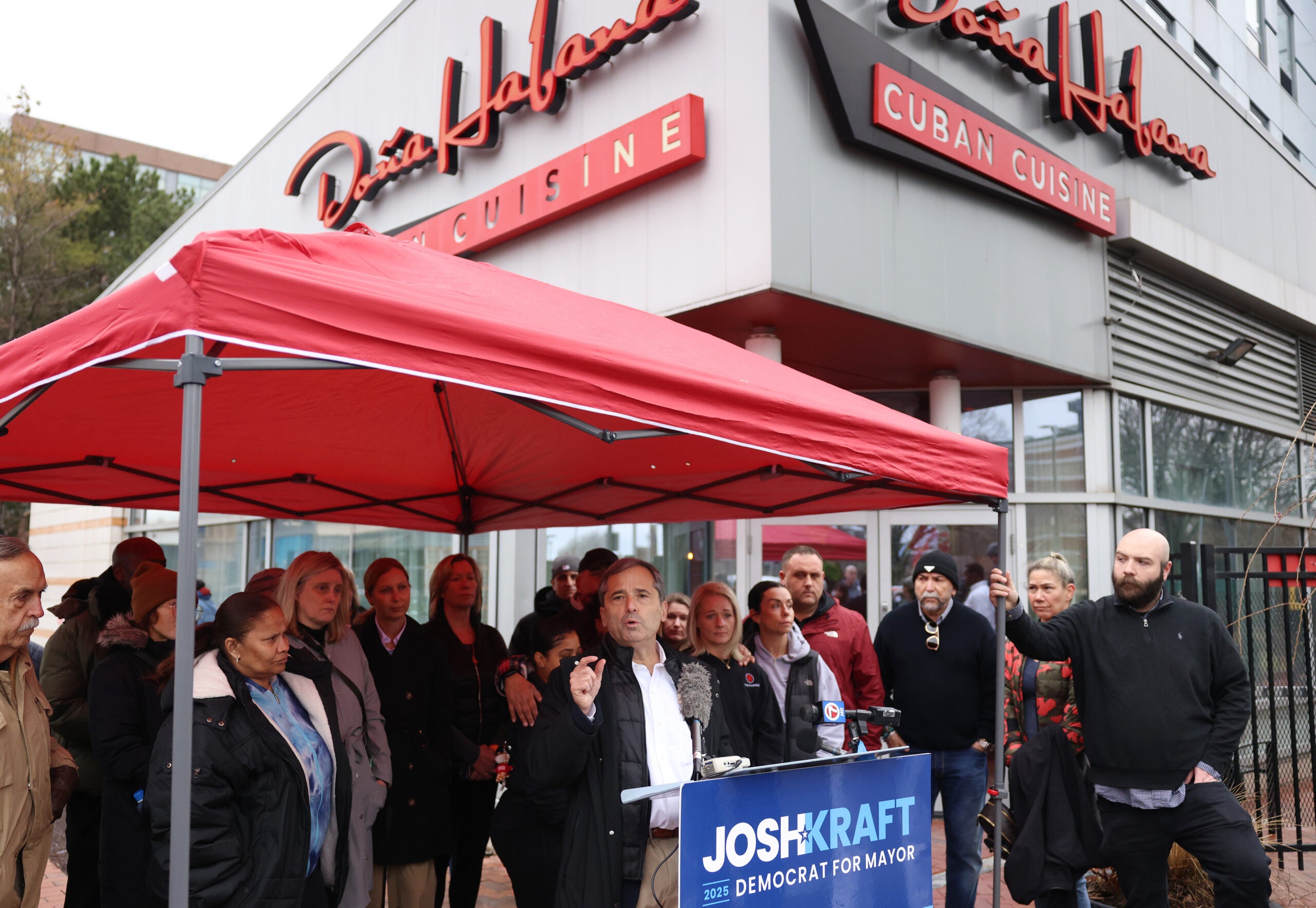
Wu frequently says that Boston is the “safest major city in America,” citing statistics about falling rates of gun violence and homicides. While Wu has won praise for these accomplishments, there are still aspects of public safety where she is vulnerable to attacks from Kraft.
One is Wu’s response to the public health crisis on display at the area known as Mass. and Cass. For years the interlocking crises of mental health, substance use, and homelessness have collided around the intersection of Melnea Cass Boulevard and Massachusetts Avenue.
A few months after taking office, Wu moved to dismantle a large encampment there. In 2023, she again oversaw a major operation to clear an encampment on nearby Atkinson Street and connect those living outside with housing and other services. Public safety had deteriorated so badly within the encampment that outreach workers were being told to avoid it for their own wellbeing. Wu empowered police to take down the tents, successfully clearing the encampment and moving many to shelter beds.
But throughout 2024 a steady drumbeat arose from residents and community leaders who said that the city’s actions at Mass. and Cass spread safety issues to other parts of the city. Concerns of congregate drug use, crime, and dangerous waste were especially prominent from those who live and do business downtown.
The Wu administration has acknowledged these spillover effects and is actively working with a variety of parties to improve conditions. But Kraft seized on these worries, blasting Wu for mishandling Mass. and Cass while introducing a plan of his own. It calls for more proactive police activity, greater cooperation with the state government, and a pivot away from “harm reduction.”
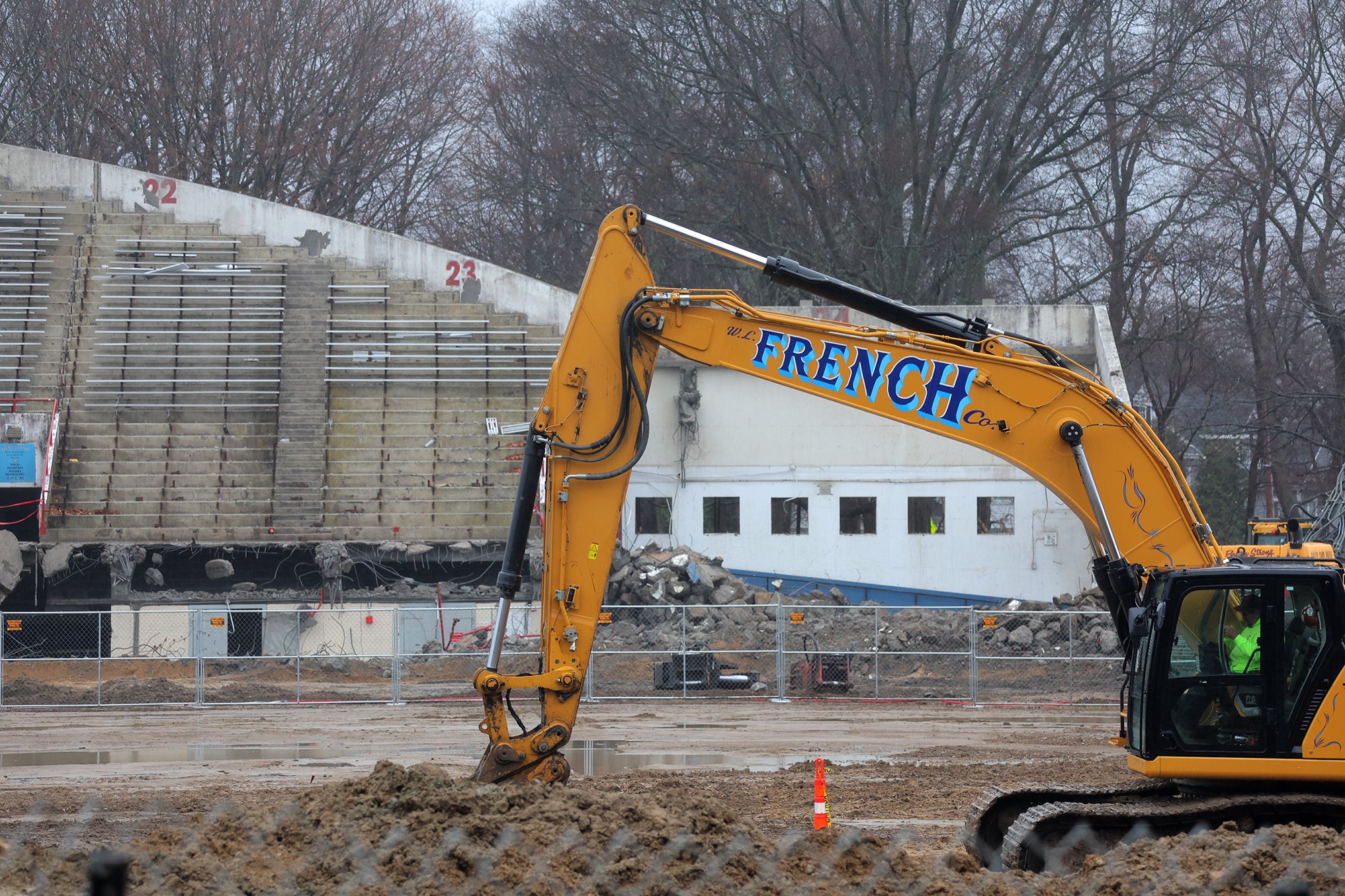
The story of the mayoral race could also end up being a tale of two stadiums. In Franklin Park, Wu is overseeing the renovation of the dilapidated White Stadium, which will be used for Boston student-athletes and a new professional women’s soccer team. In nearby Everett, plans are slowly progressing to build a soccer stadium for the New England Revolution.
Robert Kraft owns the Revolution and is a driving force in the team’s potential move from Foxborough to Everett. The Kraft Group must now negotiate with the city of Boston directly to move forward with the stadium project. If built, it would cause major transportation disruptions in Boston, most notably in Charlestown. Wu recently attended a community meeting in Charlestown on the potential impacts of stadium construction, telling residents that key details had not been discussed yet and that she had only received “radio silence” from the Krafts themselves. Wu has been generally supportive of the stadium, but only if the transportation concerns can be ironed out.
Josh Kraft has said that he would recuse himself from any negotiations involving his family’s business if he defeats Wu. He has never held an operational role in the family business. But associations between the Kraft name and the Everett project could be hard to sweep aside. Wu has already said that she has worries about a “gigantic conflict of interest” and said that Kraft needs to be more “forthright” with the public.
Wu is spearheading the White Stadium project, which relies on a public-private partnership between the city and the new women’s soccer team. While there is widespread agreement that something needed to be done to overhaul the stadium, Wu faced serious pushback from some residents and community groups. They objected to the city’s reliance on a private entity, arguing that Boston’s student-athletes would be sidelined by the new soccer team. Opponents also worry about rising construction costs, the loss of green space, and how traffic could be affected.
Opponents even sued the city, arguing that the project was illegal. Kraft allied himself with them, calling on Wu to halt demolition work and appearing at a rally they held next to the stadium.
But the city was ultimately successful in court, paving the way for continued construction and for the new soccer team to begin play in 2026. Opponents said they could appeal the decision, and Kraft maintained his position that the project is a waste of taxpayer dollars. Wu hailed the decision as a “historic victory.”
Get everything you need to know to start your day, delivered right to your inbox every morning.





To comment, please create a screen name in your profile
To comment, please verify your email address
Conversation
This discussion has ended. Please join elsewhere on Boston.com