
Sign up for the Today newsletter
Get everything you need to know to start your day, delivered right to your inbox every morning.
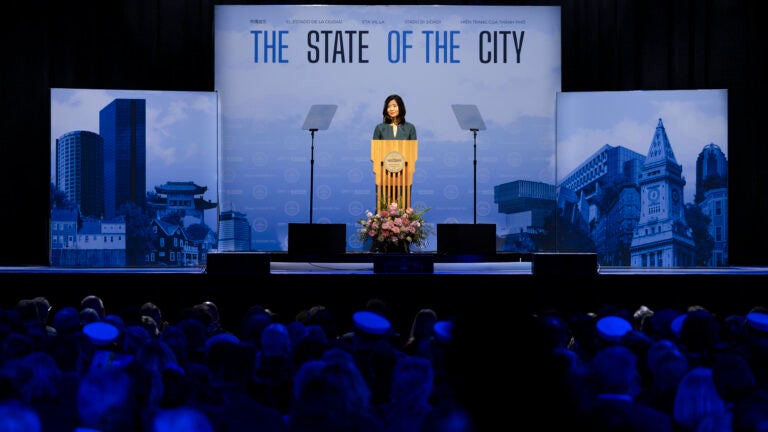
Boston Mayor Michelle Wu delivered her annual State of the City address Wednesday night. Wu highlighted Boston’s sharp decrease in homicides, new programs to help residents buy homes, expanded free access to museums, and an initiative to lower energy costs. The mayor sought to capitalize on the goodwill she earned after testifying before Congress a few weeks ago, injecting the speech with a notable through line of anti-Trump resistance.
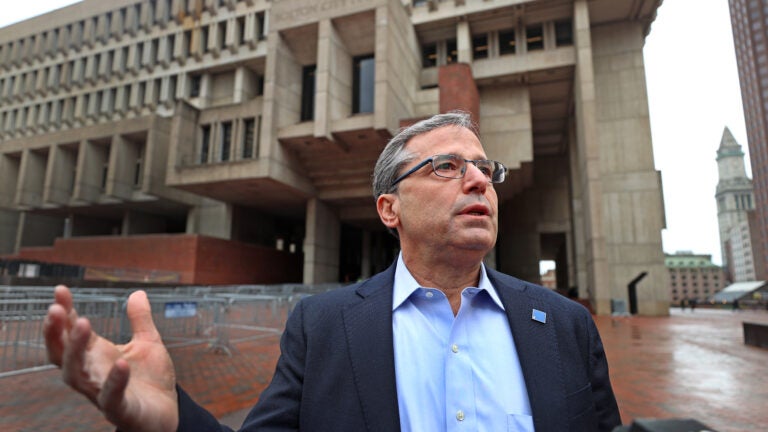
The speech also served another purpose: an unofficial kickoff to her reelection campaign. As she prepares to seek a second term, Wu is being challenged most notably by longtime philanthropist Josh Kraft.
While he is also running as a Democrat, Kraft has sought to draw a stark divide between Wu and himself on a number of high-profile issues like the controversial White Stadium redevelopment and the hasty installation of bike lanes. His core argument is that Wu “as if she alone has all the answers.”
Wednesday’s speech offered Wu a major platform to outline her vision of the future and tout her accomplishments, but it also gave Kraft plenty of opportunities to criticize the mayor and differentiate himself.
“All of us want a stronger and more vibrant city, but the state of the city under Mayor Wu is headed in the wrong direction. New housing production has ground to a halt, the problems at Mass and Cass have been pushed out into many neighborhoods, the same schools continue to fail our kids, poorly planned bike lanes have clogged our streets, and our residents are paying higher taxes due to a bloated payroll and irresponsible fiscal management,” Kraft said in a statement released Wednesday evening after the speech.
As Wu spoke, Kraft took to X to post some of his reactions in real time. He framed these posts as fact checks on some of Wu’s claims.
Wu is fond of calling Boston the “safest big city in America,” mostly attributing this to the low homicide rate and the fewer instances of gunfire seen during her time as mayor. But Kraft pointed out that shootings are up so far in 2025 and seized on simmering frustrations about Wu’s handling of Mass. and Cass. In particular, Wu’s move to clear a major tent encampment in 2023 led to spillover effects in other neighborhoods. The epicenter is downtown, where residents and civic leaders say crime and congregate drug use have become noticeably more common.
Kraft used two posts to draw attention to the area.
Wu is the driving force behind the ongoing White Stadium redevelopment. She has championed a public-private partnership with a professional women’s soccer team to restore the dilapidated stadium in Franklin Park. But some residents, advocates, and a well-known nonprofit have been highly critical of the project. They sued the city, and a trial is ongoing.
As the cost of the redevelopment rose beyond initial expectations, Wu had to walk back comments where she said that Boston would pay for its half of the project “no matter what it costs.”
Kraft brought up the White Stadium costs again, contrasting this with the city’s decision to ask the state for money to rebuild Madison Park Technical Vocational High School.
Housing and the exorbitant cost of living in Boston is at the forefront of many voters’ minds. Both Wu and Kraft say that building more housing, especially affordable housing, is the solution. But Kraft contends that Wu has not delivered on her housing promises.
Wu pledged to create around 13,000 units of housing in her first four years, but city data shows that “she is barely at 50% of her goal after 3+ years in office,” Kraft’s campaign said in a release. The campaign also cited data that shows that the number of permits pulled has fallen each year that Wu has been in office.
Another headache for Wu came last fall, when the majority of school buses failed to arrive on time on the first day of Boston’s school year. Some families even reported hours-long delays. City officials blamed the rollout of a new bus-tracking app and a surge of new registrations at the end of summer. Kraft said that this was evidence of Wu “failing our kids.”
Get everything you need to know to start your day, delivered right to your inbox every morning.



To comment, please create a screen name in your profile
To comment, please verify your email address
Conversation
This discussion has ended. Please join elsewhere on Boston.com