

Sign up for the Today newsletter
Get everything you need to know to start your day, delivered right to your inbox every morning.
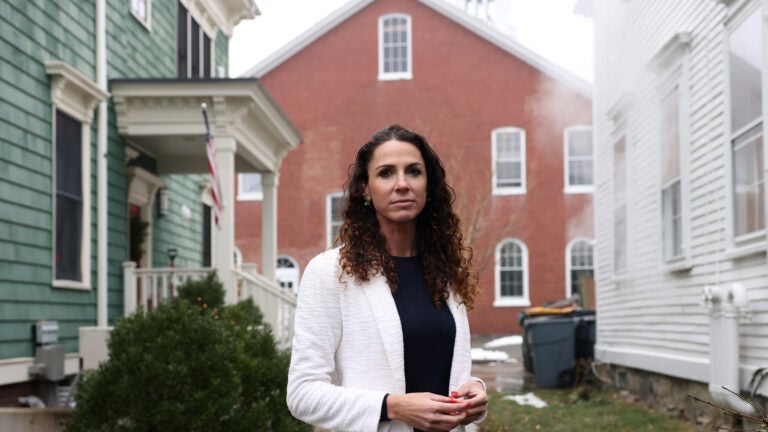
The state auditor is criticizing an aspect of a controversial state housing law, opining the state didn’t provide funding for municipalities when the law was passed.
State Auditor Diana DiZoglio’s office responded to a request from the Wrentham Select Board to look into concerns regarding the MBTA Communities Act, which requires towns and cities serviced by the MBTA to allow for multifamily housing near public transit.
Her office determined the law “constitutes an unfunded mandate,” meaning the new law, passed in 2021, didn’t provide municipalities proper funding to meet its requirements at the time it was passed.
DiZoglio’s determination came after the Supreme Judicial Court ruled against the Town of Milton, which challenged the legality of the law. The SJC determined the MBTA Communities Act is legal, and the auditor’s office points out the SJC called the law a “legislative mandate.” (The SJC also ruled the law “unenforceable,” but the state filed new guidelines in an effort to make the law enforceable.)
“I actually fully support the zoning law but our office is not able to literally ignore that the local mandate law does require contemporaneous funding be appropriated. The law was just ruled a mandate by the SJC. That means it requires a funding mechanism as part of the law,” DiZoglio wrote in a lengthy post on X.
Attorney General Andrea Campbell, who initially sued Milton for ignoring the law, replied to DiZoglio’s ruling in a statement.
“The Auditor’s claim that the MBTA Communities Law is an unfunded mandate is wrong, and, more importantly, this letter has no effect whatsoever on implementation of the Law,” Campbell said. “If those who oppose housing affordability try to make a similar claim in court, the state will vigorously defend the law, and we intend to be successful, as we have been so far.”
The auditor claims the law is unfunded because it “does not provide a funding mechanism for compliance with its provisions.” The auditor does concede that the state has provided technical assistance grants to help municipalities comply with the MBTA Communities Act.
The state has provided 125 communities with more than $7 million in technical assistance and grants to help officials draft new zoning districts, according to a spokesperson for the Executive Office of Housing and Livable Communities. All communities who have requested assistance were granted support, the spokesperson said.
However, the auditor’s office said the law is not in compliance with the Local Mandate Law “because the Commonwealth did not assume the costs of the MBTA Communities Act by general law and by appropriation in the 2021 session contemporaneously with the effective date of the MBTA Communities Act.”
In her statement on X, DiZoglio defended her office and responded to a quote in The Boston Globe from developer Jay Doherty, CEO of development firm Cabot, Cabot & Forbes who has multiple projects planned under the law. He called the auditor’s “attempt to throw a wrench into the process … grossly irresponsible,” and “political.”
“I know certain developers, seeking to exploit our housing initiatives for personal financial gain, have really gotten used to getting their way, right away lately, but Massachusetts neighborhoods are not to be treated like a personal Burger King for developers,” she wrote. “The funding issue is easily resolved and could be addressed in the Legislature immediately.”
The Town of Wrentham and its Interim Town Manager Michael King requested the auditor’s Division of Local Mandates, or DLM, to investigate the law and its financial impact. The DLM has not yet issued a determination of the law’s financial costs after “further data collection and analysis.”

Get everything you need to know to start your day, delivered right to your inbox every morning.





To comment, please create a screen name in your profile
To comment, please verify your email address
Conversation
This discussion has ended. Please join elsewhere on Boston.com