
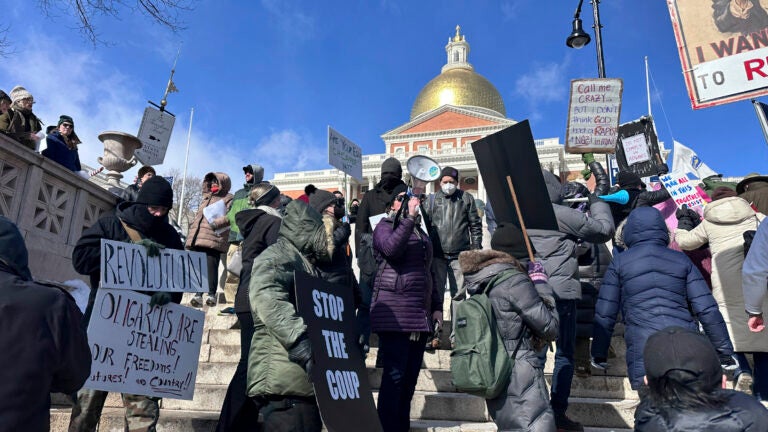
Sign up for the Today newsletter
Get everything you need to know to start your day, delivered right to your inbox every morning.
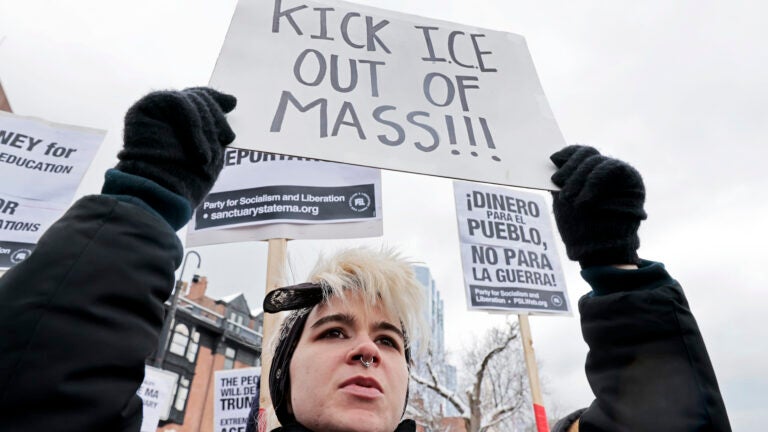
As the Trump administration works to increase deportations of undocumented immigrants, Congress could soon vote on a bill that would allow the federal government to restrict funding for so-called “sanctuary” cities like Boston.
The ACLU and other immigrant advocates are ramping up their fight against the bill, which they say could violate the Constitution and also be extremely difficult to implement. After a significant number of Democrats helped pass the Laken Riley Act last month, members of the party are being pressured to resist the legislation.
While there is no standardized definition of what constitutes a sanctuary jurisdiction, the term generally refers to places with laws that limit cooperation between local law enforcement and federal immigration authorities. Boston and other Massachusetts communities have existing laws that do just that, and a Supreme Judicial Court ruling from 2017 prohibits local law enforcement officials from making arrests based on federal civil immigration matters.
The Trump administration is picking public fights with major sanctuary cities. Boston Mayor Michelle Wu was called to testify before Congress about Boston’s policies, months after Trump’s “border czar” insulted her intelligence and said she could either help federal authorities or get “the hell out of the way.” She will testify next month, along with the mayors of New York City, Denver, and Chicago. The Department of Justice sued Chicago and the state of Illinois over sanctuary policies there, and Attorney General Pam Bondi moved to restrict funding to sanctuary cities immediately after taking office.
The “No Bailout for Sanctuary Cities Act” would officially define what constitutes a sanctuary jurisdiction and prohibit those areas from receiving federal funding that the jurisdiction “intends to use for the benefit” of undocumented immigrants. House Republicans are getting ready to call a vote on the bill in the next few weeks, Politico reported Tuesday.
“Sanctuary cities have chosen to defy federal immigration law, creating their own crisis,” said Rep. Nick LaLota of New York, who first introduced the bill in 2023 and reintroduced it last month, in a statement. “It’s unacceptable for federal taxpayers to bail them out for these reckless and misguided policies.”
“I think it’s an effort by the administration to strong arm and coerce local officials to do their bidding,” Carol Rose, executive director of the ACLU of Massachusetts, told Boston.com. “If they do it on this, they can do it on any number of issues, which is why it’s so important to hold the line right here and right now, because it’s just so clearly unconstitutional.”
House Minority Whip Katherine Clark, who represents suburbs north and west of Boston, whipped against the sanctuary cities bill when LaLota initially introduced it in the last Congress, and plans to do the same again, according to her office. Twelve Democrats voted for the initial bill, allowing it to pass the House with bipartisan support before failing to pass the Senate.
Rose argues that the bill would violate the 10th Amendment to the Constitution. Under the anti-commandeering doctrine, the federal government cannot commandeer state and local resources to enforce immigration enforcement, she said. Local officials cannot impede federal authorities, but they are under no obligation to provide their own resources to help. The bill, if passed, would undoubtedly be challenged in the courts, she added.
Sarang Sekhavat, chief of staff for the Massachusetts Immigrant and Refugee Advocacy Coalition (MIRA), said he too sees the potential for this bill to violate the 10th Amendment. But Sekhavat also sees “sheer hypocrisy” from those supporting the bill — many of whom, he says, used to be outspoken proponents of the idea of state’s rights. Indeed, the anti-commandeering doctrine was notably reinforced by the late Supreme Court Justice Antonin Scalia, a conservative hero and defender of federalism.
From a practical perspective, the bill is “bizarrely unworkable,” Rose said. It would make sanctuary jurisdictions ineligible for funds that it intends to use to “benefit” undocumented immigrants. This includes the provision of food, shelter, healthcare services, legal services, and transportation for those undocumented immigrants.
But state and local agencies do not segregate funds between citizens and non-citizens when it comes to providing those services.
“It’s not targeted in any way. It’s just sort of random,” Rose said.
While the sometimes-cloudy definitions of sanctuary jurisdictions can lead to confusion, the legislation would not even provide a useful, official definition, she added. Instead, the bill’s vague language could open the door for abuse.
“When they say ‘we’re going to punish sanctuary cities,’ they’re not clearly defining what a sanctuary city is,” Rose said. “And so it becomes whatever they say so at the time, and that’s ripe for abusive process.”
While the landscape of sanctuary policies is a “patchwork,” Sekhavat said that overall these policies have been effective. Proponents of sanctuary policies say that they increase public safety by ensuring people who might be the victims of crimes are not afraid to come forward to police. If someone witnessed a crime but fears deportation, they are less likely to report the incident to authorities. This can often be seen in cases involving domestic violence, Sekhavat said.
But disincentivizing sanctuary policies would affect entire communities in a lot of ways, Rose and Sekhavat argue. Funding for teachers, law enforcement, bus drivers, healthcare workers and more could be cut off, Rose said.
“I see just a blatant lack of humanity in this,” Sekhavat added. “This would not just hurt immigrants. This hurts everyone in these jurisdictions that it targets.”
A total of 48 House Democrats and 12 Democratic senators joined Republicans to help pass the Laken Riley Act, which requires the detention of unauthorized immigrants accused of theft and violent crimes.
How those Democratic defections would carry over into a vote on the sanctuary cities bill is unclear.
“I don’t listen to the ACLU — I listen to my district,” Rep. Vicente Gonzalez of Texas told Politico this week. Gonzalez was among the Democrats who voted in favor of the Laken Riley Act.
The only member of Massachusetts’s Congressional delegation to vote in favor of the Laken Riley Act was Rep. Stephen Lynch, who represents communities just south of Boston. Lynch received criticism from fellow Democrats for his decision. He called that bill “imperfect,” but defended his actions in an interview with WBUR last month. It was necessary, he told the station, to “change the narrative” around immigration so that people looking to come to the U.S. respect the legal process.
Lynch’s office did not respond to a request for comment.
Rose called the Laken Riley Act another “straightforward violation of the Constitution” and said the ACLU is prepping litigation around it.
Groups like MIRA and the ACLU are keeping up the pressure on elected officials to oppose the No Bailout for Sanctuary Cities Act.
The ACLU is hoping that every congressperson from Massachusetts will oppose the upcoming sanctuary cities legislation, and is urging residents to contact their elected officials about it.
“We certainly were disappointed with the vote on Laken Riley,” Sekhavat said. “It’s just about tarring immigrants as criminals as broadly as possible. This is so much of what they’re trying to do. They’re not just about enforcing immigration laws, they’re about changing immigration laws so that they can kick as many people out as possible.”
Get everything you need to know to start your day, delivered right to your inbox every morning.





To comment, please create a screen name in your profile
To comment, please verify your email address
Conversation
This discussion has ended. Please join elsewhere on Boston.com