
Extra News Alerts
Get breaking updates as they happen.
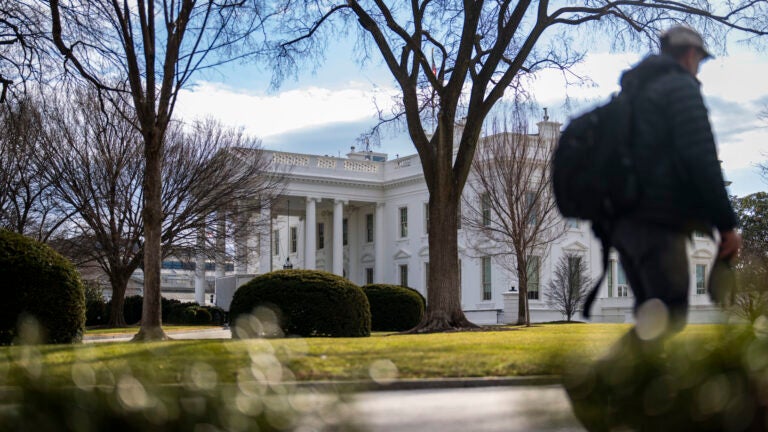
A federal judge Monday said the White House has defied his order to release billions of dollars in federal grants, marking the first time a judge has expressly declared that the Trump White House was disobeying a judicial mandate.
The ruling by Judge John J. McConnell Jr. in Rhode Island federal court ordered Trump administration officials to comply with what he called “the plain text” of an edict he issued last month.
McConnell’s ruling marked a step toward what could quickly evolve into a high-stakes showdown between the executive and judicial branches, a day after a social media post by Vice President JD Vance claimed that “judges aren’t allowed to control the executive’s legitimate power,” elevating the chance that the White House could provoke a constitutional crisis.
Already, more than 40 lawsuits have been filed against the Trump administration, challenging President Donald Trump’s brazen moves that have included revoking birthright citizenship and giving Elon Musk’s teams access to sensitive Treasury Department payment systems. Judges have already ruled that many of these executive actions may violate existing statutes.
Both McConnell and a federal judge in Washington, D.C., had previously ordered the White House to unfreeze federal funds locked up by a memo from the White House Office of Management and Budget that demanded that billions of dollars in federal grants be held back until they were determined to comply with Trump’s priorities, including with ideological litmus tests.
On Friday, 22 Democratic attorneys general went to McConnell to accuse the White House of failing to comply with his earlier order. The Justice Department responded in a filing Sunday that money for clean energy projects as well as transportation infrastructure allocated to states by the Inflation Reduction Act and the bipartisan infrastructure bill was exempt from the initial order because it had been paused under a different memo than the one that prompted the lawsuit.
McConnell’s ruling Monday explicitly rejected that argument. The judge granted the attorneys general’s request for a “motion for enforcement” — essentially a nudge. It did not find that the Trump administration is in contempt of court or specify any penalties for failing to comply.
His initial order, he wrote, was “clear and unambiguous, and there are no impediments to the Defendants’ compliance with” it.
However, the judge was straightforward in his finding that an initial temporary restraining order that he issued Jan. 29 was not being followed.
“These pauses in funding violate the plain text of the TRO,” McConnell wrote. That earlier ruling ordered the administration not to “pause, freeze, impede, block, cancel, or terminate” money that had already been allocated by Congress to the states to pay for Medicaid, school lunches, low-income housing subsidies and other essential services.
The White House fired back almost immediately, predicting an eventual victory.
“Each executive order will hold up in court because every action of the Trump-Vance administration is completely lawful,” said Harrison Fields, a White House spokesperson. “Any legal challenge against it is nothing more than an attempt to undermine the will of the American people.”
This article originally appeared in The New York Times.
Get breaking updates as they happen.



To comment, please create a screen name in your profile
To comment, please verify your email address
Conversation
This discussion has ended. Please join elsewhere on Boston.com