
Sign up for the Today newsletter
Get everything you need to know to start your day, delivered right to your inbox every morning.
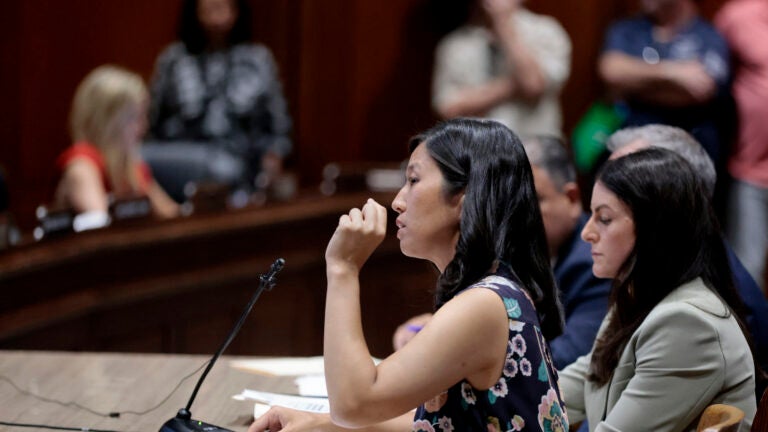
After months of negotiating and expending significant political capital, Boston Mayor Michelle Wu’s plan to shift the city’s property tax burden onto commercial real estate to save homeowners money seemingly died on Beacon Hill on Monday.
Wu needed lawmakers to approve the measure before City Council sets property taxes for next year, which the body is preparing to do Wednesday. So when the tax proposal was blocked once again in the state Senate on Monday, it appeared to be a fatal blow.
Sen. Will Brownsberger of Belmont declared as much after the Senate session.
“I personally do consider this bill dead,” Brownsberger, whose district includes parts of Boston, told reporters, per The Boston Globe.
Later on Monday evening, Senate President Karen Spilka released a lengthy statement saying that she had decided not to bring it to the floor for consideration again.
“My job as Senate President is to work toward compromise, always; without it we would accomplish nothing. It is also my job to listen to the members of the Senate, and I have heard clearly that there currently is not sufficient support for this proposal. I will therefore not bring it to the floor for further debate,” she said.
A spokesperson for Wu did not respond to a request for comment Tuesday.
The proposal has gone through several iterations, but the first version of it was announced by Wu in April. When the COVID-19 pandemic caused high office vacancy rates in Boston, commercial property values fell and residential real estate values rose. Boston relies heavily on property taxes, as about 71% of the city’s budget is funded by them. Homeowners were set to see a sharp spike in their property taxes to make up for the difference. Wu’s plan sought to soften the blow on residential property owners.
Her administration previously projected that residential property owners could see a 14% property tax spike year over year without the proposal’s approval. But last week the state Department of Revenue certified property valuations for the city that changed the calculus. Now, the average single-family home is expected to see about a 10.5% year-over-year increase.
Spilka cited this new data, saying that a “new understanding” left lawmakers and stakeholders with “serious concerns” about how the measure could affect the entire state’s competitiveness and potentially stall Boston’s economic recovery.
State Sen. Nick Collins of Boston used harsher language Monday when he used a procedural move to block any action from being taken on the measure for the third straight session.
“This matter before us was negotiated… based on false information. Whether that was intentional or not, we don’t know,” Collins said. “Now we know the sky isn’t falling, and the campaign of fear and manipulation that took place and continues to take place is a farce.”
But Collins said he is fully in favor of tax relief for homeowners in Boston, calling on the City Council to “cancel their planned three-week vacation” and pass a home-rule petition to give tax relief to homeowners in a different manner.
Wu’s proposal got to this point through a series of fits and starts. The initial version of it was passed by City Council in June, and Wu struck a compromise with leaders in the House of Representatives before it stalled in the Senate. So the mayor struck another deal with business leaders and fiscal watchdog groups who had previously opposed the measure, winning the approval of City Council and House leaders once again. But momentum stalled in recent weeks, culminating in Monday’s collapse.
State Sen. Liz Miranda of Boston spoke in support of the tax proposal during Monday’s session.
“Families in my district across age groups and incomes are struggling to stay afloat in the city we love. They cannot afford a property tax increase of any percent,” she said.
Sorry. This form is no longer available.
Get everything you need to know to start your day, delivered right to your inbox every morning.





To comment, please create a screen name in your profile
To comment, please verify your email address
Conversation
This discussion has ended. Please join elsewhere on Boston.com