
Sign up for the Today newsletter
Get everything you need to know to start your day, delivered right to your inbox every morning.
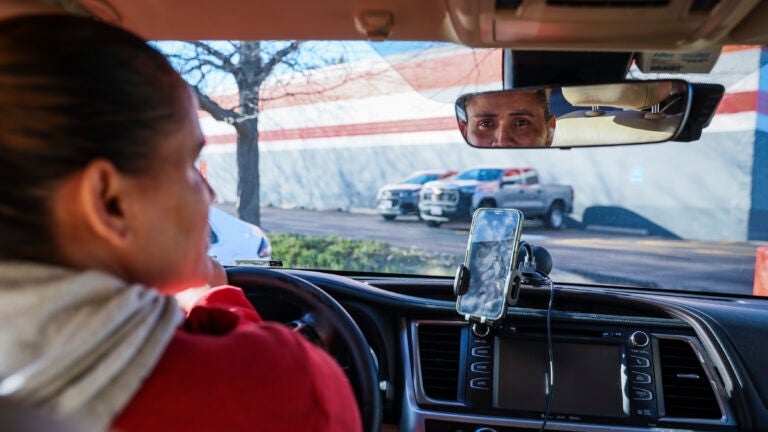
Controversy over rideshare drivers in the state has been at the forefront of conversations for the past few years. From impounding illegal mopeds to urging companies to enforce safe driving practices to questions over workers’ rights, the debates over this emerging industry are ongoing.
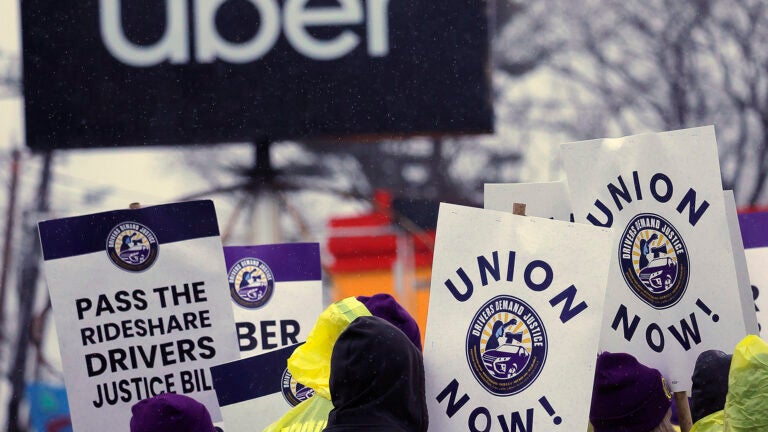
Come November, voters in Massachusetts will take up another issue: whether the drivers should be allowed to form unions for collective bargaining with transportation companies such as Uber and Lyft.
Currently, the drivers for the two companies do not qualify to form unions, like most other jobs in the state. Ballot Question 3 aims to change that.
If the ballot measure passes, to form a union, the drivers would have to collect signatures from at least 25% of active drivers or those who have completed more than the median number of rides in the past six months.
Then, if a union is formed, the state would oversee union negotiations and approve the negotiated recommendations on wages, benefits, and terms and conditions of work.
The initiative would also create a hearing process for the Massachusetts Employment Relations Board to process unfair work practice charges against the rideshare companies.
“Over the past two years, Massachusetts Uber and Lyft drivers have exposed the gig economy for what it is: an exploitation model centered on bilking workers, consumers and taxpayers alike,” Service Employees International Union (SEIU) President April Verrett said in a statement. “Drivers know that the best antidote to their industry’s sub-minimum wages, unfair deactivations and unsafe working conditions is the power to collectively bargain for better standards through a union.”
Earlier this year, Uber, Lyft, DoorDash, and Instacart funded an industry-backed ballot question committee called Flexibility and Benefits for Massachusetts Drivers. If implemented, the measure would have kept app-based drivers as independent contractors.
It also would have established an earning floor equal to 120% of the state’s minimum wage, or $18 an hour in 2023 before tips. Drivers also would have received health care stipends, occupational accident insurance, and paid sick time.
The ballot initiative came after the Attorney General’s Office filed a lawsuit in Suffolk Superior Court in 2020, seeking a determination on whether or not Uber and Lyft drivers are employees under the Massachusetts Wage and Hour Laws and, therefore, entitled to benefits and protections.
The lawsuit questioned whether rideshare drivers are independent contractors or employees.
The case was settled at the end of June, ending the companies’ ballot initiative.
“Our settlement with Uber and Lyft secured an unprecedented package of minimum wage, benefits and protections for workers,” Attorney General Andrea Campbell said in a statement following the ruling. “It’s a strong foundation that can and should be built upon.”
Campbell has endorsed the SEIU-backed Question 3.
The attorney general is apparently on par with most Massachusetts voters. The United for Justice ballot initiative committee, backed by 32BJ SEIU, commissioned a September 2023 poll of 500 likely voters, which found that two-thirds of the state’s voters support Uber and Lyft drivers having the right to form unions.
The Boston Globe‘s editorial board also endorsed the proposal, saying it could set “an important precedent for the rest of the country” and finally allow drivers to “negotiate a reasonable system for adjudicating complaints and deactivations.”
Uber is currently discussing Question 3 with its drivers and in a statement said, “We aren’t aware of any other place in the world where half the workers are ineligible to vote for their representative.”
Lyft did not comment on the ballot measure.
In the years that Uber and Lyft have operated in Massachusetts, Roxana Rivera, the assistant to the president of 32BJ SEIU, says workforce conditions have only deteriorated.
Rivera says drivers earn less and take on all the liability and responsibilities of being a driver.
“The only way … the driver can hold these companies accountable … is for drivers themselves to able to form a union, to collectively bargain, and address the issues they face on a daily basis,” Rivera said in a phone call to Boston.com.
It’s not only pay that is unfair, she said.
Despite working six or seven days a week for 12 hours a day, many drivers in the state still struggle to make ends meet. Many have already invested a significant amount of money into buying a car. When they are deactivated, often for unknown reasons, they can easily fall into debt, according to Rivera.
“These issues don’t just affect individuals but whole communities because you have tens of thousands of drivers here in Massachusetts,” she said. “It affects our whole community and largely immigrant and people of color communities.”
In the past, SEIU has helped in-home child care and home care providers gain the right to form unions.
Now, their eyes are set on making it a right for all transportation drivers nationwide.
“It’s an evolving industry,” said Rivera, that will continue to change rapidly. “To keep up with enforcement and the change, the drivers need power on their side to confront these global corporations.”
Sorry. This form is no longer available.

Get everything you need to know to start your day, delivered right to your inbox every morning.



To comment, please create a screen name in your profile
To comment, please verify your email address
Conversation
This discussion has ended. Please join elsewhere on Boston.com