
Newsletter Signup
Stay up to date on all the latest news from Boston.com
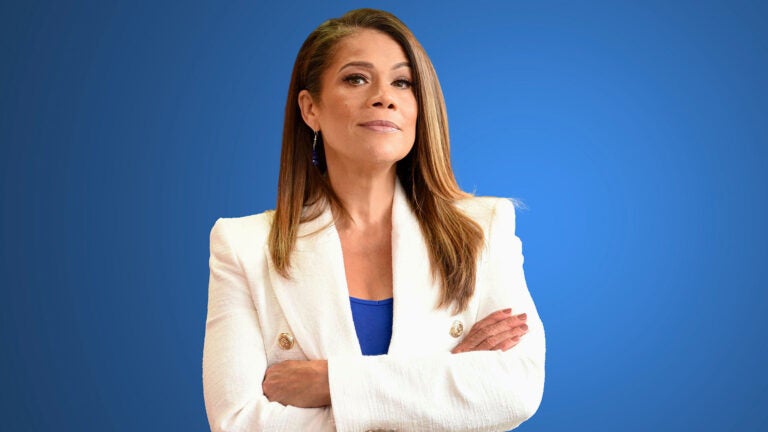
Julia Mejia, 53, lives with her daughter in Dorchester.
Mejia grew up in Dorchester, graduating from Dorchester High School and earning her Bachelor’s degree from Mount Ida College. She is currently running for reelection to the council after served two previous terms.
We surveyed Mejia on her priorities and some of the most pressing issues facing the Boston City Council this election season, based on input from our readers.
The following responses have been lightly edited for clarity.
My 3 top priorities for my next term in office are:
These are our top three priorities because we will never get to a Boston where all really means ALL if we do not highlight the need to build stronger pathways for civic engagement and accountability.
I am proud to have founded the Government Accountability, Transparency and Accessibility Committee on the City Council.
Without a dedicated Committee to ensure government oversight and administrative compliance that measures the successes of our protocols, policies and procedures, we will be forever stuck in the churning wheel where the decades change but the issues like education, housing or transportation remain the same.
Mental health is a deeply important issue and as a Boston City Councilor my commitment is unwavering. Mass and Cass, an area facing complex challenges, highlights the urgent need for comprehensive mental health and addiction services in our city.
We must approach Mass and Cass with empathy and a holistic view. Displacement will not solve the problem. Instead, we need to address the root causes by investing in mental health services, addiction treatment, and affordable housing.
Mental health and addiction often go hand in hand, requiring increased access to care, reduced stigma, and safe spaces for seeking help. Community organizations and healthcare providers need adequate resources to provide essential support and we need accountability through the City Council on the effectiveness of our programs.
Let’s collaborate to ensure Mass and Cass and communities citywide have the resources and compassion they need to tackle these issues effectively and safely. It’s about humanity and collective well-being.
We need bold leadership on housing and I have always been the loudest voice on the council fighting for these issues. I went bold in my first campaign and turned heads when I called for the goal of 50% IDP, because I knew to get to the recommended benchmark we need to aim high and hold people accountable.
We have also voted in favor of rent stabilization and to abolish the BPDA for this reason. Too often developers employ their lawyers to navigate the zoning code in ways that regular residents cannot afford to. This leads to certain neighborhoods not carrying their weight in affordable housing while others are being gentrified.
Because of this our office has also been a leader on community engagement – hosting budget popups across the city and engaging communities who are not heard. Our office brings them into the conversation, and places their needs at the forefront.
We often say nothing about us, without us, is for us, so any solution to housing needs to center the community in the decision making process, not just the bottomline of developers.
We need to look back at and learn from the lessons taken from the Boston Miracle in the 1990s and look to the great work being done today by many of our nonprofits and community leaders.
We knew back then that the best ways to address violence on our streets is through mental health services, job preparedness trainings, and putting a stop to the school-to-prison pipeline.
At the same time, we need to look at our systems of accountability and make serious changes. Too often we push off the work of government to nonprofits and community leaders, and it’s time for the government to do its job.
In particular I would look for investment in proven anti-violence measures that are already being used in the streets. I also have fought hard for more funding for youth jobs and programming to help alleviate the gun violence we see. Finally we need real gun reform so we can get guns off the street.
We need to think about all residents in Boston: the drivers, cyclists, the pedestrians, and those who take public transportation. We also need to ensure the cost of transit should never prohibit economic empowerment.
Continuous increases in public transit fare prices, in addition to inequitable service and accessibility across Boston’s communities, have discouraged many working people from relying on the T. That is why I have pushed for Late Night T service and free bus fares as Councilor.
I have also worked with community, neighborhood associations and leaders to address transportation issues around Boston. We are stronger together when the City is reflecting the voice of our community.
I have had to learn my job in a very public way during a global pandemic and racial/civil unrest. The one thing I know is that I love being a public servant. I was made for this role, serving others is my ‘why’.
But in order to do this work, we need to bring people together across their differences and call them IN to the discussion. In my next term, I will work to restore trust and use my award winning personality and coalition building skills to strengthen relationships across political and social ideologies.
As an At-Large City Councilor who grew up during the busing era I believe the work that lies ahead will set us up to be able to work through some of our greatest challenges.
In my short 3.5 years in office, I am proud that we have passed 15 pieces of important legislation, secured millions of dollars to support the social and financial of our constituents to ensure that we move Boston to a place where all really means all.
In my next term, I plan on doing the ‘heart’ work, not just the hard work, to make sure the City Council lives up to its mission of representing all Boston.
Find out more about Julia Mejia on her website and social media.
Stay up to date on all the latest news from Boston.com


To comment, please create a screen name in your profile
To comment, please verify your email address
Conversation
This discussion has ended. Please join elsewhere on Boston.com