
Using budget for cultural fights, House GOP blocks funds to LGBT groups, including one in Mass.
The GOP's far-right flank has scrubbed spending bills to eliminate money for a project aimed at helping LGBTQ seniors in Boston, among several others.
For decades, the William Way LGBT Community Center has sat at the heart of Philadelphia’s gayborhood, offering art shows, counseling services, vaccine clinics and a slew of other health and housing assistance to residents in need.
But as the center’s aging headquarters started to show its wear, its leaders turned to Washington for some help. They nearly secured $1.8 million in federal aid for renovations – until House Republicans mounted an extraordinary blockade this week, denying a request to fund the organization and other lesbian, gay, bisexual and transgender-focused groups in both Pennsylvania and Massachusetts.
Since last year’s elections, Republican lawmakers increasingly have seized on the power of the federal purse, coupling their crusade for austerity with a fierce push to advance a conservative social agenda. At the height of the annual appropriations process – as members of Congress race to fund the government and avert a shutdown – the GOP’s far-right flank has scrubbed spending bills to eliminate money that would protect LGBTQ rights, ensure gender equality and promote racial justice.
The GOP campaign, which has included false claims that such spending supports a form of child “grooming,” has shocked and enraged Democrats, who accused Republicans this week of disinformation and discrimination. But the efforts also have threatened real harm to LGBT groups and others that depend on federal aid, which now find themselves caught in an escalating conservative-led culture war.
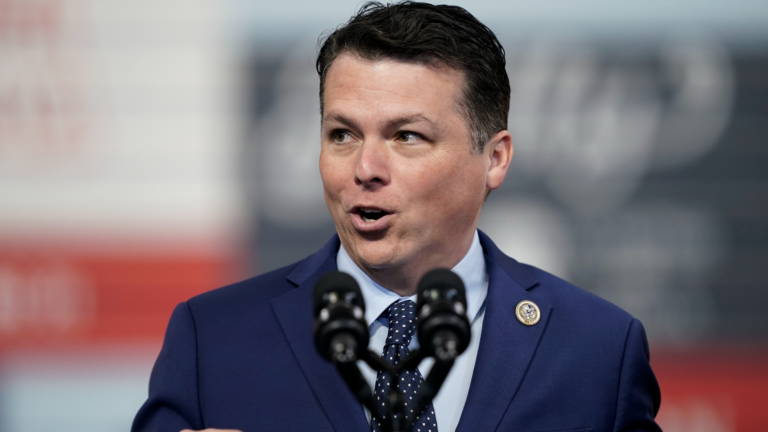
“This is money to do with social services,” said Rep. Brendan Boyle (D-Pa.), who had requested the funding that Republicans eliminated for the Philadelphia LGBT center. “Obviously I am appalled and outraged by the bigoted actions that House Republicans took today. But I’m also deeply concerned about the slippery slope we’re now on.”
For Republicans, the campaign to quash the three LGBT-related earmarks in the House illustrates the rise of the party’s far-right faction – and the extent to which conservatives are willing to invoke the budget process to advance their political causes.
The dynamic nearly overwhelmed the chamber only a week earlier, as Republican lawmakers scrambled to complete work on an annual measure that authorizes spending at the Pentagon. With the backing of Speaker Kevin McCarthy (R-Calif.), the roughly three dozen members in the House Freedom Caucus transformed the bill – historically, a bipartisan affair – into a fraught battleground over abortion, transgender healthcare and diversity.
Possessing only a narrow hold over the chamber, House GOP leaders largely have acceded to the influential bloc, which earlier this year scored a series of prized seats on committees that oversee the federal budget. Those perches have afforded conservatives a potent avenue to shape spending in its earliest stages, including the opportunity to eliminate entire programs that don’t comport with their social views.
In a bill to fund the Commerce Department and other agencies, for example, Republicans this week claimed they would eliminate funding for more than 70 programs that promote diversity, equity and inclusion. In another focused on the environment, the party in recent days aimed to wipe out a White House policy that tries to steer federal benefits, including water infrastructure spending, toward poorer, historically disadvantaged communities. GOP lawmakers at one point even pursued a provision that could ban federal buildings from flying LGBT flags during Pride month in June.
And in a sprawling bill that covers federal health and education agencies, Republicans proposed to prohibit funding for critical race theory, jettison federal dollars for safe-sex instruction and prevent the Biden administration from tapping funds to enforce a wide array of anti-discrimination rules, including those meant to protect transgender children.
The most recent flash point this week arose over “earmarks,” the federal dollars that Democrats and Republicans set aside annually for projects in their communities. House lawmakers this year have prepared an estimated 2,600 such requests as part of the appropriations process, three of which aimed to channel federal aid toward LGBT-focused organizations.
In Boston, for instance, Rep. Ayanna Pressley (D) tried to obtain $2 million on behalf of LGBTQ Senior Housing, a nonprofit working to covert a former public school in Hyde Park into 74 affordable housing units, hoping to serve LGBT seniors while serving as a new community center for the greater Boston area.
“LGBTQ elders might be in a more precarious situation,” said Gretchen Van Ness, the executive director of the group, noting that these individuals experience high rates of economic insecurity and are “more likely to experience housing discrimination and violence.”
In Reading, Pa., meanwhile, Rep. Chrissy Houlahan (D) looked to secure $970,000 for the LGBT Center of Greater Reading, which she described in an interview as an “important, welcome source for people seeking respite, who are largely young adults.”
And in Philadelphia, Boyle advocated for a $1.8 million earmark that would allow the William Way LGBT Community Center to “renovate and expand their existing community center into an expansive, fully accessible” facility, as he explained in his original proposal. The organization’s executive director, Chris Bartlett, said the federal money would have complemented existing city and state support on a project expected to cost $40 million.
“The community programs that we provide are crucial to the life and well-being not only of LGBTQ people in our region, but their friends and families and neighbors,” he said.
All three Democratic earmarks had been vetted by congressional appropriators, and each cleared a lower-level House committee vote without incident last week. Senate Democrats, for their part, similarly have requested money on behalf of some of the same groups as the chamber forges ahead in its own, unfinished work on 2024 spending bills.
On Tuesday, though, the top House appropriator overseeing housing and transportation spending – Rep. Tom Cole (R-Okla.) – unexpectedly unveiled an amendment that blocked the chamber from finalizing federal funds for those projects, describing the earmarks briefly as “problematic.”
The move quickly touched off a raucous, partisan debate. Rep. Andy Harris (R-Md.) – a top appropriator and member of the House Freedom Caucus – at one point aired a series of false or unsupported allegations about the LGBT groups that stood to receive federal dollars. Taking aim at Pressley’s earmark in Massachusetts, for example, Harris alleged it would be improper to try to aid homeless LGBT residents specifically, even though they experience higher levels of homelessness than some other populations.
“The answer to discrimination is not more discrimination,” Harris said.
(Van Ness, the leader of the Hyde Park-based group, said this week the state actually has a process to place residents in affordable housing programs.)
Harris also attacked Boyle’s earmark in Philadelphia, faulting the center for allowing some local liberal groups – including one that he described as communist-affiliated – to convene there and plan protests, including against conservative causes.
“If the Ku Klux Klan applied for one, we’d hear an uproar from the other side,” said Harris, whose office did not respond to multiple requests for comment. “That’s a First Amendment right. So I guess some First Amendment rights aren’t okay, and some are.”
The comments nonetheless served to underscore the extent to which Republicans have targeted LGBT communities this year in a bid to rile conservative-leaning voters. In state legislatures across the country, party lawmakers recently have moved to adopt a record number of restrictions that limit gay and transgender rights, while the GOP’s presidential candidates have attacked transgender athletes and rebuked schools that teach about gender identity.
A roster of appalled Democrats on Tuesday soon tried to rebut those claims, stressing they were blindsided by the GOP effort to eliminate the earmark funding.
“It seems intentionally bigoted,” Rep. Debbie Wasserman Schultz (D-Fla.) told the committee during debate, adding that Republicans are “targeting one part group of people, because you don’t like their lifestyle.”
Earlier in the day, GOP aides shared a version of the transportation spending bill that left those LGBT earmarks intact, according to a House Democratic aide, who spoke on the condition of anonymity to describe internal discussions. GOP aides to Rep. Kay Granger (R-Tex.), the chairwoman of the full committee, previously had raised concerns in private about the spending, but they had not explicitly threatened to eliminate the three earmarks, the Democratic official said.
Spokespeople for Cole and Granger did not respond to multiple requests for comment.
“There was a question in the committee among members on my side whether some of these uses of taxpayer dollars were appropriate,” said Rep. Ben Cline (R-Va.), a member of the House Freedom Caucus who serves on the panel. “The debate was healthy, and ultimately the committee decided to remove the funding out of concern that it was not an appropriate use.”
The outcome infuriated Rep. Rosa L. DeLauro (D-Conn.), the party’s leader on the Appropriations Committee, who on Tuesday faulted GOP leaders for having “crossed a red line.” Turning her attention to the House Freedom Caucus, she said that Republican leaders once again had tried to “placate the whims of some, who I might add . . . do not ever vote for appropriations bills.”
“You are negotiating with terrorists,” she said, a comment that her aides likened to former House Speaker John A. Boehner’s infamous past comments about his own party’s right-wing flank. DeLauro later retracted the comment, facing criticism from Republicans for her language.
In an interview after the vote, Houlahan said the decision to cut the earmarks served as a “surgically precise strike on a very specific group of people.” Describing the project in an earlier submission to the committee, she said the money would have helped local leaders “work with clients on life skills, financial literacy, resume-building, job skills and other necessary areas while helping them achieve permanent housing.”
But Houlahan and other Democrats said they plan to continue pushing for the funding, including in the Senate, setting up a potential clash between the two chambers – and adding to the risks that a failure to compromise could force the U.S. government to shut down after Sept. 30.
“2,668 proposals went through the entire process,” she said. “Only three didn’t make it out of the other side.”
Marianna Sotomayor and Isaac Arnsdorf contributed to this report.





To comment, please create a screen name in your profile
To comment, please verify your email address
Conversation
This discussion has ended. Please join elsewhere on Boston.com