
Newsletter Signup
Stay up to date on all the latest news from Boston.com
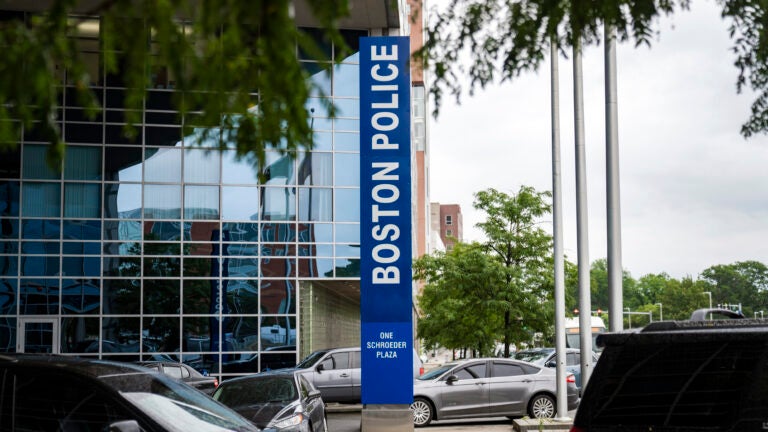
Boston’s largest police union says it has hit a wall in its contract negotiations with Mayor Michelle Wu’s administration, teeing up a move to bring talks under arbitration.
“The mayor’s office stopped negotiating and we came to a standstill, an impasse, on the topics that are on the table,” Larry Calderone, president of the Boston Police Patrolmen’s Association, told The Boston Globe on Friday.
According to Calderone, the BPPA went to the bargaining table in June and talks stalled in mid-September.
Yet, a spokesperson for Wu disputed that characterization of discussions between the union and the city, stating the city “is working urgently to negotiate with our unions while bringing community to the table to ensure their voices are heard and represented.”
Regardless, tensions over the negotiation process will create a challenge for Wu, who is looking to see through campaign promises for enacting police reform through labor contracts with the city’s law enforcement workforce.
Officials have long said substantial reform to the police force would have to come through changes in police contracts, which tightly govern operations of the Boston Police Department’s rank and file.
Wu, touting her 11-step reform plan as a candidate last year, said it is “time to get serious about structural changes to the BPD with a contract that gets to the root of the cultural and systemic reforms we need — full transparency and true accountability for misconduct, reducing wasteful overtime spending to reinvest those funds in neighborhood-level services, and removing the functions of traffic enforcement and social services from the department’s purview.”
That last point, the one about traffic enforcement, appears to be a sticking point in current negotiations.
Wu is among several city leaders — including City Councilors Kendra Lara and Kenzie Bok — who have offered the city should consider changing its policy for police details, or instances where officers work overtime supervising traffic safety. Details are frequently stationed at construction sites.
Supporters of shifting those duties from police to civilians contend doing so will provide more public jobs to city residents, especially as the department struggles to fill those shifts.
But police leaders like Calderone argue officers have the proper public safety training to provide necessary protection on city streets.
Calderone brought union gripes over the issue into a City Council meeting on the matter early last week, where he implored councilors to put pressure on Wu to hammer out the new contract.
“There’s conversations that have been had over the last several months with Mayor Wu’s office where she put the brakes on,” he said. “So I implore you, the council, go to the mayor. Ask her why she’s not fulfilling her job to collectively bargain honestly, fairly, equitably.”
Calderone went on to call the idea of civilian-staffed details “misguided, hugely insulting, (and) reckless” and claimed that it “will undoubtedly make your city streets — our city streets — less safe.”
“Civilian flaggers possess neither the authority or the training to maintain the peace and safety currently enjoyed by all of you here who live, work, or visit our great city,” he added. “This may very well be the worst idea in the history of bad ideas.”
Calderone also alleged the move “would steal away the work from police officers just to punish them.”
“This proposal will demolish a highly successful program that exists today,” he said. “Public safety details have documented proof for providing immediate responses to crime, medical issues, traffic safety, and violence — none of which will happen if police officers are replaced with civilians.”
Calderone spoke at last week’s meeting during the hearing’s public comment portion, and spoke over Bok as she informed him he had exceeded the allotted speaking time.
Some councilors walked out as Calderone kept speaking.
“You can bang that gavel all you want … We have been here for three hours and we will not be silenced,” Calderone said.
A tweet posted by the BPPA later that day said a “cop-hating panel was allowed two hours to denigrate cops.”
But Bok clarified during the hearing the BPPA was not invited to speak during the formal panel that went before councilors due to a city charter provision that prohibits the council from participating in contract negotiations. Engaging in a back-and-forth discussion with leadership of a public employee union could be interpreted as running afoul of that rule, Bok offered.
Panelists councilors did hear from, however, said civilian details could benefit the city.
Jascha Franklin-Hodge, Boston’s chief of streets, said the city actually has a shortage of officers to work details, even on overtime.
“I would like to be able to see full staffing of details at construction projects where active traffic management is essential for public safety,” he said. “The problem that we face is that many construction details go unfilled.”
City payroll records reviewed by the Globe found officers made over $24 million from working detail assignments last year — about 6 percent of total police income.
“Our constituents want to be able to work, and they want to be able to have well paying jobs, and they see the places where there’s … workforce development opportunity, and they want to fight for it,” Lara told the newspaper Friday.
Notably, the City Council does not have legal authority to pass a law that would swap-in civilians on detail work, as the current union contract stipulates those changes need to be collectively bargained for.
The council does, however, have the power to approve or reject a union contract, though councilors have not done so in recent years, the Globe reports.
Not all councilors necessarily think moving to civilian labor is the answer, though. Others, such as Council President Ed Flynn, see the shortage as indicative of the need to hire more police officers.
“It is critical to do so to confront the long-standing issues across the city of overstretched resources, forced overtime, and looming retirements,” Flynn said in a statement last week. “I also want to support having police details at construction sites, as our highly trained officers have the skills to ensure public safety and are available in the event of an emergency.”
According to the Globe, Calderone said the union has also put forward a proposal to let retired officers, university police at local schools, and officers from other police departments to work details as needed.
Aside from the detail issue, the BPPA and the city also have different priorities for the collective bargaining conversation.
Calderone told the Globe the union wants to change the requirement that officers must live in Boston for at least 10 years; wants to switch the number of days officers must work consecutively; and make higher education financial incentives for officers consistent among police ranks.
City officials, on the other hand, are looking to change the process of how officers are disciplined for misconduct, and want to tackle excessive overtime through changing the rules for officers who are considered medically incapacitated and for reducing when the city pays for officers to attend union-related matters, according to the newspaper.
Calderone said the collective bargaining process has been cordial, but he still plans to file a request to the state Joint Labor-Management Committee for an independent arbitrator for the BPPA’s negotiations with the city, the Globe reports.
Stay up to date on all the latest news from Boston.com





To comment, please create a screen name in your profile
To comment, please verify your email address
Conversation
This discussion has ended. Please join elsewhere on Boston.com