
What will change if ‘trigger’ bans take effect in Tennessee, Idaho and Texas?
Some states are banning abortion after six weeks, while others are banning abortion at any stage.
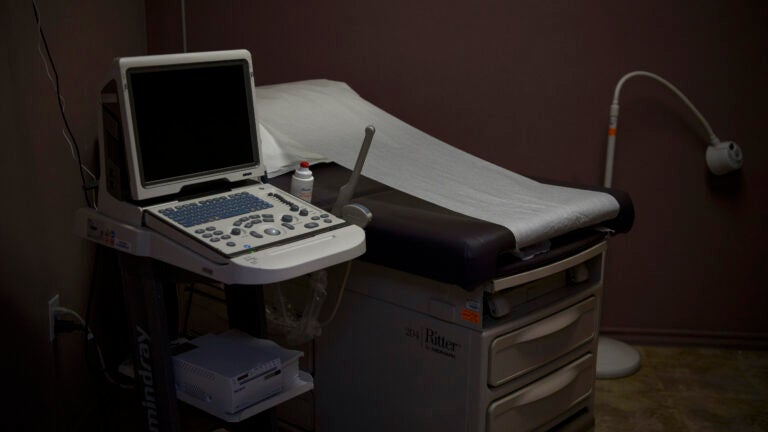
Tennessee, Idaho and Texas are poised to enact so-called trigger laws Thursday, placing new restrictions on access to abortion for millions of women and in some cases adding punishments for doctors who perform the procedures.
The laws are set to take effect weeks after the Supreme Court struck down the constitutional right to an abortion in June. But they are known as trigger laws as the states had each previously passed legislation explicitly intended to ban abortion in the event of the court overturning Roe v. Wade.
Similar laws in other states — like one in South Dakota — took effect immediately after the Supreme Court’s decision, but most required some sort of signoff from state leaders, either from the attorney general or state lawmakers, or a combination of both.
In all, 13 states with Republican-led legislatures had passed some form of a trigger law, either to outlaw abortion entirely or to allow it only up to about six weeks gestation, a time at which many women do not know they are pregnant. In a few states, including North Dakota, Utah and Wyoming, judges have blocked those bans.
Here are the states where changes may come this week.
Tennessee
Shortly after the Supreme Court lifted the hurdle of Roe, a judge ruled that a 2020 Tennessee law prohibiting abortion after six weeks could take effect.
But the state also had a separate trigger law that prohibited abortion, with no exceptions for cases of rape or incest.
Both the six-week ban and the trigger law include an exemption for cases where the mother is in immediate danger of death or severe injury.
Idaho
Abortion became illegal in the state after six weeks earlier this month, when a law passed in April went into effect. But the state’s trigger law would prohibit all abortions, except when necessary to save the life of a pregnant woman — but not to protect her health — or in cases of rape or incest that were previously reported to authorities.
Idaho’s trigger law faces a challenge from abortion advocates and the Department of Justice. The lawsuit argues that Idaho’s ban is in conflict with federal law because it would inhibit emergency room doctors from performing abortions that are necessary to stabilize the health of women facing medical emergencies.
On Wednesday, Judge B. Lynn Winmill of the U.S. District Court in Idaho ruled in favor of the Biden administration, temporarily blocking a part of the law that could have punished doctors in the state for acting to protect the health of endangered mothers.
But he emphasized the narrow scope of the decision, leaving intact most of the bill’s other provisions, which constitute a near-total prohibition on the procedure.
Texas
The Texas Supreme Court last month ruled that a 1925 law that banned abortion with no exceptions for rape or incest could take effect.
Even before that ruling resurrected the 20th-century law in Texas, the state enacted a six-week ban in 2021 by deputizing civilians with potential bounties of at least $10,000 to sue anyone who helped a woman get an abortion.
The state’s trigger law, which goes into effect Thursday, raises the penalties for abortion providers.
Under the new statute, anyone who provides or attempts to provide an abortion will face felony charges and fines of at least $100,000. There is a provision that allows doctors to perform abortions in a medical emergency, but states with similar medical exceptions have already struggled with a chilling effect on doctors who questioned whether they would face punishment if a patient did not meet the standard of a “medical emergency.”
North Dakota
A judge’s decision this week could also change the fate of North Dakota’s trigger ban, which would prohibit nearly all abortions. A judge temporarily blocked the law after the state’s sole abortion provider filed a lawsuit. The trigger ban would take effect Friday barring intervention by the judge, who will decide whether to lift the restraining order against the ban by the end of this week.
This article originally appeared in The New York Times.




To comment, please create a screen name in your profile
To comment, please verify your email address
Conversation
This discussion has ended. Please join elsewhere on Boston.com