
Newsletter Signup
Stay up to date on all the latest news from Boston.com
Gov. Charlie Baker voted for the 2016 ballot measure to require so-called “cage-free” eggs in Massachusetts.
But now, with the new law about to take effect next month, Baker is amplifying the concerns that it could result in a statewide egg shortage.
“Everyone is already paying too much at the grocery store, and not addressing this egg supply issue will further drive up costs,” the Republican governor tweeted Tuesday afternoon, urging state lawmaker to tweak the law that takes effect in January.
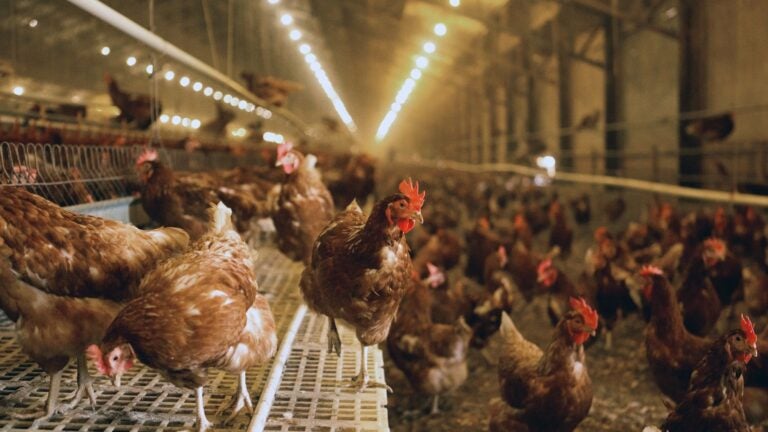
If it takes effect, the law would ban the in-state sale of eggs from hens that are raised in enclosures with less than 1.5 square feet of space — as well as meat from pigs and cows kept in cramped spaces — beginning in 2022.
The measure is intended to improve the welfare of animals often raised in such tight spaces that they cannot raise both wings, turn around, or lay down.
However, as The Boston Globe reported Monday, the egg industry is warning that it will wipe the vast majority of eggs being sold in Massachusetts off the shelves.
And even some animal rights groups, including the Humane Society, have backed a compromise to ease the 1.5-square-foot standard to 1 square foot for vertical aviaries, where hens have room to move up and down on ramps and platforms.
Most egg producers have transitioned to such aviaries, according to GBH. And the change would align Massachusetts’s law with the rules in other states that have since passed cage-free egg requirements, like California and Oregon.
“We all want to have a bill on my desk this week or next, and I’m confident lawmakers can set aside their differences and get it done soon,” Baker wrote Tuesday.
However, as the Globe reported, those “differences” aren’t so much over hens — but pigs.
Both the House and Senate passed bills this year that would reduce the minimum space for hens in vertical aviaries to 1 square foot while keeping the 1.5-square-foot standard for single-level hen houses.
Where the two chambers differ is over another section of the 2016 ballot measure banning the sale of pork from pigs raised in small crates. While the House voted in October to delay the requirement by one year, the Senate’s bill kept the 2022 phase-in timeline.
A group of state lawmakers has since been working to reconcile the two bills, but no deal has emerged yet.
And with the State House in informal session through the end of the year, Baker’s ask would require both chambers to approve any deal that does emerge without any objections. During an informal session, lawmakers can still pass bills — as they did with a recent $4 billion spending bill — but only with a voice vote, and any single objection from a lawmaker can block its passage.
State Sen. Jason Lewis, a Winchester Democrat leading the effort to merge the two bills, said in a statement that the House and Senate are working to reach an agreement “as soon as possible while respecting the will of the voters.
“We fully recognize the time-sensitive nature of this issue, and the importance of avoiding any disruption in the Massachusetts egg supply,” Lewis said.
Stay up to date on all the latest news from Boston.com




To comment, please create a screen name in your profile
To comment, please verify your email address
Conversation
This discussion has ended. Please join elsewhere on Boston.com