
Newsletter Signup
Stay up to date on all the latest news from Boston.com
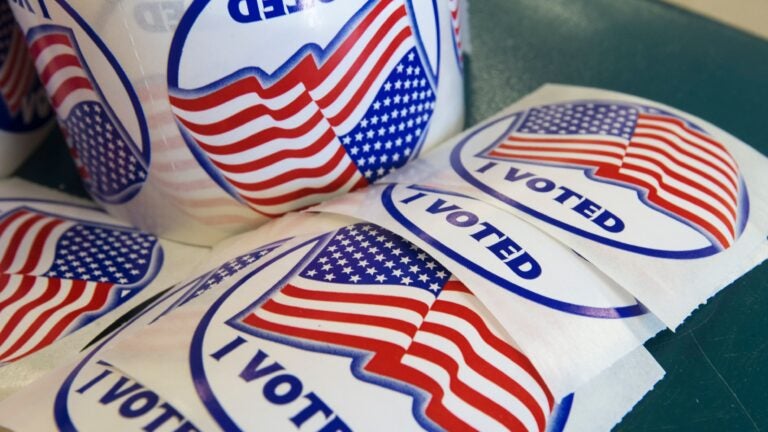
It’s not looking like Massachusetts residents will be getting fined for not voting anytime soon — a bill that would have allowed for that, proposed by state Rep. Dylan A. Fernandes, failed to make it out of committee last month.
But Fernandes, who represents Falmouth, Martha’s Vineyard and Nantucket at the Statehouse, says he’s OK with that, if the proposal gets people talking and thinking.
“You file an idea, knowing that it has no chance of passing, but that contributes to important public debate on what it means to be a democracy and what it means to be a democratic country and whether participation is a duty or right,” Fernandes told Boston.com.
The bill, H.788, would require all eligible voters in the Commonwealth to submit a ballot and be subject to a fine if they don’t. It failed to make it out of the Joint Committee on Election Laws following a hearing last month. It was the second time Fernandes proposed the bill, the first being in 2019.
The bill proposed that “all eligible voters in the Commonwealth be required to cast ballots in the November general election.” A $15 fine would be added to the voters’ state tax liability if their ballot is not mailed in or dropped off on time. The bill states, however, that voters can return the ballot without choosing a candidate if they do not wish to vote for any of those listed.
The $15 fine tacked on for those who do not vote is cheaper than getting a parking ticket in Boston, Fernandes noted, which costs approximately $40. Fernandes said he sees voting as a civic duty, similar to that of jury duty, which is often viewed as a necessary and positive act. (Also, it’s illegal to not show up for it.)
Fernandes hopes that by continuing to introduce the concept on Beacon Hill he’ll be able to stir public debate on the issue of low voter turnout and — even if it’s not through legislation — inspire more people to take the responsibility seriously.
“It also gets to the question of, what do we value as a society? Do we value people voting at incredibly consequential elections where issues about our future are at stake less than you value people overstaying at the parking meter for like 10 minutes?” Fernandes said.
Fernandes said if voter turnout could be increased, elected officials would be more reflective of the people they represent, Fernandes said.
“[Politicians] only have to talk to and reach out to the 13, 15% of the voters that do turn out at municipal elections,” he said. “[Politicians] only have to talk to these people that are a very narrow, tiny slice of the electorate, and that’s the only part of the electorate of the citizens that you’re held accountable to.”
The bill was introduced in anticipation of the Nov. 2 general elections, where, sure enough, results showed the voter turnout for the Boston mayoral race remained low at only 28.9%, despite a historic race between two women, both people of color, and an even more diverse slate of candidates in the preliminary elections. Local elections have historically had low voter turnout and this election was no different.
The obligatory voting system exists in other countries around the world, such as Australia, where they are regularly enforced. In Australia, non-voters are subject to a first-time AU$20 (approximately $15) fine up to an AU$180 fine. This voting law results in approximately 90% voter turnout at federal elections, as opposed to 55% voter turnout in the U.S. for federal elections, the New York Times reported.
Other officials have also supported the idea, explaining that it could change how politicians represent their state and hold them more accountable. Former Connecticut Secretary of State Miles Rapaport, who testified in support of the bill, echoed Fernandes’s sentiment, stating that mandating voter participation would make elected officials much more representative of their constituents and would significantly increase voter turnout.
“We want or we should want the decisions that people make, that elected officials make and that decision about who is elected, to be made by every single person,” Rapaport told WBZNews.
Stay up to date on all the latest news from Boston.com




To comment, please create a screen name in your profile
To comment, please verify your email address
Conversation
This discussion has ended. Please join elsewhere on Boston.com