
Newsletter Signup
Stay up to date on all the latest news from Boston.com
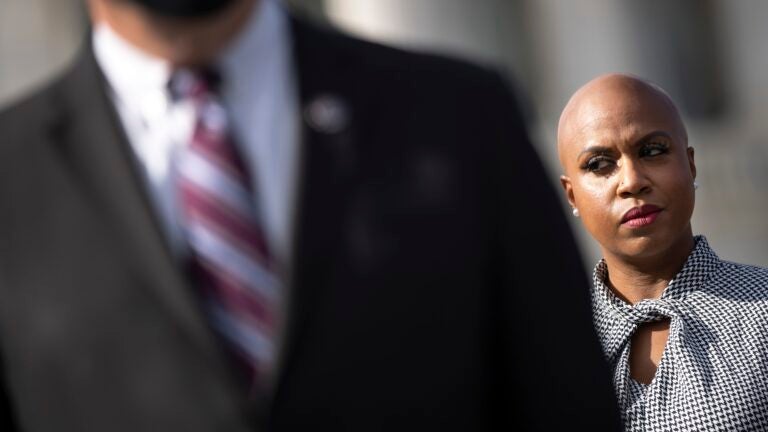
After several months of negotiations among Democrats, the House of Representatives passed a bipartisan $1.2 trillion infrastructure bill Friday night, sending the legislation to the desk of President Joe Biden.
Rep. Ayanna Pressley, however, was one of the few Democrats not on board.
In a late-night twist, Pressley and five other progressive Democrats voted against the legislation, accusing their party’s leaders of going back on a deal to tie the vote on the bipartisan infrastructure bill — which dedicates $550 billion toward new investments in roads, bridges, transit, and other infrastructure — to the passage of Biden’s roughly $2 trillion Build Back Better plan to invest in child care, climate action, health, and housing.
House Speaker Nancy Pelosi had said in June that her chamber would not vote on the former — known as the Bipartisan Infrastructure Framework, or BIF — until the Senate passed both pieces of legislation.
However, with a few centrist Democratic senators holding out on BBB and some disappointing national results in last week’s elections, the White House and Pelosi negotiated a deal to pass BIF in exchange for an agreement from moderates to vote for BBB later this month if they get additional fiscal details on the bill (BBB will need support from virtually every Democratic member in the House and Senate, in which their party holds razor-thin majorities). Progressive leaders, including Reps. Pramila Jayapal and Mark Pocan, backed the deal, too.
And so the House voted Friday night on BIF — though not on the initial terms Pressley and her allies had favored.
“For months, my progressive colleagues and I have been calling for bold investments to address both the human and physical infrastructure needs of our country,” the Boston Democrat said in a statement early Saturday morning.
“We had an agreement that these two bills would move together—not that we would vote for one in exchange for a potential vote on the other if certain conditions were met,” she continued. “Unfortunately, that agreement was not honored. As such, I voted no tonight on the narrow roads and bridges bill.”
Pressley was joined by fellow Democratic Reps. Jamaal Bowman of New York, Cori Bush of Missouri, Alexandria Ocasio-Cortez of New York, Ilhan Omar of Minnesota, and Rashida Tlaib of Michigan in opposition to the deal.
And their no votes were enough to potentially imperil the bill’s fate, given Democrats’ 221-213 majority in the House. However, a group of 13 Republicans — bucking their own party’s leadership — joined the majority of Democrats in support of the legislation. So, ultimately, BIF passed on a 228-206 vote.
The fate of BBB remains uncertain. In their agreement, moderate House Democrats did not commit to supporting the bill, but did say they would work to resolve any discrepancies that emerge in the fiscal details in order to pass it. The legislation would then head to the Senate, where Democrats will look to pass BBB through the reconciliation process on a party-line vote. To do so, they’ll need the support of Democratic holdouts Sens. Joe Manchin and Kyrsten Sinema, who have pressed to whittle down the size and scope of the bill.
The deal to pass BIF comes after Biden and progressives compromised with moderates, shrinking the initial $3.5 trillion plan to about half its size and cutting provisions like tuition-free community college and a clean electricity program.
Pressley said over the weekend that the approach pits “community member against community member,” but added that she looks forward to working to pass Biden’s “full Build Back Better agenda.”
“As lawmakers, we have a duty to deliver policies and budgets that have a meaningful and tangible impact on the daily lives of our constituents and leave no community behind,” she said.
Stay up to date on all the latest news from Boston.com





To comment, please create a screen name in your profile
To comment, please verify your email address
Conversation
This discussion has ended. Please join elsewhere on Boston.com